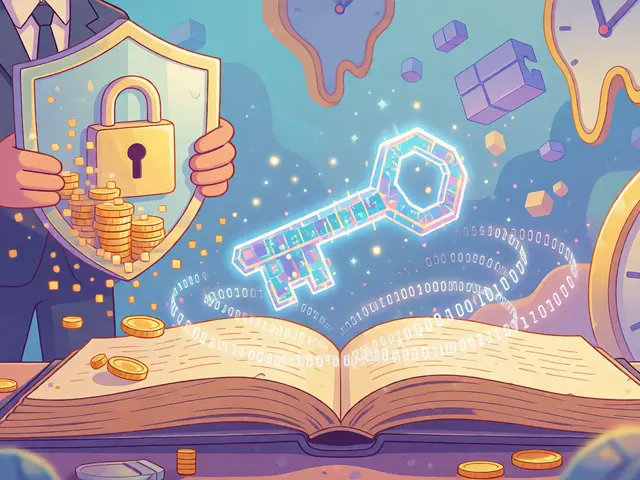
You can’t unsend a text. You can’t undo a bank transfer once it’s cleared. But in the digital world, we’re used to being able to edit history. We tweak documents, delete emails, and change database entries without leaving a trace. That flexibility is great for productivity but terrible for trust. What if you could create a record that, once written, becomes permanent? That’s blockchain immutability, and it’s not just a buzzword-it’s the backbone of trust in an era where data manipulation is cheap and easy.
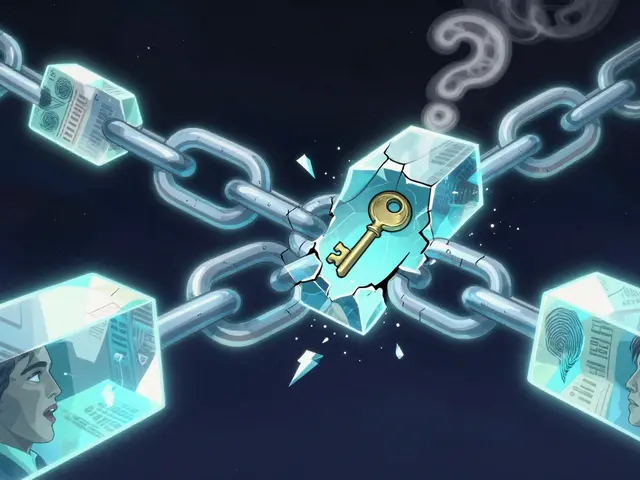
Immutability means that once data is added to a blockchain, it cannot be altered, deleted, or tampered with. This isn’t magic; it’s math. Each block contains a cryptographic hash of the previous block, creating a chain. If you try to change one piece of data, the hash changes, breaking the link to every subsequent block. To fix it, you’d have to recalculate every block after it, faster than the rest of the network can add new ones. In a distributed network like Bitcoin or Ethereum, this is practically impossible.
So, why does this matter? Because in certain industries, the cost of a lie-or a mistake-is catastrophic. From saving lives in hospitals to proving who owns a diamond, here are the scenarios where you absolutely need a record that refuses to forget.
Healthcare: Trusting Your Medical History
Your medical record is your life story told in numbers and notes. Currently, these stories are fragmented across different hospitals, clinics, and labs. Worse, they’re stored in centralized databases that are vulnerable to hacks and human error. Imagine a patient whose allergy information was accidentally overwritten during a system migration. The result could be fatal.
Electronic Medical Records (EMRs) on a blockchain solve this by creating a single, immutable source of truth. Once a doctor logs a diagnosis or a lab results, it’s there forever. No hospital admin can quietly alter it to cover up a mistake. No hacker can rewrite history to steal identities without leaving a trail. This doesn’t mean your data is public-privacy layers handle that-but it means the integrity of the data is guaranteed.
The stakes are even higher in pharmaceuticals. Counterfeit drugs kill thousands of people globally each year. By tracking every pill from the factory to the pharmacy shelf using blockchain, companies create an unbreakable chain of custody. If a box claims to contain genuine medication, the blockchain verifies its journey. If the record says it sat in a warehouse for six months past its expiration date, you know exactly what you’re swallowing. It’s not just about stopping fraud; it’s about ensuring safety when your health is on the line.
Audit Trails: The End of "He Said, She Said"
In finance and corporate governance, auditing is often a painful, manual process. Auditors spend weeks digging through spreadsheets and emails to verify transactions. And even then, they’re relying on records that *could* have been edited before they arrived at their desk.
Blockchain creates a real-time, tamper-proof audit trail. Every transaction, every approval, every change in status is stamped with a timestamp and locked in place. For cybersecurity teams, this is gold. If a breach happens, investigators can look back at the ledger to see exactly what changed, when, and by whom. There’s no arguing with the ledger. This level of transparency reduces the time needed for compliance checks in regulated industries like banking and insurance.
Consider a high-stakes merger. Due diligence involves verifying millions of dollars in assets and liabilities. With a traditional ledger, you trust the company’s word. With a blockchain-based system, you verify the code. Smart contracts execute payments only when conditions are met, and those executions are recorded immutably. Disputes over whether a payment was made or a condition was met become obsolete because the evidence is baked into the network itself.
Supply Chain: Provenance You Can Verify
We’ve all seen the news: food recalls due to E. coli, luxury handbags that turn out to be fakes, conflict diamonds entering the market unnoticed. These problems stem from a lack of visibility. A product passes through dozens of hands-from raw material supplier to manufacturer to distributor to retailer-and paper trails get lost, forged, or destroyed.
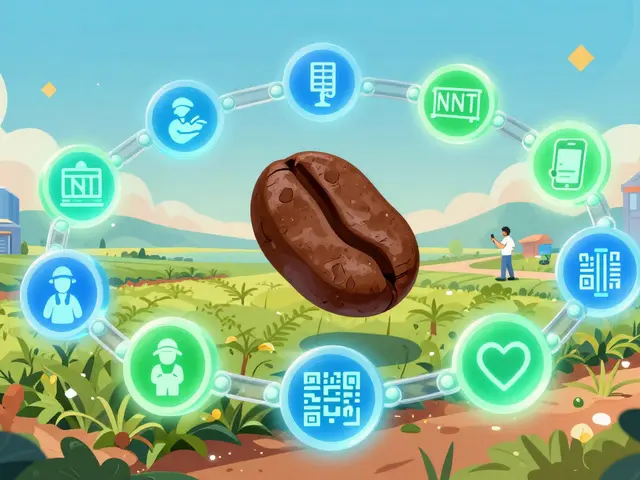
Supply chain management leverages blockchain immutability to create a digital twin of physical goods. Every step of the journey is logged. For food safety, projects like IBM Food Trust allow retailers to trace a batch of lettuce back to the specific farm and harvest date in seconds, rather than days. This speed saves lives during contamination outbreaks.
In the luxury goods sector, brands use blockchain to prove authenticity. A buyer scans a QR code on a handbag and sees its entire lifecycle: where the leather was sourced, who stitched it, which boutique sold it, and when. Because the record is immutable, a counterfeiter can’t simply copy the tag and claim a fake is real. They’d have to forge the entire history, which is nearly impossible without access to the private keys of previous owners.

Identity Management: Owning Your Digital Self
Right now, your identity is scattered across Facebook, LinkedIn, banks, and government agencies. You don’t own your data; they do. And if they get hacked, your personal info is exposed. Centralized databases are honeypots for attackers.
Self-sovereign identity (SSI) flips this model. Instead of storing your passport scan in a company’s server, you hold a cryptographic key that proves who you are. When you need to verify your age or address, you share a proof, not the underlying data. This verification event is recorded on the blockchain, creating an immutable log of who accessed your data and when.
This is critical for Know Your Customer (KYC) processes in finance. Banks spend billions verifying customers. With blockchain, once a user is verified by a trusted authority, that verification token exists on the ledger. Other banks can check the token’s validity without re-collecting sensitive documents. It reduces friction for users and cuts costs for institutions, all while keeping the verification history secure and unalterable.
Intellectual Property: Proof of Creation
Artists, writers, and developers often struggle to prove when they created something. Copyright registration is slow and expensive. Digital files can be copied infinitely, making ownership murky.
Blockchain offers a timestamped certificate of existence. When a musician uploads a track to a blockchain platform, the file’s hash is recorded. This proves that the song existed at that specific moment in time. If someone else tries to claim they wrote it first, the blockchain provides objective, immutable evidence. This is especially useful for non-fungible tokens (NFTs), which represent unique digital assets. The NFT metadata links to the original work, and the ownership history is transparent and permanent.
For patent attorneys, this simplifies prior art searches. Inventors can register concepts on a blockchain to establish priority dates. It doesn’t replace legal patents, but it adds a layer of undeniable proof that can resolve disputes quickly.
| Feature | Traditional Database | Blockchain Ledger |
|---|---|---|
| Data Alteration | Easy (Admin privileges required) | Extremely Difficult (Requires consensus attack) |
| Transparency | Opaque (Internal view only) | Transparent (Publicly verifiable) |
| Trust Model | Central Authority (Bank, Hospital) | Distributed Consensus (Network participants) |
| Audit Cost | High (Manual verification) | Low (Automated verification) |
| Single Point of Failure | Yes (Server crash/hack) | No (Distributed nodes) |
Governance and DAOs: Rules That Stick
Corporate governance is often opaque. Decisions are made behind closed doors, and minutes can be rewritten. In a Decentralized Autonomous Organization (DAO), rules are encoded in smart contracts and executed automatically. Proposals, votes, and treasury movements are recorded on the blockchain.
Because these records are immutable, members can verify that the organization followed its own rules. If a proposal said it would allocate 10% of funds to marketing, and the smart contract moved 5%, everyone sees the discrepancy immediately. There’s no room for bureaucratic drift or hidden agendas. This builds trust among stakeholders who may never meet in person.

Fraud Detection: AI Meets Immutable Truth
Fraud thrives in ambiguity. Criminals exploit gaps in data and delayed reporting. When you combine blockchain immutability with artificial intelligence, you get a powerful defense system. AI models analyze patterns in real-time transactions, flagging anomalies. Because the underlying data is immutable, the AI’s decisions can be audited later. Did the AI miss a pattern because the data was wrong, or because the algorithm failed?
In financial services, this combination helps detect money laundering faster. Suspicious transactions are flagged and recorded. Investigators can trace the flow of funds through multiple wallets, knowing that the history hasn’t been scrubbed. This transparency deters bad actors who rely on the ability to hide their tracks.
Clinical Trials: Unbiased Research
Pharmaceutical companies face scrutiny over clinical trial data. Were results cherry-picked? Was negative data suppressed? These questions undermine public trust in new medicines.
Blockchain allows researchers to upload raw data points as they are collected. Since the data cannot be altered after upload, regulators and peers can verify the integrity of the study. This transparency accelerates approvals and attracts funding, as investors know the numbers haven’t been massaged. It turns research from a black box into a glass house.
Key Takeaways
- Healthcare: Immutable EMRs prevent unauthorized alterations and ensure patient safety through accurate histories.
- Supply Chain: Tamper-proof tracking combats counterfeiting and speeds up food safety recalls.
- Auditing: Real-time, unchangeable records reduce compliance costs and simplify forensic investigations.
- Identity: Self-sovereign identity gives users control while providing banks with verifiable KYC data.
- Governance: DAOs use immutable rules to enforce fair voting and transparent fund allocation.
Is blockchain data truly unchangeable?
Technically, yes, but with caveats. In public blockchains like Bitcoin, changing a confirmed transaction requires recomputing the proof-of-work for that block and all subsequent blocks, plus having more computational power than the rest of the network combined. This is economically and computationally prohibitive. However, in permissioned blockchains used by enterprises, administrators might have limited ability to reverse transactions depending on the consensus mechanism, though true immutability is still the goal.
Does immutability mean my data is public?
Not necessarily. Immutability refers to the inability to change data, not who can see it. Many blockchains use encryption, zero-knowledge proofs, or private channels to keep data confidential while maintaining an immutable record. For example, in healthcare, only authorized parties with the correct keys can decrypt and view patient records, but the fact that a record exists and hasn’t been tampered with is verifiable by the network.
What happens if I make a mistake on the blockchain?
You can’t delete it. If you send crypto to the wrong address, it stays there. In business applications, mistakes are handled by adding new transactions that correct the error. For instance, if a supply chain entry has the wrong weight, a new block is added with the corrected weight, referencing the original. The history shows both the error and the correction, preserving the audit trail.
How does immutability help with GDPR compliance?
GDPR grants the "right to be forgotten," which conflicts with blockchain immutability. Solutions involve storing personal data off-chain (in traditional databases) and only putting the cryptographic hash of that data on the blockchain. If a user requests deletion, the off-chain data is removed, and the hash remains on the chain but no longer points to any retrievable personal information. This satisfies both the need for an immutable anchor and the right to privacy.
Is blockchain immutability worth the cost?
It depends on the value of trust. For low-value, high-volume transactions, traditional databases are cheaper and faster. But for high-value assets, regulatory compliance, or scenarios where fraud prevention is critical, the cost of setting up and maintaining a blockchain solution is often outweighed by the savings in audits, legal disputes, and reputation damage. Industries like finance and pharma find the ROI positive due to the high stakes involved.