
Imagine handing over your most sensitive secrets to a system that anyone can peek at, yet no one can steal. That sounds impossible, right? But that is exactly what blockchain healthcare data security aims to achieve. For years, the healthcare industry has struggled with massive data breaches, fragmented records, and patients having zero control over who sees their medical history. In 2026, blockchain technology offers a radical shift from centralized databases to decentralized, immutable ledgers that put the power back into your hands.
The stakes are incredibly high. Recent reports indicate that nearly 40% of patient health records contain errors, and data breaches cost the industry billions annually. Traditional Electronic Health Records (EHR) systems are silos-hospitals, labs, and insurers often cannot talk to each other securely. Blockchain changes this by creating a shared, tamper-proof source of truth. This isn't just about preventing hackers; it's about ensuring that when you walk into an emergency room miles away, the doctor sees accurate, verified information instantly.
How Blockchain Secures Medical Data
To understand why blockchain is different, you have to look at how traditional systems fail. Most hospitals use centralized servers. If a hacker breaches that server, they access thousands or millions of records at once. It’s like putting all your eggs in one basket and leaving the door unlocked.
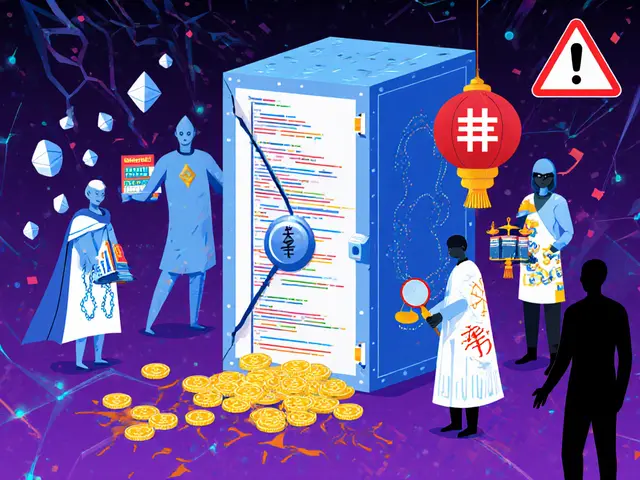
Blockchain flips this model. Instead of storing your entire medical record on one server, the data is encrypted and broken into fragments. These fragments are distributed across a network of computers (nodes). Here is the kicker: even if someone hacks one node, they only get a useless piece of encrypted code. To read your data, they would need the cryptographic key held exclusively by you.
This process relies on two core technologies:
- Cryptographic Hashing: Every time data is added to the blockchain, it gets a unique digital fingerprint. If someone tries to alter a past record, the hash changes, alerting the entire network to the tampering attempt immediately.
- Smart Contracts: These are self-executing codes that enforce rules. For example, a smart contract might automatically grant a specialist access to your X-rays for 24 hours after you give permission, then revoke that access automatically. No human intervention needed.
Companies like MedChain and MedRec pioneered these permissioned platforms. They don’t store the actual heavy medical files on the chain but rather the pointers and permissions, keeping the system fast while maintaining security.
Patient Control and Zero Trust Architecture
The biggest game-changer for patients is the concept of "Zero Trust." In traditional IT, once you’re inside a hospital’s network, you might have broad access. In a blockchain system, trust is never assumed; it is always verified.
You hold the private keys to your health data. Think of these keys as digital signatures. When you visit a new doctor, you generate a temporary key for them. Once the appointment is over, that key expires. You decide who sees what, and for how long. This directly addresses the frustration many feel when they discover their insurance company or employer accessed their records without explicit consent.
This level of control also improves data accuracy. Since every change to a record requires verification through consensus mechanisms, false entries become nearly impossible. The Identity Management Institute notes that this collaborative verification significantly reduces the error rate found in current EHR systems, potentially saving lives by ensuring doctors make decisions based on correct data.

Interoperability: Breaking Down Silos
One of the most expensive problems in healthcare is interoperability. When you switch providers, your records often don’t follow you. You end up repeating blood tests, imaging scans, and medical histories because the new provider can’t access the old data securely.
Blockchain creates a universal language for data sharing. Because the ledger is distributed, all authorized parties see the same version of the truth. This is particularly valuable for:
- Clinical Research: Researchers can access anonymized, aggregated data from multiple institutions without compromising individual privacy.
- Insurance Claims: Smart contracts can automate claims processing, verifying treatment against policy terms instantly. This could save the industry up to $100 billion annually by reducing administrative overhead and fraud.
- Supply Chain Verification: Ensuring that medications and medical devices haven’t been tampered with during transport.
By 2026, we are seeing a convergence where blockchain integrates seamlessly with existing EHR systems. It doesn’t replace your hospital’s software; it acts as a secure bridge between disparate systems.

Challenges and Real-World Implementation
Despite the hype, implementing blockchain isn’t plug-and-play. It’s complex, expensive, and requires a cultural shift. Many healthcare organizations report a 3-to-6-month productivity dip during transition periods as staff learn new protocols.
Key challenges include:
- Integration Complexity: Legacy EHR systems were not built with blockchain in mind. Connecting them requires significant technical expertise and custom middleware.
- Scalability: Public blockchains can be slow. Healthcare needs high-frequency transactions. This is why most solutions use "permissioned" blockchains, which are faster but require strict governance.
- Key Management: If you lose your private key, you lose access to your data. While recovery methods exist, they add layers of complexity for non-tech-savvy patients.
- Regulatory Compliance: Navigating HIPAA (in the US) and GDPR (in Europe) is tricky. Blockchain’s immutability conflicts with GDPR’s "right to be forgotten." Solutions involve storing data off-chain and only keeping hashes on-chain, allowing the actual data to be deleted if requested.
However, the market is growing rapidly. From $1.1 billion in 2021, the blockchain healthcare market is projected to reach $5.7 billion by 2026. North American organizations are leading adoption, driven by increasing cyber threats and regulatory pressure.
| Feature | Traditional Centralized EHR | Blockchain-Based System |
|---|---|---|
| Data Storage | Single central server (single point of failure) | Distributed across multiple nodes |
| Access Control | Institution-controlled, often rigid | Patient-controlled via cryptographic keys |
| Tamper Evidence | Difficult to detect internal alterations | Immutable; any change is instantly visible |
| Interoperability | Poor; siloed systems | High; shared ledger across providers |
| Cost Efficiency | High administrative overhead for sharing | Automated via smart contracts, lower long-term costs |
The Future of Healthcare Data
We are moving toward a future where your health data is an asset you own, not a liability managed by corporations. By 2029, analysts predict blockchain will be standard practice for large healthcare organizations. We will likely see deeper integration with AI for automated fraud detection and IoT devices for real-time monitoring, all secured on a blockchain backbone.
The goal is simple: safer data, better care, and full transparency. While the technical hurdles remain, the direction is clear. Your health data belongs to you, and blockchain is finally giving you the tools to prove it.
Is blockchain healthcare data security compliant with HIPAA?
Yes, but with careful architecture. HIPAA requires protected health information (PHI) to be secure and accessible only to authorized individuals. Blockchain supports this through encryption and access controls. However, because blockchain is immutable, storing PHI directly on-chain can conflict with the "right to amend" or delete records. Most compliant systems store data off-chain (in secure cloud storage) and keep only encrypted hashes and access logs on the blockchain. This allows the actual data to be modified or deleted if required by law, while the audit trail remains intact.
What happens if I lose my private key?
Losing your private key means losing access to your data, similar to losing the password to a bank account with no reset button. However, healthcare blockchain implementations usually include multi-signature wallets or social recovery mechanisms. This means trusted entities (like family members or designated healthcare proxies) can help recover access. Some systems also integrate with identity management services that allow for secure key recovery processes without compromising the underlying security.
Can hackers still breach a blockchain system?
While the blockchain ledger itself is extremely resistant to hacking due to its distributed nature, the endpoints are vulnerable. Hackers may target the user’s device, the smart contract code (if there are bugs), or the off-chain storage where the actual medical files reside. Therefore, blockchain enhances security but does not eliminate the need for strong cybersecurity hygiene, such as two-factor authentication and regular software updates.
How much does it cost for a hospital to implement blockchain?
Implementation costs vary widely depending on the scale and existing infrastructure. Small clinics might pay tens of thousands for integration modules, while large hospital networks can spend millions for enterprise-wide deployment. Costs include software licensing, hardware upgrades, staff training, and consulting fees. However, these upfront costs are often offset by long-term savings in administrative efficiency, reduced fraud, and fewer data breach penalties.
Will blockchain replace Electronic Health Records (EHR)?
No, blockchain will not replace EHRs; it will enhance them. EHRs are necessary for clinical workflows and data entry. Blockchain acts as a secure layer on top of EHRs, facilitating interoperability and security. Think of EHRs as the books where data is written, and blockchain as the secure library system that manages who can read those books and ensures no pages are torn out or altered.




Michael Berggren
May 11, 2026 AT 11:18I’ve been thinking about this for a while now. The idea of owning your own health data feels like the next step in human autonomy 🌱 It’s not just about security, it’s about dignity. When you hold the keys, you hold the power. That’s beautiful to me.
Bridget Coogle
May 12, 2026 AT 13:08it sounds good but i worry about losing keys. my mom lost her phone once and we panicked for days. what if that happens with medical records? seems risky
Albert Lee
May 13, 2026 AT 07:52Bridget, I completely understand that fear! 😱 Losing access to your life’s history is terrifying. But think about the safety net being built into these systems. Multi-signature wallets mean you aren’t alone. You can have trusted people help you recover access. It’s not just tech, it’s community support woven into code. We are building a safer world together 💪
Shelby Cantu
May 13, 2026 AT 09:20the interoperability part is key. tired of repeating tests every time i switch doctors. blockchain fixes that gap instantly.
Gavin Wonnacott
May 13, 2026 AT 10:28This is absolute nonsense. You’re suggesting that untrained patients should handle cryptographic keys? Please. The average person can’t even reset their password without calling IT. Giving them control over immutable ledgers is asking for disaster. Your naivety is staggering. This isn’t sci-fi, it’s basic computer science 101. Don’t pretend otherwise.
Jan Gilmore
May 15, 2026 AT 06:05Gavin, you’re missing the point entirely. It’s not about raw cryptography skills; it’s about user interfaces abstracting the complexity. Look at how banking apps work now. People send millions daily without knowing RSA encryption. Blockchain healthcare will be the same. The backend handles the heavy lifting. The frontend is simple. Stop projecting your inability to adapt onto everyone else. The market is moving fast, and you’re left behind because you refuse to learn.
robert Whitehead
May 17, 2026 AT 04:56You people are so naive. HIPAA compliance is a nightmare on blockchain. GDPR right to be forgotten vs immutability. It’s a legal minefield. And don’t get me started on scalability. Public chains are too slow. Permissioned chains are just centralized databases with extra steps. This whole industry is a bubble inflated by venture capitalists who don’t understand medicine. Wake up.
Mike S
May 17, 2026 AT 05:56Oh look, another expert telling us why it won’t work. 🙄 Robert, spare us the lecture. The post clearly explains off-chain storage for GDPR. Maybe read before you type? And Gavin, stop whining. Tech evolves. You’ll still be using floppy disks in your mind while the rest of us move forward. Typical elitist tantrum.