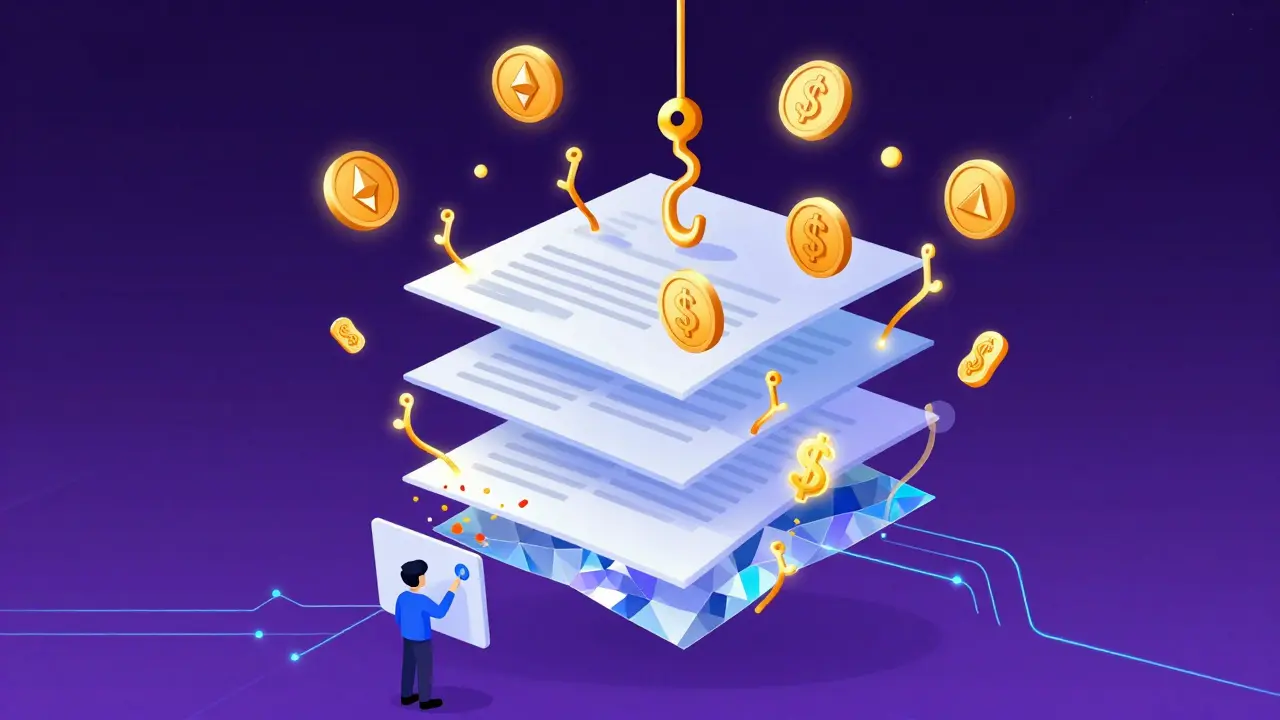
Uniswap v4 on Base isn’t just another upgrade. It’s the first time a decentralized exchange feels like a platform you can actually build on - not just use. Launched in January 2025, this version isn’t about tweaking numbers. It’s about rewriting the rules of how liquidity works, how trades execute, and who gets to control the logic behind them. And it’s live right now on Base, Coinbase’s low-cost Ethereum layer-2 chain, making it faster and cheaper than ever to trade crypto without a middleman.
What Makes Uniswap v4 Different?
Forget what you know about Uniswap v3. The old version still works fine, but v4 throws out the old model of one contract per trading pair. Instead, it uses a singleton contract - one single smart contract that runs every single pool. That sounds technical, but here’s why it matters: deploying a new trading pair used to cost hundreds of dollars in gas. Now? It costs less than a dollar. For developers, that means you can create niche tokens, experimental pairs, or even custom tokenomics without breaking the bank. The real game-changer? Hooks. Think of them like plugins for your trading pool. Want to automatically adjust fees when volatility spikes? Done. Want liquidity to auto-rebalance every hour? Hook it. Want to lock in rewards only for users who hold a certain NFT? That’s possible now. Over 150 hooks have already been built since launch. Some are simple. Others are wild - like pools that pay users in stablecoins just for holding liquidity during market dips.Why Base Matters
Base isn’t just another blockchain. It’s backed by Coinbase, which means it’s built for real people, not just crypto devs. Transactions on Base cost a fraction of what they do on Ethereum mainnet - often less than a penny. That’s huge for small traders and liquidity providers who were priced out before. And because Base is fully compatible with Ethereum tools, your MetaMask, your wallets, your dApps - they all work the same way. Uniswap v4 on Base isn’t a side project. It’s a strategic move. Coinbase wants to bring DeFi to its 110 million users. Uniswap v4 gives them the tools to do it without sacrificing decentralization. You’re not trading on a centralized exchange. You’re trading on a decentralized protocol that runs on a chain built for mass adoption.How Swaps Work Now - No More WETH
One of the most annoying things about older versions of Uniswap? You had to wrap ETH into WETH before swapping it for any token. That meant two transactions. Two gas fees. Two chances for something to go wrong. Uniswap v4 fixes that. Native ETH support means you can swap ETH directly for USDC, DAI, or any ERC-20 token in one click. No wrapping. No extra steps. Gas fees for ETH trades dropped by about 15%. For someone doing frequent swaps, that adds up fast. And then there’s flash accounting. This is a quiet revolution. In older versions, if you did a complex trade - say, swapping ETH for token A, then token A for token B - the system had to track every single intermediate step. That meant high gas costs for multi-step trades. Flash accounting ignores all the middle steps. It only charges you for the final result. If you’re swapping through multiple tokens, you could save 30-50% on gas compared to v3.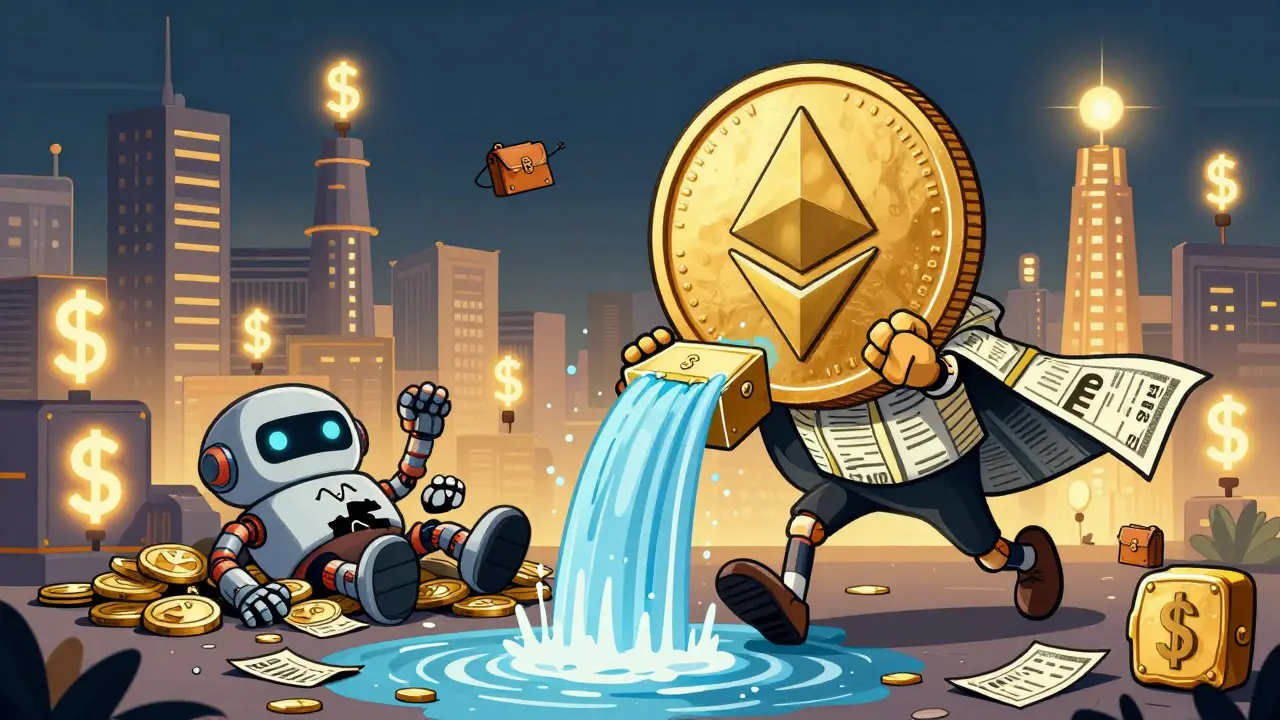
Who’s Using It - And Who Isn’t?
Early adopters are mostly developers and institutional players. Projects like Bunni, Angstrom, and Cork Protocol are already building custom pools on v4. These aren’t random experiments. These are teams building automated trading strategies, yield optimizers, and risk-managed liquidity products. They’re using hooks to create features that no centralized exchange can offer - because centralized exchanges can’t let users customize how the market works. For regular users? The interface hasn’t changed much. You still go to app.uniswap.org, connect your wallet, pick your tokens, and swap. It looks familiar. But behind the scenes, everything’s faster, cheaper, and more flexible. If you’re just swapping ETH for USDT, you won’t notice the difference - except your gas bill is lower. The people who lose out? Those relying on old DEXs like PancakeSwap or SushiSwap. They still use separate contracts for every pool. Their deployment costs are high. Their gas fees are higher. And they don’t have hooks. That means they can’t compete on customization. Uniswap v4 isn’t just better - it’s in a different category now.Is It Safe?
Security isn’t an afterthought here. Before launch, Uniswap v4 went through nine independent security audits. That’s more than any DeFi protocol in history. There was also a $15.5 million bug bounty program. Over 500 researchers tried to break it. Nothing stuck. And here’s the kicker: Uniswap has never been hacked. Not v1, not v2, not v3. And v4 inherits all the same code that’s handled over $2.75 trillion in trades. That track record matters. When you’re putting real money into a protocol, you don’t want to gamble on untested code.
What You Can’t Do Yet
Don’t expect a full-featured trading terminal. Uniswap v4 isn’t a replacement for Binance or Coinbase Pro. You can’t set stop-losses. You can’t do margin trading. You can’t short tokens. Those features are built into centralized exchanges - and they’re not coming to Uniswap v4. That’s by design. This isn’t a trading platform. It’s a liquidity infrastructure. Also, if you’re not a developer, you won’t be able to build your own hooks. The tools are still in early stages. Documentation exists, but tutorials, video guides, and easy-to-use hook builders aren’t ready yet. You’ll need Solidity skills and a deep understanding of EVM mechanics to create custom logic. And while Base is cheap, it’s not immune to congestion. During big market rallies, gas fees can spike - just not as high as on Ethereum mainnet.Should You Use It?
If you’re a trader who swaps crypto regularly - especially ETH for stablecoins or other tokens - yes. You’ll pay less in fees. You’ll get faster confirmations. And you’ll be using the most advanced decentralized exchange in existence. If you’re a liquidity provider, yes - but only if you’re comfortable with the risks. Custom hooks can optimize your returns, but they can also introduce new failure modes. A poorly coded hook could lock your liquidity or misprice your pool. Start small. Use existing hooks from trusted projects like Bunni or Angstrom before trying to build your own. If you’re a developer? This is your playground. The hook system is open. The tools are improving daily. And you’re building on top of the most trusted DeFi protocol ever created. This isn’t just another chain. It’s the future of decentralized finance.What’s Next?
The next few months will be about adoption. Will more projects migrate their liquidity from v3 to v4? Will wallets like Rainbow or Zerion add full v4 support? Will Coinbase integrate v4 into its app so millions of users can swap without leaving the platform? One thing is clear: Uniswap v4 isn’t just an update. It’s a new category. It’s no longer just a DEX. It’s a DeFi operating system. And Base is the fastest, cheapest, most user-friendly place to run it.Is Uniswap v4 on Base safe to use?
Yes. Uniswap v4 underwent nine independent security audits and had a $15.5 million bug bounty program before launch. It inherits the same codebase that handled over $2.75 trillion in trades across v2 and v3 - with zero successful hacks. While no system is 100% risk-free, v4’s security track record is unmatched in DeFi.
Do I need to wrap ETH to trade on Uniswap v4?
No. Uniswap v4 supports native ETH, meaning you can swap ETH directly for any ERC-20 token like USDC or DAI without converting it to WETH first. This cuts gas fees by about 15% for ETH trades and removes an extra step from every transaction.
Can I make custom trading rules on Uniswap v4?
Yes, but only if you’re a developer. Uniswap v4’s hook system lets you build custom logic for fees, liquidity, and trading rules - like auto-adjusting fees during volatility or rewarding users who hold specific NFTs. Over 150 hooks already exist, but creating your own requires Solidity knowledge and experience with EVM smart contracts.
Is Uniswap v4 better than Binance or Coinbase?
It’s not better - it’s different. Binance and Coinbase offer fiat on-ramps, customer support, and advanced trading tools like stop-losses and margin. Uniswap v4 offers decentralization, lower fees on ETH trades, and full customization through hooks. If you want control over how your trades execute, v4 wins. If you want ease of use and regulatory compliance, centralized exchanges still lead.
How do I start using Uniswap v4 on Base?
Go to app.uniswap.org, connect your MetaMask or other EVM wallet, and make sure your network is set to Base. You can swap tokens immediately. Liquidity provision is live. To see if you’re using v4, check the pool address - v4 pools are deployed under the singleton contract. The interface looks the same, but behind the scenes, you’re getting lower fees and faster trades.



Ashley Lewis
December 23, 2025 AT 00:14This is the kind of over-engineered complexity that turns DeFi into a tax audit with extra steps.
Hook systems are not innovation-they’re entropy masquerading as progress.
Real users don’t want plugins. They want to swap ETH for USDC and go about their day.
Uniswap v4 is the cryptocurrency equivalent of a Swiss watch with 47 gears just to tell the time.
It’s brilliant. And it’s useless.
Most of us don’t need a DeFi operating system.
We need a reliable ATM.
And we’re paying more in cognitive load than in gas fees.
Well done, architects of unnecessary complexity.
You’ve made decentralization a luxury good.
Tyler Porter
December 23, 2025 AT 10:58Hey hey hey, let’s not get carried away here!
Uniswap v4 is a game-changer, seriously!
Think about it-you can swap ETH directly now? No more wrapping? YES PLEASE!
And the hooks? Oh man, they’re like magic spells for liquidity!
I’ve seen pools that auto-rebalance when the market dips-so smart!
And Base? Cheaper than your coffee run!
Don’t let the haters scare you off!
This is the future, folks!
Just connect your wallet and go!
You’ll thank yourself later!
Trust me!
I’ve been doing this since 2021!
It’s not magic-it’s just better tech!
Try it today!
You won’t regret it!!
Rishav Ranjan
December 25, 2025 AT 06:11Same as v3. Just more gas fees for devs who think they’re building the next Bitcoin.
Real traders don’t care about hooks.
They care about price.
And slippage.
And speed.
This is noise.
Steve B
December 25, 2025 AT 23:31One cannot help but observe the tragic irony of decentralization being weaponized into a framework of hyper-specialized financial instrumentation.
What was once an open, permissionless frontier now demands cryptographic literacy as a prerequisite for participation.
Is this liberation-or exclusion dressed in smart contract silk?
When the tools to shape liquidity require mastery of Solidity, have we not replaced the bank with the professor?
And who, pray tell, shall be the student?
Not the grandmother in Lagos sending remittances.
Not the student in Manila trading with pocket money.
Only those who speak the language of the machine.
And so, the revolution becomes a seminar.
And the people? They remain on the sidelines, watching the code dance.
Is this progress?
Or merely the evolution of elitism?
Sophia Wade
December 27, 2025 AT 10:47There’s something profoundly poetic about Uniswap v4-it’s not just a protocol, it’s a canvas.
Every hook is a brushstroke; every liquidity pool, a living ecosystem.
It’s the difference between a highway and a garden-you can drive on either, but only one lets you plant flowers where you want them.
And Base? It’s the sunlit soil that makes it all bloom.
This isn’t just cheaper gas-it’s the quiet hum of financial autonomy, whispering through the EVM.
For the first time, liquidity isn’t a commodity-it’s a creative act.
And the most beautiful part? You don’t need to understand all of it to benefit from it.
Just like you don’t need to know how a violin is made to be moved by its song.
Let the builders build.
Let the traders trade.
And let the quiet revolution unfold, one gas-efficient swap at a time.
Brian Martitsch
December 28, 2025 AT 01:30Lmao v4 on Base? Cute.
Still can’t stop-loss.
Still can’t short.
Still can’t do anything real traders do.
It’s like buying a Lamborghini and only using it to go to the grocery store.
Hook system? Sounds like a plugin store for masochists.
Meanwhile, Binance does it all for 0.1% fee and customer service.
Y’all are so busy building castles in the blockchain that you forgot to invite the peasants.
Decentralized? More like elitist-ized.
😂
SHEFFIN ANTONY
December 29, 2025 AT 06:32Oh wow, Uniswap v4 is 'the future'? Please.
Everyone’s acting like this is the second coming of Satoshi.
Meanwhile, PancakeSwap has 10x the volume and 100x the users.
And you’re all excited about ‘hooks’?
Who asked for this?
Who voted for this?
Where’s the community governance?
Oh right-Coinbase quietly deployed it and now everyone’s clapping like trained seals.
It’s not innovation-it’s corporate colonization.
Uniswap was supposed to be anti-Coinbase.
Now it’s their mascot.
Pathetic.
And Base? More like ‘Base-ment’-where the real crypto goes to die quietly.
Vyas Koduvayur
December 30, 2025 AT 20:46Let’s unpack this properly, because most people are missing the structural implications.
Uniswap v4’s singleton contract isn’t just a technical upgrade-it’s a paradigm shift in state management on-chain.
By consolidating all pools into one contract, you reduce the EVM’s storage footprint by an estimated 60-70% per deployed pair, which means less bloating of the global state tree.
That’s huge for node operators and light clients.
But here’s the kicker: hooks are essentially stateful middleware, which means you’re now introducing external logic into the core execution path.
That’s a risk.
Not because of smart contract bugs-though those exist-but because of compositional complexity.
Imagine 10 hooks interacting across 500 pools during a flash crash.
What’s the gas cost then?
What’s the MEV exposure?
And who audits the hooks?
Most are open-source, sure-but who’s monitoring them in real time?
And if a hook misfires and drains liquidity-whose liability is that?
Uniswap’s core contract is immutable, but the hooks? They’re mutable, deployable, and often poorly documented.
So yes, it’s powerful.
But it’s also a minefield wrapped in a whitepaper.
And if you’re a retail user thinking this is ‘easier’-you’re deluding yourself.
It’s not easier.
It’s just more invisible risk.
And that’s the real danger.
Lloyd Yang
January 1, 2026 AT 13:31Okay, let me tell you why this matters so much, especially if you’ve ever been priced out of DeFi.
I used to trade on Ethereum mainnet back in 2021. Gas fees hit $200 to add liquidity to a new token. I cried. Not because I was broke-I was just exhausted.
Then I found Base. Suddenly, I could add liquidity for 10 cents. I started small-$50 here, $100 there.
Now I’m using Uniswap v4 hooks to auto-rebalance my LP positions during volatility spikes. I didn’t code it myself-I used a pre-built hook from Bunni. It’s like using a preset in Photoshop-no coding needed.
And the native ETH swap? Game over for WETH. I used to do two transactions just to trade ETH for USDC. Now it’s one click. One fee. One less thing to worry about.
And flash accounting? If you’re doing multi-hop trades, you’re saving 40% on gas. That’s like getting a free coffee every day for a year.
This isn’t just for devs. It’s for anyone who wants to participate without being taxed into silence.
Yes, there’s complexity under the hood.
But the interface? Still just as simple as it’s always been.
That’s the magic.
They made the hard stuff easy.
And that’s what real innovation looks like.
You don’t need to understand the engine to enjoy the ride.
Just connect your wallet. Swap. Breathe.
And thank the people who built this for us.
Jake Mepham
January 2, 2026 AT 09:06Uniswap v4 on Base isn’t just an upgrade-it’s the first time DeFi stopped pretending it’s for crypto bros and started being for humans.
Remember when you had to wrap ETH? I used to forget and lose $10 in gas trying to fix it.
Now? I just swap. Done.
And the hooks? I don’t need to build them. I just use them. Like apps on my phone.
One pool pays me in DAI just for holding liquidity during a crash. That’s not just yield-that’s emotional security.
Base isn’t just cheap-it’s friendly. It doesn’t feel like a lab. It feels like home.
And yes, centralized exchanges have stop-losses. But they also have KYC. They also have freeze buttons. They also have CEOs who can shut you down with a tweet.
Here? I control my money. No middleman. No ‘we’re sorry, your account is under review.’
This isn’t about being ‘better than Binance.’
This is about being free.
And that’s worth more than any fee discount.
If you’re still using PancakeSwap or SushiSwap? You’re not saving money.
You’re paying in trust.
And trust? It’s expensive.
Try v4 on Base.
Just once.
You won’t go back.
Ashley Lewis
January 4, 2026 AT 05:01How touching. A ‘human’ DeFi.
Yet still requires a wallet.
Still requires seed phrases.
Still requires understanding ‘liquidity’ and ‘slippage’ and ‘hooks’.
Real humans don’t use wallets.
They use apps.
And they don’t care if it’s decentralized.
They care if it works.
And if it costs less than a coffee.
Uniswap v4 is not for humans.
It’s for people who romanticize complexity.
And that’s not progress.
That’s performance.