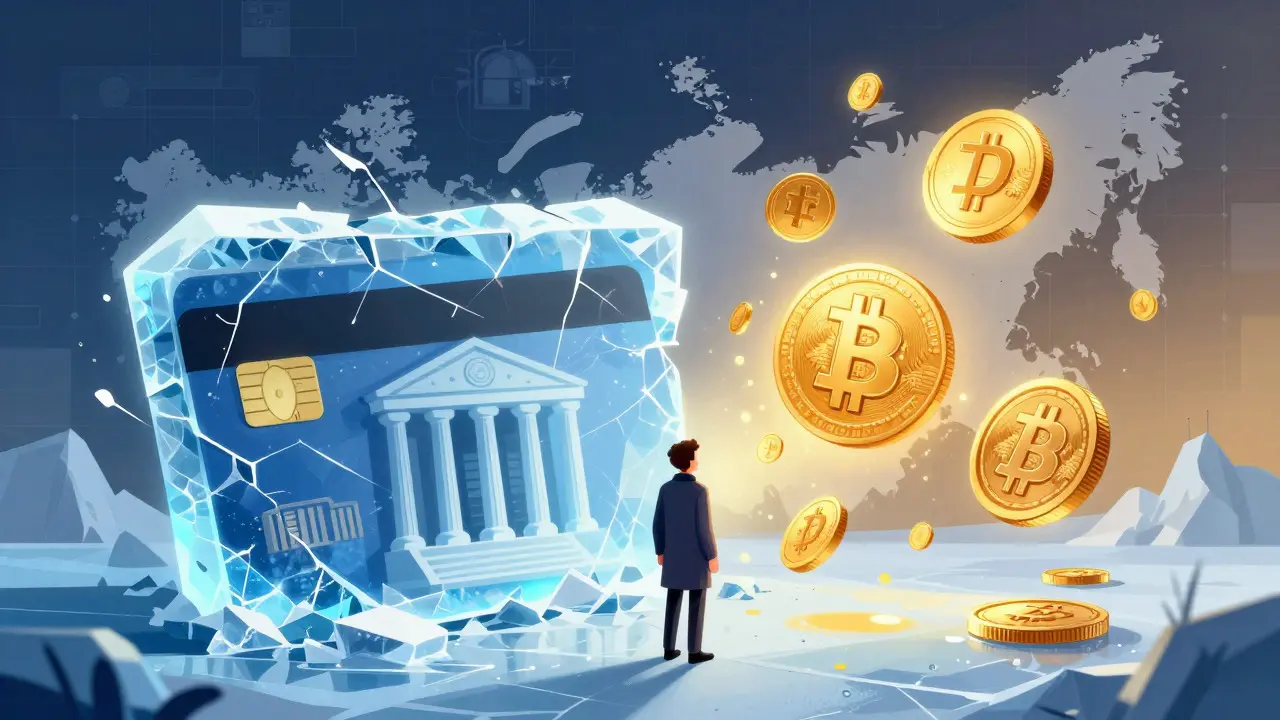
Imagine trying to pay an international contractor or buy software from abroad, only to find your bank account frozen because of geopolitical tensions. For millions of people in Russia, this isn't a hypothetical nightmare; it’s daily life. This reality has turned crypto adoption in Russia into one of the most dynamic and complex stories in the global financial landscape. While Western nations debate regulation, Russia is living through a forced experiment in digital finance.
As of mid-2026, approximately 20 million Russians-about 13.6% of the population-are actively using cryptocurrencies. That’s not just hobbyist trading; it’s survival strategy. The total value held in Russian crypto exchange wallets hit 827 billion rubles (roughly $10.15 billion) by March 2025. But here’s the twist: the government still technically bans you from buying coffee with Bitcoin. So how does this work? Let’s break down the mechanics, the restrictions, and why the system keeps growing despite the red tape.
The Paradox of Prohibition and Practice
Russia’s relationship with crypto is defined by a legal contradiction that would make any compliance officer sweat. The Federal Law "On Digital Financial Assets" (No. 259-FZ), which took effect on January 1, 2021, allows citizens to own cryptocurrency as a type of property. You can hold it, sell it for rubles, and even mine it. However, the same law explicitly prohibits using crypto as a means of payment for goods and services within the country.
This creates a bizarre ecosystem. You can’t pay your landlord in Ethereum, but you can use it to settle a debt with a supplier in Vietnam. According to Statista’s September 2025 merchant adoption survey, less than 0.5% of Russian businesses accept cryptocurrency directly. Compare that to the global average of 3.5%, and you see the gap. The restriction isn’t about preventing ownership; it’s about protecting the Ruble’s status as the primary domestic currency while allowing capital to flow out when traditional channels are blocked.
Deputy Finance Minister Ivan Chebeskov acknowledged this tension in October 2025, stating that the state must address crypto to "secure economic and technological benefits." It’s a pragmatic shift. The government realized they couldn’t ban what had become essential infrastructure for cross-border trade. Now, the focus is shifting from suppression to controlled integration.
Why Russians Turned to Crypto: The Sanctions Factor
To understand the surge in adoption, you have to look at the timeline. Before 2022, crypto was a niche interest in Russia. After the invasion of Ukraine and the subsequent wave of international sanctions, everything changed. SWIFT disconnections and frozen bank accounts left businesses and individuals stranded. Crypto became the lifeboat.
Chainalysis’ 2025 Global Crypto Adoption Index ranks Russia #10 globally. More importantly, it ranks #4 in institutional centralized service value received. This tells us that big players aren’t just dabbling; they’re relying on it. Senior Economist Sarah Manshaei noted that Russia’s high institutional ranking reflects "sophisticated use cases emerging despite regulatory constraints," particularly in cross-border transactions.
Consider the experience of small business owners. A user known as 'TechExportRU' shared in a Telegram community with over 15,000 members that switching to USDT stablecoin payments for exporting software to Southeast Asia cut their transaction costs by 40%. Traditional wire transfers were taking 3-5 business days and costing 3-5% in fees. Crypto settled in 10-15 minutes for under 0.5%. When your livelihood depends on getting paid, those margins matter.
| Feature | Traditional Wire Transfer | Cryptocurrency (e.g., USDT/Bitcoin) |
|---|---|---|
| Processing Time | 3-5 Business Days | 10-15 Minutes |
| Transaction Fees | 3-5% | 0.1-0.5% |
| Accessibility (Post-2022) | Limited/Blocked for many entities | Highly Accessible via P2P |
| Regulatory Risk | Low (within sanctioned banks) | Medium (account freezes possible) |
The Regulatory Tightrope: What’s Allowed and What’s Not
Navigating Russian crypto laws requires reading between the lines. The "On Digital Financial Assets" law is the cornerstone, but it’s vague on enforcement. Here’s what you need to know if you’re operating in or with Russia:
- Ownership is Legal: You can hold Bitcoin, Ether, or stablecoins. They are treated as digital rights rather than money.
- Paying for Goods is Illegal: If you try to buy a car or groceries with crypto, you’re breaking the law. Merchants who accept it risk fines.
- Taxation Exists: Income from crypto sales is taxable. The tax rate aligns with standard income tax brackets (13-15%), but reporting mechanisms are still being refined.
- Banking Integration is Emerging: In October 2025, Bank of Russia official Vladimir Chistyukhin announced plans to allow banks to handle crypto transactions under "strict capital and reserve requirements." This is a massive shift. It suggests that by late 2026, we might see regulated on-ramps and off-ramps through major banks like Sberbank or VTB, though likely with heavy monitoring.
The risk remains high. During the Bank of Russia’s March 2025 compliance review cycle, 28% of surveyed users reported having their accounts frozen temporarily. One user, 'SberbankCryptoUser', lost 250,000 rubles in potential market gains after a three-week freeze during routine verification. The message from regulators is clear: "We’ll let you play, but we hold the keys to the gate."
How Russians Actually Use Crypto: The P2P Workaround
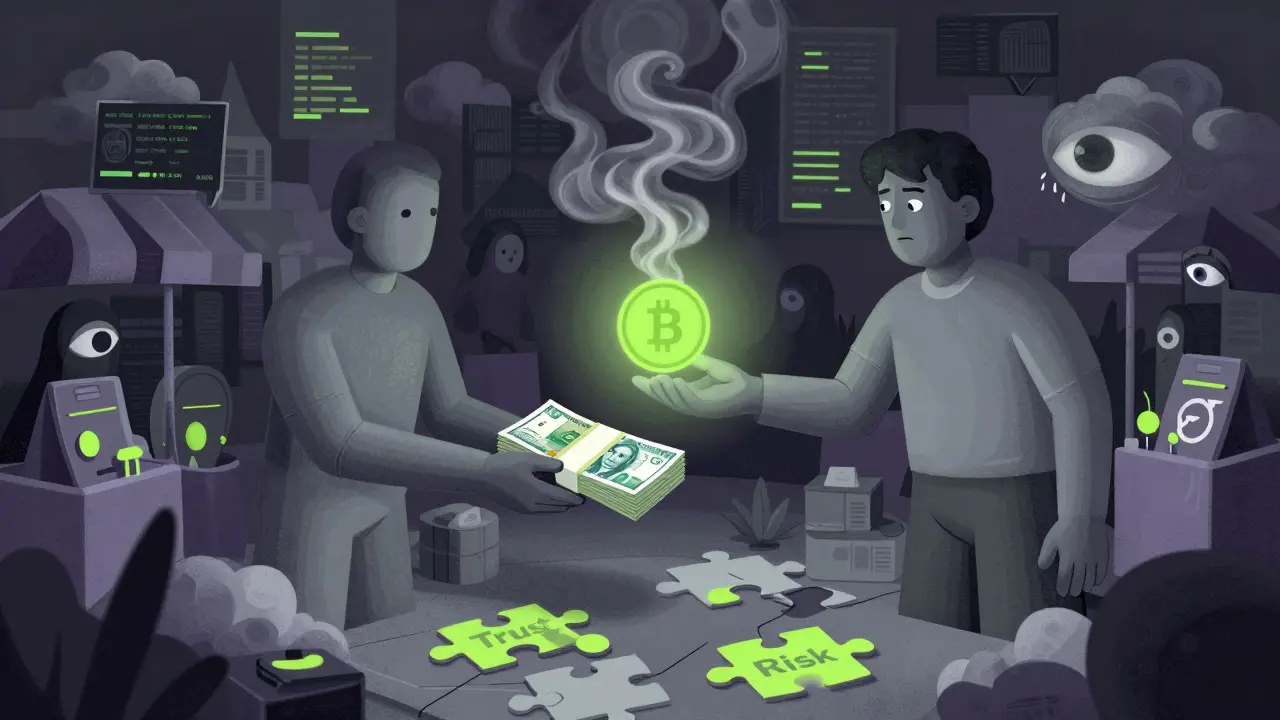
If merchants can’t accept crypto and banks are hesitant, how do transactions happen? The answer is Peer-to-Peer (P2P) markets. Platforms like Bybit, HTX, and local alternatives like EXMO have become de facto clearinghouses. Users don’t just swap crypto for fiat; they swap trust.
In a typical P2P transaction, a buyer pays a seller via a traditional bank transfer (often using non-sanctioned intermediaries or cash deposits), and the seller releases crypto from escrow. This method bypasses direct merchant acceptance laws because the final settlement is in Rubles, even if the underlying asset is digital. Reddit communities like r/RussianCrypto (over 12,000 members) are filled with tips on navigating these trades safely.
Stablecoins dominate this space. Data from the Bank of Russia shows that while Bitcoin holds 62.1% of wallet balances and Ether 22%, stablecoins like USDT and USDC make up 15.9%. Why? Because traders want volatility-free storage for their working capital. When the Ruble fluctuates, USDT provides a safe harbor. It’s not just speculation; it’s inflation hedging.
Infrastructure Challenges and Security Risks
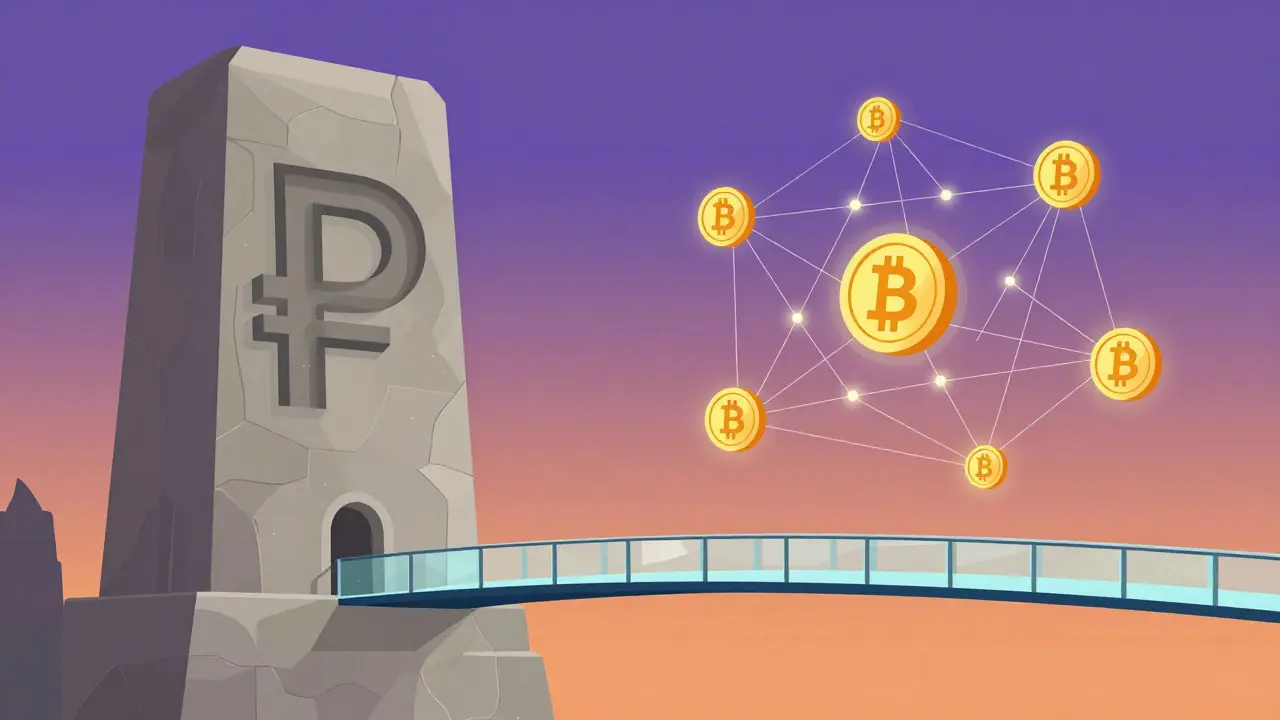
Adoption doesn’t mean ease of use. The Russian crypto infrastructure is fragmented. Major global exchanges like Coinbase or Binance often restrict access or face liquidity issues due to sanctions. Local platforms like Garantex were shut down by U.S. Treasury sanctions in 2022, forcing users to migrate to newer, less established domestic alternatives.
This fragmentation increases security risks. With fewer regulated centralized exchanges, users rely heavily on decentralized exchanges (DEXs) and self-custody wallets. While this gives users control, it also removes consumer protections. There’s no FDIC insurance for a hacked hardware wallet. According to FinProm Analytics, 68% of new users require external assistance during setup, highlighting a steep learning curve. A Moscow State University study estimated it takes 15-20 hours of study to comfortably manage wallets and understand regulatory constraints.
Fraud is also prevalent. Scammers target inexperienced users through fake Telegram support groups and phishing sites. Without strong legal recourse, victims often lose everything. This is why community trust scores matter so much on P2P platforms. A seller with 1,000 successful trades is safer than one with ten.
Future Outlook: Where Is Russia Headed?
The trajectory points toward greater formalization. The Bank of Russia scheduled a comprehensive survey of crypto investments between January 15 and February 28, 2026. This data will likely shape the next phase of legislation. Expect stricter KYC (Know Your Customer) rules and potentially a state-backed digital ruble (CBDC) to compete with private stablecoins.
Statista projects the Russian crypto market revenue to reach $2.3 billion in 2025, driven by institutional adoption and cross-border needs. Chainalysis predicts user growth to 23.5 million by end-2026. However, geopolitical risks remain. The U.S. Treasury Department has indicated "heightened scrutiny of Russian crypto activities," which could lead to further sanctions on mixing services or specific blockchain addresses.
For now, crypto in Russia is less about decentralization ideology and more about practical necessity. It’s a tool for preserving wealth, facilitating trade, and maintaining connectivity in an isolated economy. As regulations evolve, the line between underground utility and mainstream finance will continue to blur.
Is it legal to own cryptocurrency in Russia?
Yes, owning cryptocurrency is legal under the Federal Law "On Digital Financial Assets" (No. 259-FZ). Citizens can hold, buy, sell, and mine crypto. However, it is illegal to use cryptocurrency as a means of payment for goods and services within the country.
Can I use Bitcoin to pay for groceries in Russia?
Technically, no. Using crypto for domestic retail payments is prohibited by law. Less than 0.5% of Russian merchants accept crypto directly. Most transactions involving physical goods are settled in Rubles, with crypto used primarily for cross-border B2B transactions or personal savings.
How do Russians buy crypto if banks are restricted?
Most Russians use Peer-to-Peer (P2P) platforms where they pay sellers via bank transfer or cash, and receive crypto in return. Some also use local exchanges like EXMO or BitPrepay. As of late 2025, there are moves to allow major banks to handle crypto transactions under strict regulations, which may simplify this process soon.
What are the biggest risks for crypto users in Russia?
The main risks include sudden regulatory changes, bank account freezes during compliance checks, and fraud on unregulated P2P platforms. Additionally, the lack of consumer protection means that if a wallet is hacked or an exchange fails, recovering funds is difficult. Users must be vigilant about security and verify counterparty reputations.
Will Russia introduce its own digital currency?
Russia has been developing a Central Bank Digital Currency (CBDC) called the digital ruble. While private crypto adoption grows, the state aims to launch the digital ruble to maintain monetary sovereignty and monitor transactions. It is expected to coexist with private cryptocurrencies but serve as the primary state-backed digital payment method.


Lisa Chong
July 24, 2026 AT 23:27It is absolutely terrifying to think that the global financial system is being dismantled right under our noses by shadowy cabals who want total control over every penny you earn. The so-called 'sanctions' are merely a smokescreen for a deeper agenda to debase the currency and force people into digital slavery where the state can watch every transaction. They tell you it's about national security, but really it's about removing your last shred of economic freedom. I have seen the documents, or at least fragments of them, that prove this isn't just about Russia but a test case for the entire Western world. When they ban cash payments in Europe next, remember this moment as the beginning of the end. We are all just lab rats in their grand experiment. Trust no one, especially not the banks that freeze your assets on a whim.
Guy Davis
July 26, 2026 AT 23:18its basically theft plain and simple
KEITH WONG
July 27, 2026 AT 10:50look at the data though 📉 most people are just trying to survive not overthrow the government lol
Heather Austin
July 28, 2026 AT 10:46i mean from a purely technical standpoint the p2p markets are fascinating because they essentially create a parallel banking system that operates outside traditional regulatory frameworks which is both brilliant and incredibly risky for users who dont understand the mechanics well enough to protect themselves from scams or frozen accounts
Ran Tao
July 29, 2026 AT 15:21Oh please spare me the 'survival' narrative 🙄 It's not survival it's opportunism masked as necessity. These aren't helpless victims they're savvy operators gaming the system while the rest of us suffer through inflation caused by their geopolitical blunders. The elites in Moscow are laughing all the way to the bank while the little guy gets burned by volatility. Typical. Always typical. 😒
Natalie Lucas
July 30, 2026 AT 21:42you guys are missing the point entirely!! its about resilience and finding new ways to connect when old systems fail. imagine having the power to send money anywhere instantly without asking permission from some bureaucrat in a suit. that is empowering and we should be celebrating that innovation not tearing it down with cynicism
Hamza k
July 31, 2026 AT 12:21The sheer audacity of the state trying to dictate how value moves is nothing short of draconian theater. They cling to the ruble like a drowning man clutching driftwood while the tide of digital finance washes away their relevance. It is a spectacular display of hubris meeting reality.
Steven Briggs
August 1, 2026 AT 22:18i guess it makes sense if you look at the timeline
Curtis Johnson
August 2, 2026 AT 12:53we need to find common ground here because blaming individuals for systemic issues only divides us further. yes there are risks and yes there are bad actors but the core desire for financial autonomy is something many of us can empathize with regardless of politics. let's focus on education and safety rather than fear mongering or elitist dismissals
Kim Kay
August 2, 2026 AT 23:18it is important to remember that behind every statistic there is a real person trying to pay their bills or support their family. the learning curve is steep and the stakes are high so we should approach this topic with compassion and a willingness to help others navigate these complex waters safely