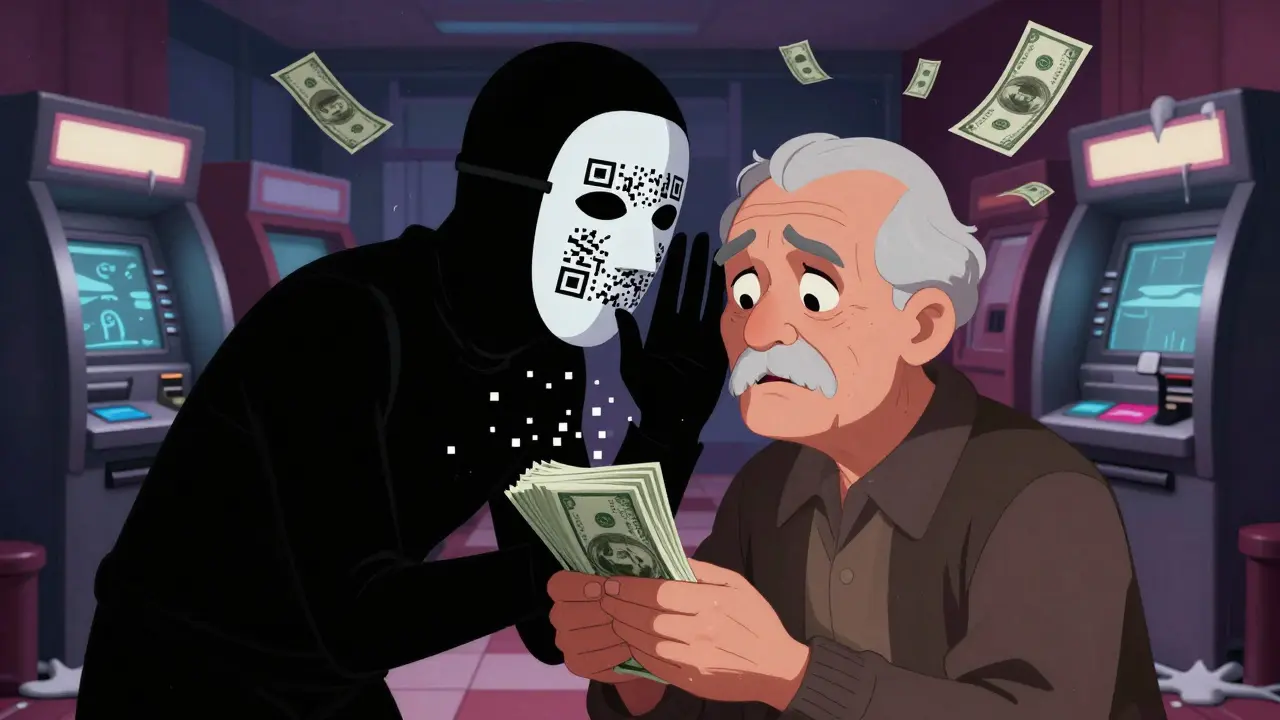
You walk up to a machine in the mall. You insert cash. You scan a QR code. In seconds, you’ve bought Bitcoin. It feels like magic-fast, private, and easy. But for more than 10,000 Americans in 2024 alone, that convenience came with a devastating price tag.
The numbers are staggering. According to the FBI’s Internet Crime Complaint Center (IC3), victims lost $246.7 million through cryptocurrency ATM (crypto ATM) scams last year. That is not a typo. The majority of these victims were seniors over 60, targeted by sophisticated social engineering tactics that exploit the irreversible nature of blockchain transactions.
This isn’t just about bad luck. It’s a systemic failure where technology outpaced regulation, security was an afterthought, and criminals found a loophole they couldn’t resist. As we move into 2026, new laws and federal warnings are changing the landscape. Here is what you need to know to protect yourself and your family.
The Anatomy of a Crypto ATM Scam
To understand why losses are so high, you have to look at how these machines work compared to traditional ATMs. A standard bank ATM is heavily regulated. If someone steals your card or drains your account, there are layers of protection, insurance, and reversal mechanisms.
Crypto ATMs operate differently. They are often classified as Money Services Businesses (MSBs) but many operators fail to follow Bank Secrecy Act (BSA) obligations. This means no customer identification, no transaction monitoring, and rarely any suspicious activity reporting. For a scammer, this is paradise.
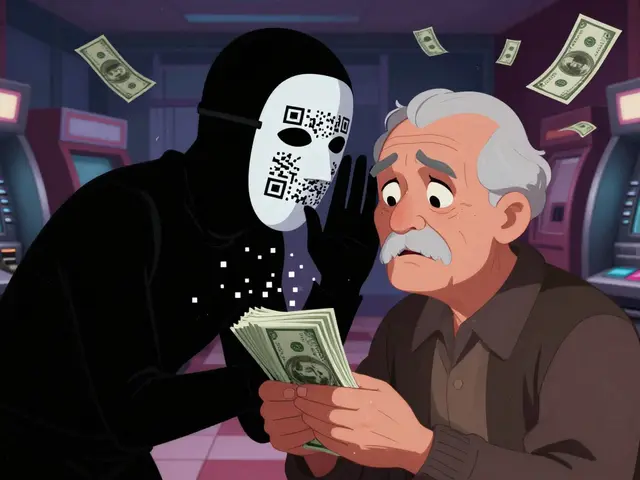
The most common scam is the "Grandparent Scam" or "Romance Scam." A criminal contacts a victim via phone or text, pretending to be a grandchild in jail or a romantic partner in trouble. They demand immediate payment via Bitcoin because it’s “private” and “can’t be traced.” The victim rushes to the nearest kiosk, inserts hundreds or thousands of dollars, and sends the funds to the scammer’s wallet.
Once those coins leave the machine, they are gone. Blockchain transactions are immutable. There is no chargeback button. There is no customer service hotline to reverse the transfer. The money vanishes into the digital ether, often mixed through tumblers to hide its origin.
| Feature | Traditional ATM | Crypto ATM |
|---|---|---|
| Regulation | Strict Federal Oversight (FDIC) | Largely Unregulated / Fragmented State Laws |
| ID Verification | Required (PIN/Card) | Often None (Cash Insertion Only) |
| Reversibility | Yes (Fraud Protection) | No (Immutable Blockchain) |
| Transaction Limits | Daily Withdrawal Caps | Variable; Often High for Verified Users |
| Fraud Reporting | Mandatory Suspicious Activity Reports | Inconsistent Compliance |
Who Is Getting Hurt? The Senior Vulnerability
The data reveals a painful trend. More than two-thirds of crypto ATM fraud victims in 2024 were over the age of 60. This represents a 99% increase in complaints from this demographic compared to previous years. Why seniors?
It’s not about intelligence. It’s about trust and isolation. Older adults are often taught to respect authority figures on the phone. When a caller claims to be from the IRS, the police, or a tech support company, they comply. Scammers leverage this deference. They create urgency-“You must pay now or go to jail”-which bypasses logical thinking.
Arizona serves as a stark example. In 2024, Arizona residents lost $177 million to cryptocurrency fraud. Scottsdale police reported $5 million lost in a single year, while families in Peoria lost nearly $1 million the prior year. These aren’t isolated incidents; they are part of a coordinated epidemic targeting vulnerable communities.
Nancy LeaMond, AARP’s executive vice president, noted that lawmakers across the political spectrum are finally recognizing this crisis. “In state after state, AARP found lawmakers... eager to work on commonsense rules that balance innovation and consumer safety,” she said. The bipartisan concern highlights that this is a public health issue, not just a financial one.
Technical Flaws: It’s Not Just Social Engineering
While scammers use psychological tricks, the machines themselves are also vulnerable to technical exploitation. Security researchers have uncovered critical flaws in popular hardware models.
In March 2024, IOActive security researcher Gabriel Gonzalez published findings on the Lamassu Douro Bitcoin ATM, a widely used model. He identified multiple critical vulnerabilities, including CVE-2024-0674. This flaw allowed an unprivileged user to gain root execution on the ATM simply by creating a malicious file and triggering an update process.
What does this mean in plain English? A hacker could physically approach the machine, inject malware, and take full control of the system. They could steal user data, intercept transactions, or install spyware. Similar issues may persist in newer versions of software, suggesting that manufacturers prioritize speed-to-market over rigorous security auditing.
James Wyler, President of Trusted Security Solutions, points out that crypto ATM security is part of a broader fintech challenge. With the rise of quantum computing threats, even current encryption methods may become obsolete soon. Until then, basic vulnerabilities like those in the Lamassu systems leave users exposed to both social engineers and technical hackers.
The Regulatory Crackdown: What’s Changing in 2025-2026
The era of the wild west is ending. The U.S. Department of Treasury’s Financial Crimes Enforcement Network (FinCEN) issued Notice FIN-2025-NTC1 on August 4, 2025. This formal warning tells banks and credit unions: watch out for crypto ATM deposits. FinCEN emphasized that illicit actors, including transnational criminal organizations, are increasingly using these kiosks to launder money.
FinCEN provided specific red flag indicators for financial institutions:
- Sudden spikes in deposits from customers who previously had little activity.
- Customers who seem coached or read scripts during interactions.
- Deposits made immediately after receiving instructions from third parties.
At the state level, Arizona led the way with groundbreaking legislation. The new Cryptocurrency Kiosk License Fraud Prevention law imposes strict limits:
- Daily Transaction Limits: Reduced to $2,000 per day for new customers and $10,500 for existing ones.
- Enhanced Warnings: Operators must display clear, unavoidable warning screens that customers must acknowledge before proceeding.
- Refund Mechanisms: Operators are required to issue full refunds, including fees, to new customers who report fraud within 30 days of the transaction.
As of 2025, at least 40 states introduced legislation regarding digital assets, with 11 passing laws specifically targeting crypto ATMs. This regulatory patchwork is tightening, making it harder for scammers to operate freely.
How to Protect Yourself and Your Family
Until regulations fully catch up everywhere, personal vigilance is your best defense. Here is a practical checklist to avoid becoming another statistic.
- Never Send Crypto Under Pressure: If someone calls you claiming to be from the government, police, or a tech company and demands payment in Bitcoin, hang up. Legitimate agencies never demand payment via cryptocurrency.
- Talk to a Trusted Person: Before using a crypto ATM, especially for large amounts, call a child, spouse, or friend. Scammers rely on secrecy. Breaking that silence stops the scam.
- Check the Machine’s Location: Be wary of machines in obscure locations like empty strip malls or parking garages. Legitimate operators usually place kiosks in high-traffic, secure areas.
- Start Small: If you are new to crypto ATMs, start with a small amount ($20-$50) to test the process. Do not insert your life savings based on a stranger’s instruction.
- Know the Fees: Crypto ATMs charge exorbitant fees, often 10-20% higher than exchanges. This is a business model, not a charity. Be aware of what you are paying.
If you suspect you have been scammed, act fast. Contact your local police department and file a report with the IC3 at ic3.gov. While recovery is unlikely, reporting helps law enforcement track patterns and shut down operations.
The Future of Crypto Access
The goal isn’t to ban crypto ATMs. They provide valuable access to decentralized finance for people without bank accounts. However, the current model is broken. The combination of technological vulnerabilities, regulatory gaps, and irreversible transactions creates a perfect storm for crime.
Industry analysts note that scammers prefer cryptocurrency precisely because it lacks the protections of other payment forms. The solution lies in balancing accessibility with security. This means stricter licensing, mandatory cooling-off periods for first-time users, and better technical standards for hardware manufacturers.
For consumers, the message is clear: if it sounds too good to be true, or if you’re being rushed into a decision, it’s a scam. The $246 million lost in 2024 is a wake-up call. Let’s make sure we don’t add to that number in 2026.
Can I get my money back if I’m scammed at a crypto ATM?
Generally, no. Because cryptocurrency transactions are irreversible on the blockchain, once the funds are sent to the scammer’s wallet, they cannot be retrieved by banks or exchanges. Some states, like Arizona, now require operators to refund new customers within 30 days if fraud is reported, but this is not universal. Always check local laws before using a kiosk.
Are crypto ATMs legal?
Yes, crypto ATMs are legal in most U.S. states, but they are subject to varying degrees of regulation. Many states require operators to hold licenses and comply with Anti-Money Laundering (AML) laws. However, enforcement has historically been weak, leading to the current scam epidemic. New laws in 2025-2026 are tightening these requirements significantly.
Why are seniors the primary target of crypto ATM scams?
Seniors are targeted due to social engineering tactics that exploit trust and fear. Scammers often pose as authority figures (police, IRS) or loved ones in distress. Older adults may be less familiar with cryptocurrency’s irreversible nature and more likely to comply with urgent demands. FBI data shows a 99% increase in complaints from victims over 60 in recent years.
What is FinCEN Notice FIN-2025-NTC1?
Issued in August 2025, this notice warns financial institutions about the rising risks of illicit activities linked to convertible virtual currency (CVC) kiosks. It provides red flag indicators to help banks identify suspicious deposits, such as sudden spikes in activity or customers appearing coached. It marks a federal acknowledgment of the systemic risks in the crypto ATM ecosystem.
Are crypto ATMs technically secure?
Not always. Security researchers have found critical vulnerabilities in popular models like the Lamassu Douro, allowing hackers to gain root access. While some operators improve security, many prioritize convenience over robust protection. Users should assume that the machine itself could be compromised, in addition to the risk of social engineering scams.