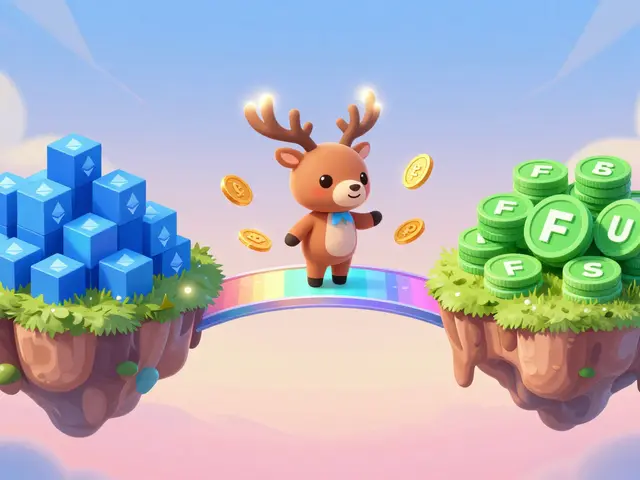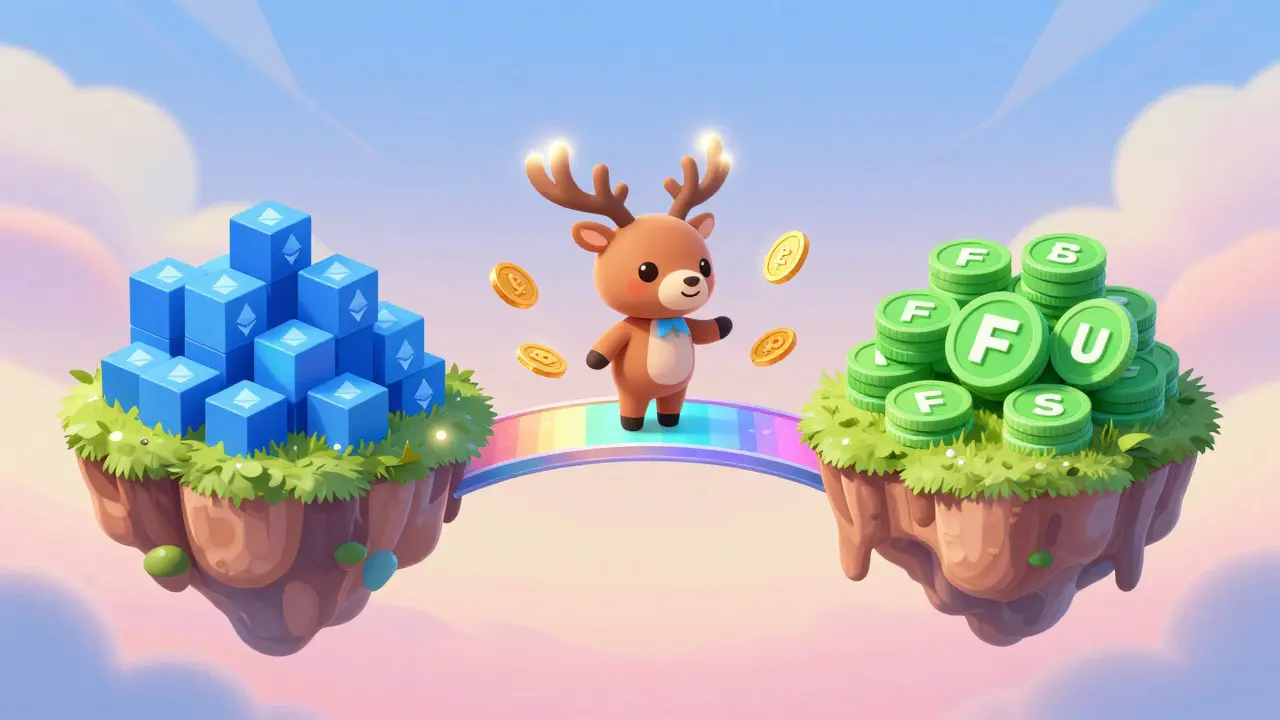
Have you ever tried to move crypto from one blockchain to another and felt like you were playing a game of hot potato? You send it here, wait for confirmations there, pay fees everywhere, and hope nothing gets stuck in the middle. That is exactly the problem Elk Finance is trying to solve. It positions itself as a cross-chain liquidity network and decentralized exchange (DEX) that lets you swap tokens across different blockchains without needing a centralized middleman.
But here is the catch. In the world of DeFi, "cross-chain" can mean many things. Some protocols are robust giants; others are experimental projects with thin liquidity. Elk Finance primarily operates on the Fuse blockchain, which is less crowded than Ethereum or Solana but offers its own set of advantages. Before you connect your wallet and stake your funds, we need to look under the hood. Does this platform actually deliver fast, secure swaps, or is it just another shiny new interface promising the moon?
What Exactly Is Elk Finance?
To understand if Elk Finance is right for you, you first need to know what it isn't. It is not a centralized exchange like Coinbase or Binance where you deposit money into an account controlled by a company. Instead, it is a protocol built on smart contracts. When you use Elk, you are interacting directly with code that executes trades automatically.
The core value proposition here is interoperability. Most DEXs are stuck on one chain. If you want to trade on Uniswap, you generally need to be on Ethereum (or its Layer 2s). If you want PancakeSwap, you usually go to BNB Chain. Elk Finance aims to bridge these gaps, allowing users to transfer value between networks including Ethereum, Fuse, Avalanche, and other compatible chains. The goal is seamless movement. You should be able to swap a token on one chain and receive the equivalent asset on another without manually bridging assets through multiple risky steps.
The platform’s native token, ELK, plays two roles. First, it acts as a utility token for transactions within the ecosystem. Second, and perhaps more importantly, it serves as a governance token. Holders can vote on how platform resources are allocated. This DAO (Decentralized Autonomous Organization) structure means the community, not a CEO, decides the future direction of the protocol. However, governance power only matters if people actually participate, which brings us to the question of adoption.
The Fuse Blockchain Connection
You might have noticed the title mentions "Fuse." Why does that matter? Elk Finance has chosen Fuse as its primary implementation hub. Fuse is often described as a high-performance, low-cost blockchain designed for everyday payments and consumer applications. Unlike Ethereum, which can suffer from congestion and gas fees that spike into the hundreds of dollars during busy periods, Fuse aims for speed and affordability.
By anchoring heavily on Fuse, Elk Finance targets a specific user segment: those who want quick, cheap transactions without the complexity of Layer 2 rollups or the volatility of mainnet Ethereum fees. For small-to-medium traders, this is a significant advantage. Imagine swapping $50 worth of tokens. On Ethereum, the gas fee might eat up 10% of your trade. On Fuse, via Elk Finance, that cost drops to fractions of a cent. This makes micro-trading and frequent portfolio adjustments viable rather than financially painful.
However, being tied to Fuse also limits immediate reach. While Elk claims cross-chain capabilities, the deepest liquidity pools are likely on Fuse. If you are holding assets exclusively on Solana or Polygon, you may still face friction entering the Elk ecosystem unless the cross-chain bridges are fully optimized and liquid. Always check which chains currently support direct swaps before committing funds.
User Experience and Interface
Let's talk about how it feels to use the platform. A great protocol is useless if the interface is confusing. Elk Finance provides a web-based trading interface that looks familiar to anyone who has used other DEXs. You select the token you have, choose the token you want, and click swap. Simple enough.
But simplicity can be deceptive. Here is what you need to watch out for:
- Wallet Compatibility: The platform integrates with major wallets like MetaMask and Trust Wallet. This is good news because you don't need to create a new account or download proprietary software. Just connect your existing wallet.
- Mobile Access: According to available data, Elk Finance supports mobile access, though the experience may vary compared to dedicated apps from larger competitors like PancakeSwap. Ensure your browser on iOS or Android handles Web3 connections smoothly.
- Speed: The platform advertises swap speeds within seconds. In practice, this depends heavily on the underlying blockchain's congestion. On Fuse, transactions are typically fast. On Ethereum, even if Elk facilitates the logic, the final settlement waits for Ethereum miners.
One area where Elk Finance seems to lag behind industry leaders is community visibility. Major DEXs thrive on active Discord servers, Twitter threads, and Reddit discussions where users share tips and report bugs. Search results for Elk Finance show limited user feedback on mainstream forums. This could mean two things: either the user base is small and quiet, or the community hangs out in private channels. As a user, lack of public discourse makes it harder to gauge real-world reliability.
Security and Risk Assessment
In DeFi, security is not a feature; it is the product. If the smart contracts have a bug, your money is gone. Period. There is no customer service line to call. So, how secure is Elk Finance?
Here is the hard truth: detailed security audit reports and Total Value Locked (TVL) metrics for Elk Finance are not prominently displayed in public sources. For a platform handling cross-chain transfers, this is a red flag you cannot ignore. Established protocols publish their audit results from firms like CertiK or Trail of Bits front and center. They show TVL to prove liquidity depth.
Without transparent audit data, you are operating on trust alone. Trust is fine in theory, but in crypto, verification is king. Before depositing significant capital, I recommend doing the following:
- Visit the official website (elk.finance) and look for a "Security" or "Audits" page.
- Check if the smart contract addresses are verified on block explorers like Etherscan or Fusescan.
- Start with a tiny amount. Test the swap process. Withdraw your funds. See if everything works as expected.
Cross-chain bridges are historically the most vulnerable points in DeFi. Hackers love targeting them because they hold large amounts of locked value. If Elk Finance uses third-party bridges, you inherit their risk profile. Make sure you understand which bridge technology powers the cross-chain swaps.
ELK Tokenomics and Governance
The ELK token is the lifeblood of the ecosystem. Its price performance recently showed a 9.40% increase over a seven-day period, slightly outperforming the broader market's 9.00% gain. While short-term price action is exciting, it doesn't tell you much about long-term viability.
What matters more is the utility. How is ELK used?
- Governance Voting: Holders vote on proposals. This includes decisions on fee structures, new chain integrations, and treasury spending.
- Liquidity Mining Rewards: The platform mentions "efficient dual-reward liquidity farming." This suggests that providing liquidity to Elk pools earns you rewards, likely in ELK tokens. This incentivizes users to keep the pools deep and stable.
However, "sustainable tokenomics" is a phrase that appears often in whitepapers but rarely holds up in bear markets. Ask yourself: Are the rewards inflationary? If the protocol prints new ELK tokens to pay farmers, the price dilutes. If the rewards come from transaction fees, the model is healthier. Without detailed documentation on the emission schedule, it is hard to judge the long-term value accrual for ELK holders.
How Elk Finance Compares to Competitors
No project exists in a vacuum. To make an informed decision, you need to compare Elk Finance against established players. Let's look at how it stacks up against PancakeSwap (the dominant DEX on BNB Chain) and centralized exchanges like Coinbase.
| Feature | Elk Finance | PancakeSwap | Coinbase (CEX) |
|---|---|---|---|
| Type | Decentralized (DEX) | Decentralized (DEX) | Centralized (CEX) |
| Primary Chain | Fuse (Cross-chain focus) | BNB Chain | Multi-chain (Custodial) |
| Custody | Non-custodial (You hold keys) | Non-custodial (You hold keys) | Custodial (They hold keys) |
| Fees | Low (Fuse network fees) | Low-Medium | High (Spread + Commission) |
| Security Transparency | Limited Public Data | Extensive Audits | Regulated Entity |
| Best For | Cross-chain experimentation, Fuse users | High-volume BNB trading | Fiat on-ramping, beginners |
As you can see, Elk Finance occupies a niche. It is not trying to beat PancakeSwap on volume or Coinbase on fiat ease-of-use. It is trying to win on cross-chain efficiency within the Fuse ecosystem. If you are already invested in Fuse or looking for low-fee alternatives to Ethereum L1 swaps, Elk makes sense. If you are a beginner wanting to buy Bitcoin with a credit card, stick to Coinbase.
Verdict: Should You Use Elk Finance?
So, is Elk Finance worth your time? It depends entirely on your goals. If you are a seasoned DeFi user comfortable with connecting wallets, managing gas fees, and understanding smart contract risks, Elk Finance offers an interesting toolset. Its focus on the Fuse blockchain provides a cost-effective environment for trading, and its cross-chain ambitions address a real pain point in the crypto space. The recent positive price action of the ELK token suggests some market confidence, but remember that price is not proof of quality.
However, if you are new to crypto, or if you plan to store large amounts of capital, proceed with extreme caution. The lack of readily available security audits and limited community presence are significant hurdles. In DeFi, obscurity can be dangerous. You want to be using platforms where thousands of eyes are watching for vulnerabilities.
My recommendation? Treat Elk Finance as a laboratory, not a vault. Use it to test cross-chain swaps with small amounts. Explore the Fuse ecosystem. Participate in governance if you hold ELK. But do not park your life savings here until you see more transparency regarding security audits and deeper liquidity metrics. The potential is there, but the proof needs to be stronger.
Is Elk Finance a centralized or decentralized exchange?
Elk Finance is a decentralized exchange (DEX). It operates via smart contracts on the Fuse blockchain and other compatible networks, meaning you retain control of your funds in your own wallet (like MetaMask) rather than depositing them into a company-controlled account.
What is the ELK token used for?
The ELK token serves two main purposes: governance and utility. Holders can vote on protocol upgrades and resource allocation (DAO governance). Additionally, it is used within the ecosystem for transactions and potentially for earning rewards through liquidity farming.
Which blockchains does Elk Finance support?
Elk Finance primarily operates on the Fuse blockchain. However, it is designed as a cross-chain liquidity network, aiming to support transfers and swaps between Ethereum, Avalanche, and other compatible networks. Always verify current supported chains on their official website before trading.
Is Elk Finance safe to use?
Like all DeFi protocols, Elk Finance carries inherent smart contract risks. While it aims for trustless operations, public information regarding independent security audits is limited. Users should exercise caution, start with small amounts, and ensure they understand the risks of cross-chain bridging before committing significant funds.
How do I get started with Elk Finance?
To use Elk Finance, you need a Web3-compatible wallet such as MetaMask or Trust Wallet. Fund your wallet with FUSE tokens or other supported assets, visit elk.finance, connect your wallet, and you can begin swapping tokens or providing liquidity. Ensure your wallet is configured to interact with the Fuse network if required.