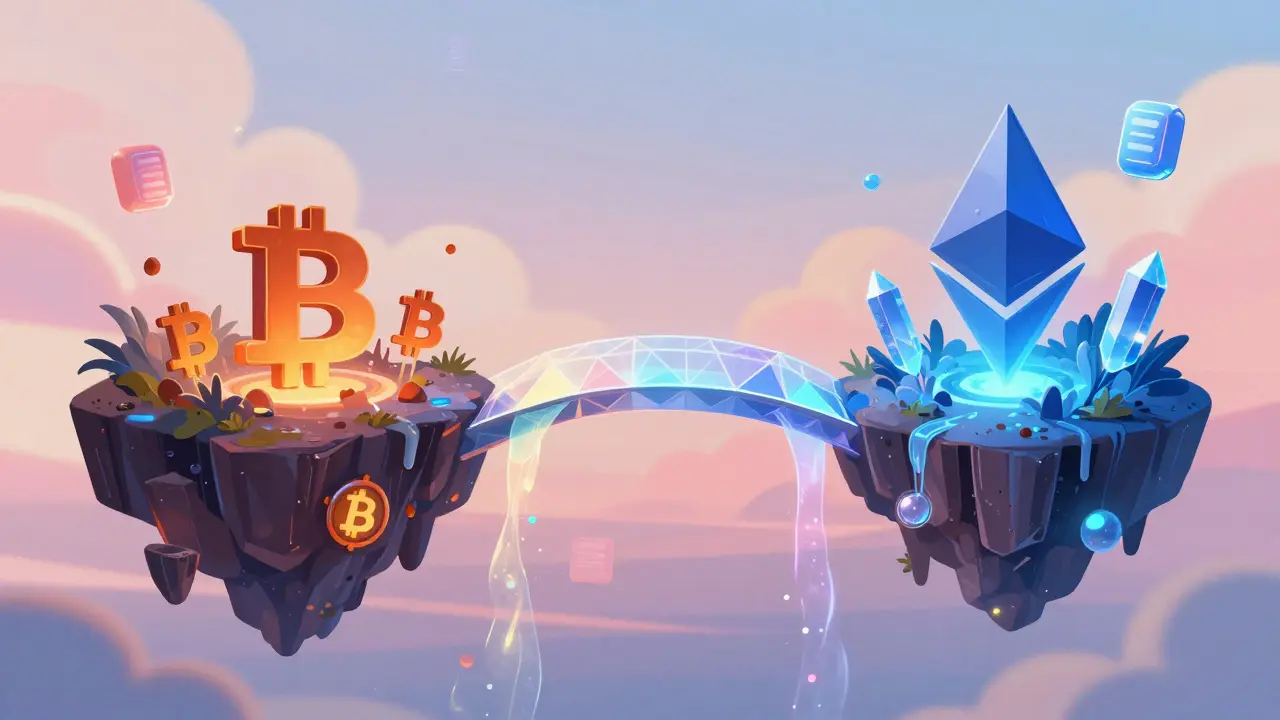
Imagine swapping Bitcoin for Ethereum without using a bridge, wrapping tokens, or handing your keys to a centralized middleman. That is the promise of Sifchain, an omni-chain decentralized exchange (DEX) designed to connect multiple blockchains directly through its native protocol. In a world where liquidity is often siloed across different networks, Sifchain aims to be the universal translator for crypto assets. But does it actually deliver on that vision, or is it just another ambitious project struggling with thin liquidity and technical hurdles?
If you are looking for a quick answer: Sifchain is a powerful tool for advanced users who want true cross-chain swaps without wrapping assets. However, for beginners or those trading low-cap altcoins, the experience can be frustrating due to slippage and complexity. Let’s break down exactly how it works, what the risks are, and whether it fits into your portfolio strategy in 2026.
What Exactly Is Sifchain?
To understand Sifchain, you first need to understand the problem it solves. Most decentralized exchanges operate on a single chain. Uniswap runs on Ethereum; PancakeSwap runs on BNB Chain. If you want to move assets between them, you traditionally have to use a bridge, which introduces security risks and delays. Or, you wrap your asset (like turning BTC into WBTC), which adds another layer of trust.
Sifchain uses a Cosmos-based architecture to create an omni-chain network where users can swap native assets from one blockchain to another directly. It supports major chains like Ethereum, BNB Smart Chain, Avalanche, Solana, Bitcoin, Polygon, and even Dogecoin. The core technology relies on liquidity pools combined with traditional order books, allowing for both instant market swaps and limit orders.
The native token of this ecosystem is ROWAN the governance and utility token used for staking, voting, and paying transaction fees within the Sifchain network.. You stake ROWAN to secure the network and participate in governance decisions via SifDAO. Without ROWAN, the engine doesn’t run.
How Cross-Chain Swaps Actually Work
The magic happens in the backend, but the user experience should feel seamless. Here is the step-by-step process when you execute a swap:
- Select Assets: You choose the asset you want to send (e.g., native Bitcoin) and the asset you want to receive (e.g., native Ethereum).
- Lock and Mint: When you initiate the trade, your Bitcoin is locked in a multi-signature vault on the Bitcoin network. Simultaneously, the Sifchain network mints a representation of that value on its own chain.
- Execute Swap: The swap occurs on the Sifchain layer against existing liquidity pools. Because these pools contain real assets from various chains, you get the actual Ethereum you requested, not a wrapped version.
- Unlock and Send: The system unlocks the equivalent amount of Ethereum from the Ethereum-side vault and sends it to your wallet.
This process eliminates the need for wrapped tokens, reducing counterparty risk. However, it does introduce latency. While single-chain swaps take seconds, cross-chain swaps on Sifchain historically took 15-20 minutes. Recent upgrades aim to reduce this to under two minutes, but patience is still required.
Pros and Cons: The Honest Truth
No platform is perfect. Before you deposit funds, weigh these factors carefully.
| Feature | Details | Verdict |
|---|---|---|
| Asset Variety | Supports BTC, ETH, SOL, AVAX, DOGE, and more natively. | Excellent |
| Liquidity Depth | Deep for major pairs (BTC/ETH); thin for altcoins. | Mixed |
| User Experience | Steep learning curve; requires understanding of gas fees on multiple chains. | Difficult for Beginners |
| Security | Non-custodial; uses commitment-reveal scheme to prevent front-running. | Strong |
| Speed | Cross-chain finality takes minutes, not seconds. | Slow |
The biggest advantage is sovereignty. You keep control of your private keys, and you trade native assets. The biggest disadvantage is liquidity fragmentation. If you try to swap a small-cap token for Bitcoin, the slippage can be brutal because the pool isn't deep enough to absorb the trade without moving the price significantly.
Sifchain vs. Competitors: Who Wins?
You aren't limited to Sifchain. The omni-chain space is crowded. How does it stack up against rivals like THORSwap a leading non-custodial cross-chain DEX built on Thorchain technology. or ApeX Omni another emerging cross-chain liquidity solution.?
THORSwap is currently the market leader in terms of Total Value Locked (TVL). As of late 2023 data, THORSwap held over $800 million in TVL, while Sifchain hovered around $1.8 million. This massive difference matters. Higher TVL means deeper liquidity, which means better prices for traders. If you are trading large volumes, THORSwap or established aggregators might offer tighter spreads.
However, Sifchain offers unique features like limit orders and margin trading directly within the cross-chain environment. Most competitors only support market orders. If you are a trader who likes to set specific entry and exit points across chains, Sifchain’s adaptive automated market makers (AMMs) give you tools that others don’t.
The ROWAN Token: Investment or Utility?
Every DEX has a token. For Sifchain, it’s ROWAN. Its value proposition rests on three pillars:
- Governance: Holders vote on protocol changes, fee structures, and new chain integrations.
- Staking Rewards: Validators and delegators earn rewards from transaction fees.
- Fee Payment: Some transactions require ROWAN to cover costs.
Price predictions for ROWAN vary wildly. Some analysts see potential for significant growth if Sifchain captures even a fraction of the cross-chain volume. Others point out that the token has underperformed the broader market, dropping nearly 5% in a week while the global market rose 3.5%. Remember, high-risk DeFi tokens can be volatile. Always do your own research (DYOR) before buying governance tokens based solely on utility promises.

Is Sifchain Safe? Security Risks Explained
Security is the top concern in DeFi. Sifchain employs a commitment-reveal scheme to protect users from front-running. This means when you place an order, you first submit a hashed version of the transaction. Only after the order is confirmed do you reveal the details. This prevents bots from seeing your intent and jumping ahead of you.
However, the multi-chain nature introduces bridge risks. Every time assets move between chains, they pass through smart contracts and validators. While Sifchain’s code has been audited, no system is immune to exploits. Additionally, regulatory uncertainty looms. The SEC and other bodies are scrutinizing cross-chain protocols. Governance tokens like ROWAN could face classification challenges, which might impact accessibility in certain jurisdictions.
Who Should Use Sifchain?
Sifchain is not for everyone. Here is who will benefit most:
- Advanced Traders: Those who understand gas fees, slippage tolerance, and cross-chain mechanics.
- Privacy-Conscious Users: People who want to avoid centralized exchanges (CEXs) and KYC requirements.
- Limit Order Enthusiasts: Traders who prefer setting specific prices rather than accepting market rates.
Avoid Sifchain if you are a beginner, if you need instant execution for day trading, or if you are trading obscure tokens with low liquidity. Stick to major pairs like BTC, ETH, and SOL for the best experience.
Getting Started: A Quick Guide
If you decide to try Sifchain, here is how to start safely:
- Set Up a Wallet: Ensure you have a compatible wallet like MetaMask or Keplr installed.
- Fund Your Wallet: Deposit native assets (e.g., BTC on Bitcoin network, ETH on Ethereum network). Do not use wrapped versions unless necessary.
- Connect to Sifchain: Visit the official interface and connect your wallet.
- Check Liquidity: Before swapping, look at the pool depth. If the slippage warning exceeds 1-2%, consider breaking the trade into smaller chunks.
- Execute and Wait: Confirm the transaction and wait for the cross-chain finalization. Do not close the window until the confirmation appears.
Start with small amounts to test the waters. Familiarize yourself with the interface and timing before committing larger capital.
Is Sifchain safe to use?
Sifchain is non-custodial, meaning you retain control of your private keys. It uses advanced security measures like commitment-reveal schemes to prevent front-running. However, all DeFi platforms carry inherent risks, including smart contract vulnerabilities and bridge exploits. Always verify URLs and start with small transactions.
What is the minimum amount to swap on Sifchain?
There is no strict minimum set by the protocol, but practical limits exist. You must cover gas fees on both the source and destination chains. For Bitcoin swaps, this means having enough BTC to pay mining fees. Typically, swaps under $10-$20 may not be cost-effective due to these fees.
How long do cross-chain swaps take?
Historically, swaps took 15-20 minutes. With recent consensus mechanism upgrades, the goal is to reduce this to under 2 minutes. Actual times depend on network congestion on the source and destination blockchains.
Can I use Sifchain on mobile?
Yes, Sifchain’s interface is web-based and responsive, making it accessible on iOS and Android devices via browsers. There is also integration with mobile wallets like Trust Wallet and Keplr for easier access.
Why is slippage high on some pairs?
Slippage occurs when there is insufficient liquidity in the pool for the size of your trade. Major pairs like BTC/ETH have deep liquidity and low slippage. Smaller or less popular pairs have thinner pools, causing larger price impacts for each trade.