Thinking about trading crypto in South Korea but wondering if Huobi (now known as HTX) is the right fit? You are not alone. The Korean market is unique-dominated by local giants like Upbit and Bithumb, with strict regulations that often leave global exchanges on the outside looking in. But here’s the twist: Huobi doesn’t operate a standalone "Huobi Korea" entity anymore. Instead, it operates globally under the brand HTX a major cryptocurrency exchange platform founded in 2013, serving users worldwide, including those in Asia.
If you are a Korean resident or trader looking at this platform, you need to know exactly what you’re getting into. Is it accessible? Does it support the Korean Won (KRW)? And how do its fees stack up against local competitors? Let’s cut through the noise and look at the real data.
The Rebranding: From Huobi to HTX
First things first: stop searching for "Huobi." In September 2023, the exchange rebranded to HTX. This wasn’t just a logo change; it signaled a shift toward a broader ecosystem beyond simple spot trading. Founded in 2013 by Leon Li, a former Oracle engineer, the platform has grown into one of the top 10 exchanges globally by volume. As of early 2025, it holds over $4 billion in total assets and serves more than 47 million users.
For Korean users, this matters because the platform is no longer just a "Chinese exchange." It has decentralized its operations, moving headquarters to Seychelles and expanding offices globally. However, unlike Upbit or Bithumb, HTX does not have a dedicated Korean subsidiary with a local license. This distinction is critical for understanding your legal standing and banking options.
Accessibility and Regulatory Status in Korea
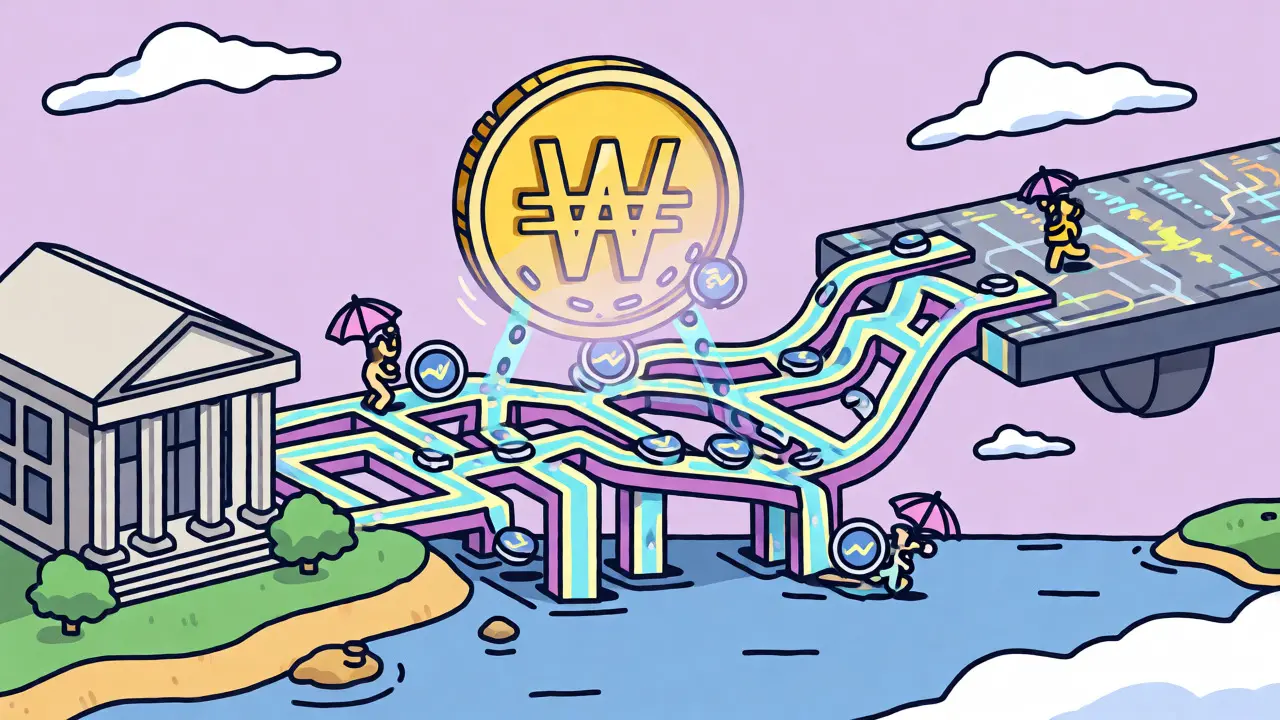
Here is the big question: Can you actually use HTX from Korea? Yes, but with caveats. South Korea enforces strict anti-money laundering (AML) laws and requires exchanges to partner with local banks for real-name verification accounts. HTX does not currently offer direct KRW fiat deposits via these local bank partnerships in the same seamless way Upbit does.
Instead, Korean traders typically use HTX for two main reasons:
- Access to Altcoins: Local Korean exchanges often list fewer coins. HTX supports over 700 digital assets and 1,000+ trading pairs, giving you access to tokens that aren’t available locally.
- Fiat On-Ramps: While direct KRW deposits might be limited or require third-party services, HTX supports 57 different local currencies and roughly 60 payment methods. Many Korean users deposit USDT (Tether) or other stablecoins purchased from local exchanges and then trade on HTX.
Be aware that regulatory pressure in Korea is high. If you are using HTX, ensure you understand the tax implications. Crypto profits are taxed in Korea, and since HTX is an offshore exchange, reporting requirements fall squarely on you.
Fees and Trading Costs Breakdown
Korean traders are price-sensitive. Why pay 0.25% on Upbit when you can find better rates elsewhere? HTX offers a competitive fee structure, but it works differently than the flat-rate models common in Korea.
| Feature | HTX (Global) | Typical Korean Exchange (e.g., Upbit/Bithumb) |
|---|---|---|
| Spot Maker Fee | 0.2% (Base), down to 0.0126% | 0.05% - 0.25% (Tiered) |
| Spot Taker Fee | 0.2% (Base), down to 0.0126% | 0.05% - 0.25% (Tiered) |
| Withdrawal Fee (BTC) | Variable, network-dependent | Fixed, often higher for foreign chains |
| Fiat Deposit (KRW) | Limited/Third-party | Free/Direct Bank Transfer |
Notice the potential savings. By leveling up in HTX’s VIP tier system-based on 30-day trading volume-you can slash fees significantly. For active day traders, dropping to 0.0126% is a massive advantage over the standard 0.2% base rate. However, if you are a casual buyer who only touches the market once a month, the hassle of managing tiers might outweigh the small fee difference.
Security and Trustworthiness
Is HTX safe? Historically, yes, but with scars. The platform experienced a security breach in 2019, losing approximately $280 million in hot wallet assets. Crucially, HTX covered these losses from its own reserves without suspending withdrawals. This move built significant trust among long-term users.
Today, HTX employs robust security measures:
- Cold Storage: The vast majority of user funds are kept offline.
- Merkle Tree Proof of Reserves: Users can verify that the exchange holds enough assets to cover all balances. This transparency aligns with global best practices post-FTX collapse.
- Two-Factor Authentication (2FA): Mandatory for withdrawals and sensitive actions.
While HTX is not licensed by the Financial Services Commission (FSC) of Korea directly, it complies with international standards. For Korean users, this means you are trading on a regulated global platform, but you lack the direct consumer protection guarantees provided by FSC-regulated local entities.
User Experience and Features
The interface is where HTX shines for power users. The mobile app and desktop dashboard are sleek, fast, and highly customizable. Unlike some clunky global platforms, HTX offers a clean UI that supports English, Chinese, and other languages. Korean language support may vary depending on the region setting, so check the current app version for full localization.
Beyond basic spot trading, HTX offers advanced features that appeal to sophisticated Korean traders:
- Copy Trading: Mirror the moves of successful traders automatically. This is great if you want exposure to altcoin pumps without doing the research yourself.
- Staking and Earn Products: Lock up your holdings to earn yield. Rates fluctuate, but they often beat traditional bank interest rates.
- OTC Desk: For whales moving large amounts of BTC or ETH, the Over-The-Counter desk prevents slippage.
One standout feature is the "Buy Crypto" section, which allows direct purchases of over 300 coins. While KRW integration isn’t native, using credit cards or third-party processors makes it surprisingly easy to enter the market.

Pros and Cons for Korean Users
Let’s summarize the decision matrix. Should you stick with Upbit or try HTX?
| Pros | Cons |
|---|---|
| Huge selection of altcoins (700+) | No direct KRW bank transfer integration |
| Lower fees for high-volume traders | Not FSC-licensed in Korea |
| Advanced tools (Copy trading, OTC) | Potential KYC complexity for new users |
| Proven track record of covering breaches | Customer support response times vary |
If you are a beginner who wants to buy Bitcoin with won straight from your KakaoBank account, stick to local exchanges. But if you are chasing the next meme coin or need deep liquidity for a specific pair, HTX opens doors that local platforms keep shut.
Final Verdict
Huobi Korea, now operating as part of the global HTX ecosystem, is a viable option for serious crypto investors in South Korea. It lacks the seamless fiat on-ramp of local competitors, requiring a bit more effort to move funds in and out. However, the trade-off is access to a wider universe of assets and potentially lower trading costs for active participants.
Start small. Test the withdrawal process. Verify the KYC requirements. Once you see how smooth the platform runs, you might find yourself keeping a portion of your portfolio there for the altcoin opportunities.
Does HTX support Korean Won (KRW) directly?
Direct KRW deposits are limited compared to local exchanges. Most Korean users purchase USDT on a local exchange like Upbit and then transfer it to HTX to trade for other cryptocurrencies. Some third-party services may allow card purchases in KRW, but direct bank transfers are not the primary method.
Is HTX safe to use in South Korea?
Yes, HTX is considered secure with cold storage and proof-of-reserves audits. However, it is not licensed by the Korean Financial Services Commission (FSC). This means while your assets are technically safe from hacks due to good security practices, you don't have the same local regulatory protections as you would with Upbit or Bithumb.
What are the fees for trading on HTX?
The base spot trading fee is 0.2% for both makers and takers. This can be reduced to as low as 0.0126% by achieving higher VIP levels based on your 30-day trading volume. Withdrawal fees vary by cryptocurrency and network congestion.
Why did Huobi change its name to HTX?
In September 2023, the company rebranded to HTX to reflect its expansion beyond just being an exchange. The new name represents a broader ecosystem including DeFi, NFTs, and Web3 infrastructure, marking its 10th anniversary and signaling a new phase of growth.
Can I use HTX if I am blocked from China?
HTX is not available in mainland China due to regulatory bans. However, it is fully operational in most other countries, including South Korea, though users must comply with local AML/KYC regulations. There are no geographic blocks preventing Korean residents from creating accounts.