Have you ever stumbled upon a cryptocurrency with a name that sounds like it belongs in a video game or a meme thread? That’s exactly what happens when you look up Degen Forest, a project built around its native MOOLA token. It’s not Bitcoin. It’s not Ethereum. And if you’re asking “what is this?” you aren’t alone. With a ticker symbol of MOOLA and a total supply capped at 600 million tokens, this ERC-20 coin has quietly made its way onto several exchanges, including XT Exchange, since mid-2024. But beneath the catchy branding lies a mix of bold promises, early-stage development, and serious speculative risk.
In this guide, we’ll break down what Degen Forest actually does, how the MOOLA token works, who’s behind it, and whether it’s worth your attention-or your money. We’ll also compare it to established players so you can see where it stands in the crowded crypto wallet space.
Key Takeaways
- Degen Forest is an early-stage crypto project centered on the MOOLA ERC-20 token, deployed on Ethereum.
- The token fuels a proposed all-in-one digital wallet called Degen Wallet, which aims to offer banking-like features for crypto users.
- Tokenomics include a deflationary burn mechanism: 33% of wallet fees are used to buy back and destroy MOOLA tokens.
- As of July 2026, MOOLA trades below $0.003, placing it firmly in the low-cap, high-risk category.
- No major institutional research firms cover MOOLA, and community activity remains limited compared to competitors like MetaMask or Trust Wallet.
What Exactly Is Degen Forest?
Degen Forest isn’t just another meme coin. Or is it? The line blurs quickly. At its core, Degen Forest positions itself as a gateway to “Digital Banking” where “Freedom meets the Future of Finance.” That’s the mission statement on their website. But let’s translate that into plain English: they want to build a decentralized financial suite-starting with a wallet-that appeals specifically to self-described “degens,” or degenerate traders, who thrive on high-risk, high-reward crypto plays.
The project launched publicly around June 2024, following a press release via GlobeNewswire announcing its listing on XT Exchange. Since then, it hasn’t gained widespread media coverage from outlets like CoinDesk or Bloomberg, nor has it been analyzed by top-tier research firms such as Messari or Galaxy Digital. This absence suggests one thing clearly: Degen Forest is still finding its footing.
So why does it exist? According to the team, they aim to bring “Decentralized Autonomous Technology to the masses.” In practice, that means creating tools-like their upcoming wallet-that allow everyday users to interact with blockchain technology without needing deep technical knowledge. Sounds familiar? You might be thinking of Coinbase Wallet or MetaMask. Those products already dominate the market. So what makes Degen Forest different?
That brings us to the heart of the ecosystem: the MOOLA token.
Understanding the MOOLA Token
MOOLA is an ERC-20 utility token operating on the Ethereum Layer-1 blockchain. It serves as the lifeblood of the Degen Forest ecosystem. Unlike governance tokens that only give voting rights, MOOLA is designed to have real functional use within the platform.
Here’s how it works:
- Total Supply: Capped at 600 million tokens. No more will ever be created.
- Utility: Used to incentivize participation in beta testing programs for the Degen Wallet.
- Burn Mechanism: 33% of all fees collected inside the wallet go toward buying MOOLA from the open market and permanently removing them from circulation.
This last point is crucial. By burning tokens, Degen Forest introduces deflationary pressure. Fewer tokens mean higher scarcity, which could theoretically drive up value-if demand increases. But here’s the catch: there’s no guarantee of increased demand yet. The wallet is still in beta, meaning most people haven’t even tried it, let alone adopted it daily.
Let’s put some numbers on this. As of July 2026, MOOLA trades at approximately $0.002037 per token. That’s less than half a cent. For context, Bitcoin sits above $60,000, Ethereum hovers near $3,500, and even smaller altcoins like Polygon (MATIC) trade well above $1. MOOLA’s price reflects its status as a micro-cap asset-accessible to retail investors with small budgets, but carrying extreme volatility and liquidity risks.
CoinCodex projects a potential drop to $0.001692 by late 2025, suggesting algorithmic models view the token skeptically. Meanwhile, Crypto.com shows minor fluctuations between $0.002243 and $0.002328 over recent weeks. These tiny movements indicate thin trading volume and limited buyer interest.
Who’s Behind Degen Forest?
Every successful crypto project needs a credible team. Let’s meet the faces behind Degen Forest:
- Tech Visionary: Claims to have been a “degen since 2013.” While colorful, this title offers little verifiable background.
- Tech Fundamentalist: Described as a “Master of Code” with experience building everything from robots on mainframes to bots for the metaverse. Again, impressive-sounding-but hard to verify independently.
- AJ - Master of APAC Operations: Has 18 years of entrepreneurial experience in tech and FinTech. Allegedly helped companies enter the Korean market and built relationships with giants like Samsung, LG, and Gemalto. This is the most concrete credential among the trio.
Notice something missing? There’s no public GitHub repository linked to the project. No whitepaper detailing architecture diagrams. No API documentation for developers. Without these, transparency suffers. Investors rely on code audits and open-source contributions to trust a project’s security and functionality. Their absence raises red flags.
Also notable: no mention of legal compliance structures. As global regulators tighten rules under frameworks like MiCA in Europe and SEC guidance in the U.S., unlicensed entities face growing scrutiny. If Degen Forest plans to scale globally, it’ll need to address regulatory hurdles soon.
How Does the Degen Wallet Work?
The centerpiece of Degen Forest’s vision is the Degen Wallet, marketed as an “All-In-One Banking Suite” offering “Full-Spectrum Financial Freedom.” What does that actually mean?
Think of it as a hybrid between a traditional bank account and a crypto wallet. Users would supposedly manage deposits, transfers, staking, NFT storage, and possibly lending-all within one interface. The goal? To simplify complex blockchain interactions for non-experts.
But here’s the reality check: the wallet is currently in beta. Beta means unfinished. Features may change. Bugs may persist. Security vulnerabilities could emerge. And until the product launches fully, none of these capabilities are proven.
To encourage early adoption, Degen Forest rewards participants with MOOLA tokens during the beta phase. It’s a classic growth hack: pay users to test your software. Whether those testers stick around after launch remains unknown.
Compare this to industry leaders:
| Wallet | Monthly Active Users | Supported Chains | Open Source? | Regulatory Compliance |
|---|---|---|---|---|
| MetaMask | ~30 million | Ethereum + L2s | Yes | Partially compliant |
| Trust Wallet | ~20 million | Multichain (EVM, Solana, etc.) | Partial | Varies by region |
| Coinbase Wallet | ~15 million | Ethereum + select chains | No | Fully regulated |
| Degen Wallet | Unknown (Beta) | Ethereum Only | No | Unclear |
As you can see, Degen Wallet lags significantly behind incumbents in user base, chain support, and transparency. Its sole advantage? A niche focus on “degen” culture-a segment known for chasing trends rather than stability.
NFTs and Other Ecosystem Components
Beyond the wallet and token, Degen Forest also boasts an NFT collection called the Degen Forest Collection. On paper, holding these NFTs grants access to exclusive benefits. But dig deeper, and things get murky.
The floor price listed on their site is 0 ETH. Zero. Not close to zero. Exactly zero. In legitimate NFT markets, even failed collections maintain minimal resale values due to collector sentiment or rarity traits. A true zero-floor usually signals either no secondary market activity-or worse, manipulated data meant to create false impressions of accessibility.
Without visible trading history, holder counts, or community engagement metrics (like Twitter followers or Telegram members), it’s impossible to assess genuine demand. Most active NFT projects boast thousands of holders and vibrant Discord communities. Degen Forest lacks both.
Risks You Should Know Before Buying MOOLA
If you’re considering investing in MOOLA, pause and ask yourself: am I prepared for total loss? Because that’s very possible. Here’s why:
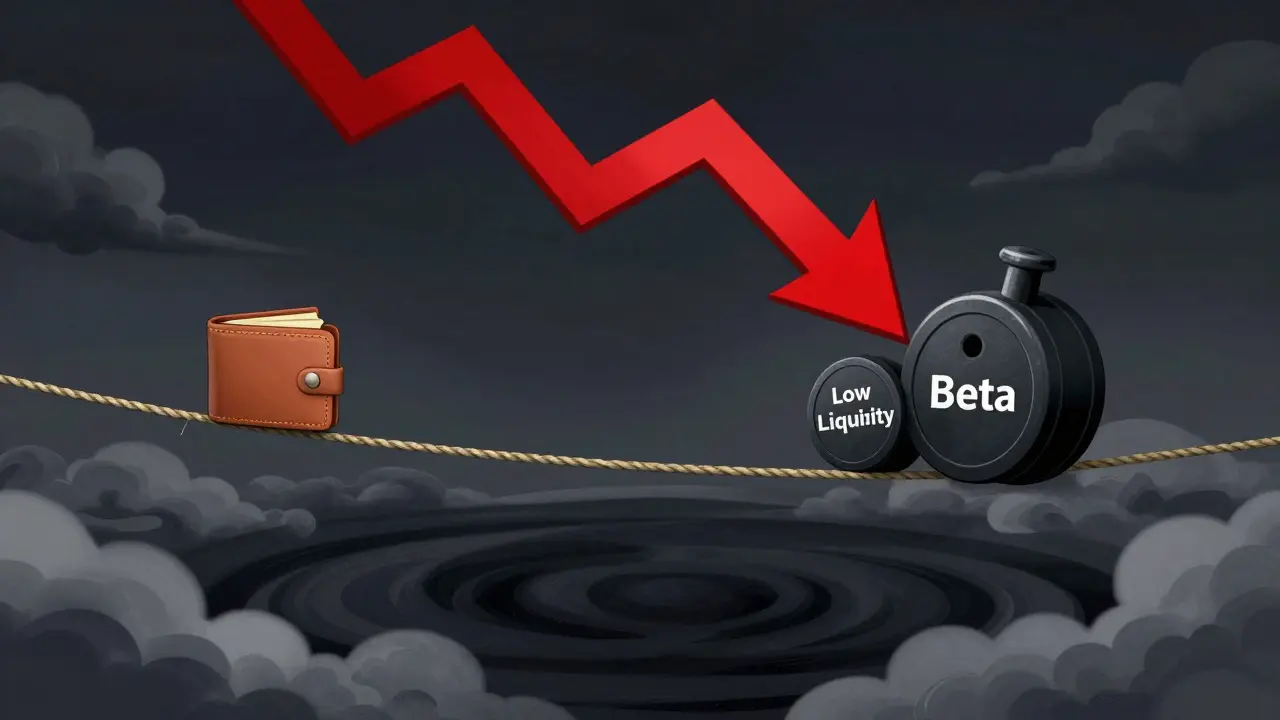
- Low Liquidity: Thin order books mean large buys/sells cause massive price swings. Exiting positions quickly becomes difficult.
- No Institutional Backing: No venture capital firms, banks, or governments endorse this project. All funding appears self-generated.
- Limited Use Case: Until the wallet launches successfully, MOOLA has no practical function outside speculation.
- Regulatory Uncertainty: Operating without clear licenses exposes the project to future bans or fines.
- Team Anonymity: Lack of verifiable identities reduces accountability if issues arise.
Remember: speculative tokens often surge briefly before collapsing. Many traders chase pumps hoping to sell before the crash. Others hold too long, watching gains vanish. Either way, emotional discipline matters far more than hope.
Where Does Degen Forest Fit in the Bigger Picture?
The broader crypto market exceeds $1.2 trillion in valuation. Within that, digital wallets represent a rapidly expanding sector-projected to grow from $2.8 billion in 2023 to $17.5 billion by 2030. Yet dominance rests heavily with three players: MetaMask (~74% share on Ethereum), Trust Wallet, and Coinbase Wallet.
Degen Forest enters this arena not as a disruptor, but as a challenger targeting a specific subculture. The “degen” demographic accounts for roughly 68% of daily trading volume according to Chainalysis reports. They love risk. They ignore fundamentals. They follow hype.
For now, Degen Forest thrives in that environment. But longevity requires evolution. Can they transition from novelty to necessity? Time will tell.
Is MOOLA a good investment?
Only if you understand and accept extreme risk. MOOLA is a low-cap, unproven token tied to a beta-phase wallet. There’s no guaranteed return, and significant downside exists. Treat any purchase as entertainment spending-not savings.
Can I stake MOOLA tokens?
Not yet. Staking functionality hasn’t been implemented or documented. Any claims about staking rewards should be treated as speculative until officially released by the team.
Which exchanges list MOOLA?
XT Exchange lists MOOLA following its June 2024 announcement. Smaller platforms may add it later, but major venues like Binance or Coinbase do not currently support it.
Is Degen Forest safe to use?
Safety depends on implementation. Since the wallet is still in beta, bugs and exploits remain possible. Always keep private keys secure, never share seed phrases, and avoid connecting unknown dApps until the platform matures.
Will MOOLA increase in value?
Possibly-but unpredictably. Price movement hinges on wallet adoption, marketing success, and overall crypto market conditions. Algorithmic forecasts suggest declines through late 2025, indicating caution is warranted.