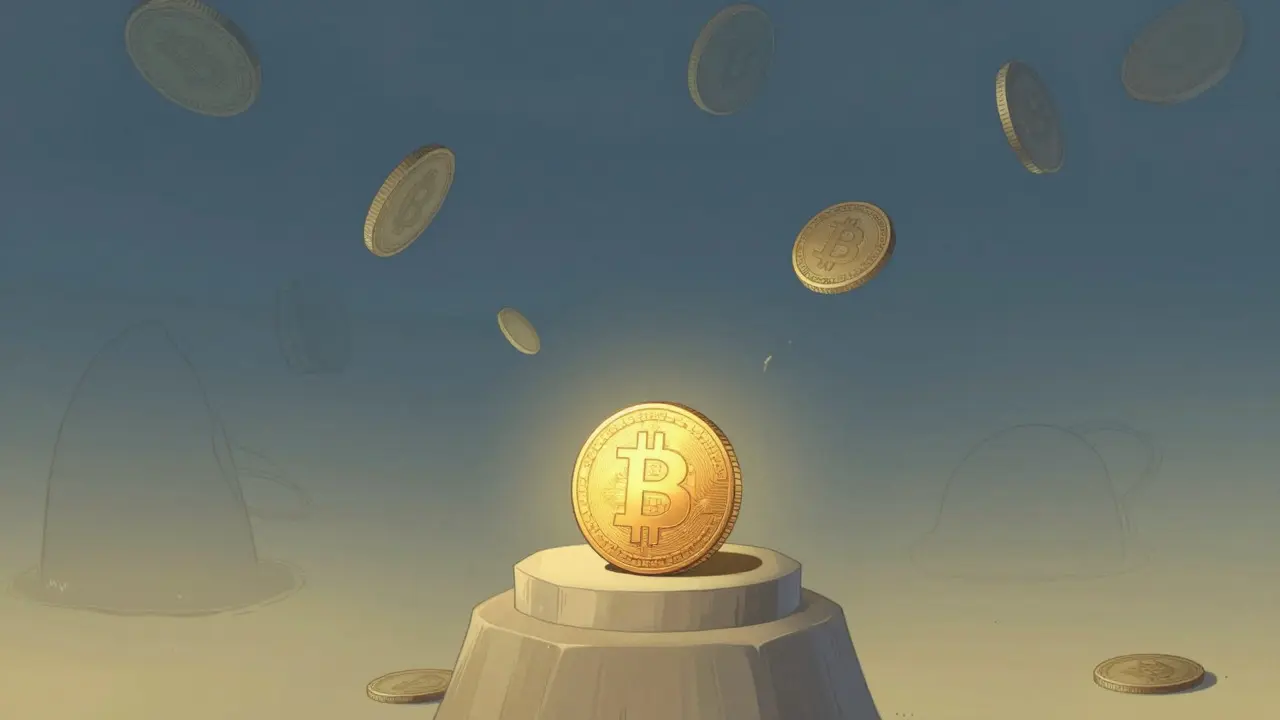
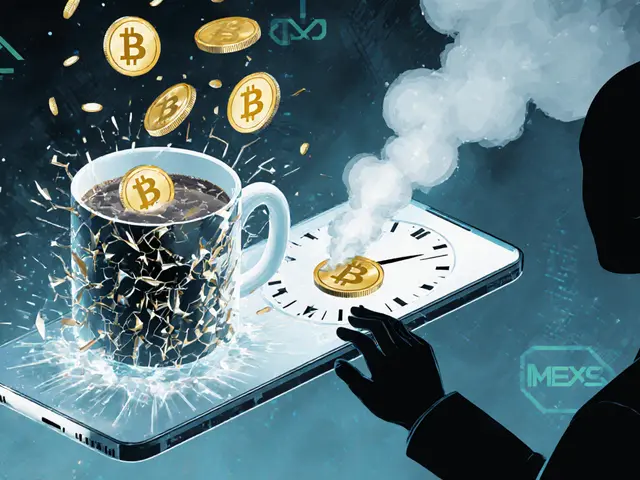
Imagine buying a limited-edition sneaker that gets rarer every year versus a coffee shop loyalty card that gives you more points the longer you stay. One becomes more valuable because there are fewer of them; the other keeps you engaged by constantly adding value to your account. This is the core tension in crypto tokenomics: should a digital asset’s supply shrink to create scarcity, or expand to reward participation?
In 2026, understanding this distinction isn't just academic-it's the difference between picking a store-of-value asset and choosing a medium for daily transactions. Whether you're holding Bitcoin or spending on a decentralized app, the underlying economic model dictates how your investment behaves when market sentiment shifts.
The Mechanics of Scarcity: Deflationary Models
This approach mimics precious metals like gold. There is only so much available, and mining it requires effort. In the crypto world, this usually happens through two main methods:
- Hard Caps: A maximum limit on the number of tokens that will ever exist. Bitcoin is the poster child here, with a strict cap of 21 million coins. No matter how many years pass, you will never see a 22nd millionth Bitcoin mined.
- Token Burns: Sending tokens to an inaccessible wallet address, effectively removing them from circulation forever. Ethereum’s EIP-1559 update introduced a "base fee" that is burned with every transaction. During high network activity, more ETH is burned than created, making the network temporarily deflationary.
Binance Coin (BNB) takes a hybrid route. It started with 200 million tokens but commits to burning a portion of its profits quarterly until the supply hits 100 million. By late 2023, they had already destroyed billions of dollars worth of BNB. This creates a psychological effect: holders feel their slice of the pie is getting bigger even if the market price doesn't move immediately.
However, deflation has a dark side. If everyone believes the token will be worth more tomorrow, no one wants to spend it today. This leads to hoarding. Vitalik Buterin, co-founder of Ethereum, has warned that extreme deflation can cause "pathological economic behavior," where users prioritize holding over using the currency, which kills network utility.
The Engine of Participation: Inflationary Models
On the flip side, inflationary tokens have no hard cap on supply. New tokens are continuously minted and distributed to validators, stakers, or developers. Think of this like a salary: you work (secure the network), and you get paid (new tokens).
Why would anyone want inflation? Because it encourages movement. If a token is constantly increasing in supply, holding it without earning interest means your purchasing power dilutes. This pushes users to either spend the token or stake it to earn rewards that offset the inflation.
Dogecoin is a classic example. Originally capped at 100 billion, its creators removed the cap in 2014. Now, 10,000 new DOGE are created every block, resulting in a perpetual annual inflation rate of about 3.8%. Stellar (XLM) operates similarly, with a fixed 1% annual inflation rate distributed to those who vote for node operators.
Before its major updates, Ethereum was also inflationary, issuing roughly 4.3% new ETH annually to miners. This model ensures that network security is funded. Miners and validators need income to pay for electricity and hardware. Without new token issuance, who pays them?
Head-to-Head: Pros, Cons, and Real-World Performance
Choosing between these models depends entirely on what you want the token to do. Let's break down the practical implications.
| Feature | Inflationary Model | Deflationary Model |
|---|---|---|
| Supply Dynamics | Continuously increases; no hard cap | Decreases or fixed cap; burns reduce supply |
| Primary Use Case | Payments, staking rewards, ecosystem incentives | Store of value, long-term investment |
| User Behavior | Encourages spending and active participation | Encourages holding (HODLing) and hoarding |
| Security Funding | Strong (validators earn new tokens) | Weakening over time (relies on transaction fees) |
| Risk Factor | Value dilution if utility doesn't grow | Liquidity crunch due to excessive hoarding |
| Example Assets | Dogecoin (DOGE), Stellar (XLM) | Bitcoin (BTC), Binance Coin (BNB) |
Data from 2023 highlights the divergence. Inflationary tokens dominated daily transaction volume. Seven of the top ten payment-focused cryptocurrencies used inflationary models. Why? Because merchants prefer currencies that people actually spend. Dogecoin maintained a 24-hour trading volume averaging $1.2 billion, facilitating easy entry and exit for traders.
Conversely, deflationary tokens led in wealth preservation. Bitcoin’s purchasing power increased by 1,900% from 2020 to 2023, outperforming the U.S. dollar, which lost 18% of its value in the same period. However, this came at the cost of liquidity. Glassnode analytics showed Bitcoin’s on-chain transaction volume dropped by 37% during its bull run as users moved coins into cold storage, refusing to sell or spend.
The Rise of Hybrid Models in 2026
Pure inflation or pure deflation is becoming rare. Most successful projects in 2026 use hybrid mechanisms to balance security funding with value appreciation. Ethereum is the prime case study. With EIP-1559, it became "disinflationary." It still issues new ETH to validators (inflationary component) but burns base fees (deflationary component). When the network is busy, it burns more than it mints, turning net negative. When quiet, it turns slightly positive to keep validators happy.
This dynamic adjustment is crucial. Dr. Garrick Hileman from the Cambridge Centre for Alternative Finance noted that pure deflationary models struggle with long-term security. Once Bitcoin’s block rewards vanish around 2140, the network must rely solely on transaction fees. If fees aren't high enough, miners might leave, weakening security. Hybrid models attempt to solve this by ensuring validators always have an incentive to secure the network, regardless of short-term price action.
Binance also shifted its strategy. Instead of rigid quarterly burns, BNB now uses a dynamic auto-burn mechanism tied to network usage and ETH price metrics. This makes the deflationary pressure responsive to real-world demand rather than arbitrary schedules.
What Should You Look For?
If you are evaluating a new project, don't just look at the price chart. Dig into the tokenomics dashboard. Ask yourself these questions:
- Is the supply transparent? Can you verify the burn events or issuance rates on a blockchain explorer? Projects that hide their supply mechanics are red flags.
- Does the model match the utility? If a token is meant for paying for cloud storage, high inflation might discourage adoption unless staking yields are attractive. If it's meant as digital gold, low or negative inflation is expected.
- Who benefits from new issuance? In inflationary models, check if new tokens go to early investors (vesting cliffs) or to the community (staking rewards). Early investor dumps can crash prices regardless of the broader model.
User surveys from 2023 show a split preference. Experienced traders (5+ years) favored hybrid models (73%), recognizing the need for balance. Novice traders often leaned toward deflationary assets (49%) due to the narrative of "scarcity equals value." However, remember that scarcity alone doesn't create value-utility does. Shiba Inu burned 410 trillion tokens in 2021, yet its price collapsed 85% shortly after because the burn didn't increase actual network usage.
Regulatory and Market Context
Regulators are watching these mechanisms closely. The U.S. SEC has hinted that tokens with predictable, algorithmic inflation schedules might be treated differently than those with complex, profit-driven burn mechanisms that could be seen as securities offering returns based on others' efforts. In 2023, enforcement actions targeted projects where burn mechanisms were marketed as guaranteed profit generators, blurring the line between commodity and security.
For institutional investors, the preference is clear. Fidelity’s 2023 survey found 68% of institutions preferred deflationary stores of value for portfolio hedging. Meanwhile, enterprise payment processors like PayPal opted for stablecoins with slight inflationary models to incentivize merchant adoption through yield.
As we move further into 2026, the trend is toward algorithmic adaptability. Static rules are being replaced by smart contracts that adjust supply based on network health metrics. The "best" model isn't inflationary or deflationary-it's the one that aligns incentives so perfectly that users forget about the money and focus on the product.
Is Bitcoin inflationary or deflationary?
Bitcoin is technically disinflationary. It has a hard cap of 21 million coins, meaning the total supply will never exceed this number. While new bitcoins are still mined, the rate of issuance is cut in half approximately every four years (the "halving"). As the issuance rate approaches zero, the existing supply becomes increasingly scarce relative to demand, creating deflationary pressure on price, though not a reduction in total circulating supply via burns.
How do token burns affect price?
Token burns reduce the circulating supply. According to the law of supply and demand, if demand remains constant or increases while supply decreases, the price per token should theoretically rise. However, burns alone do not guarantee price increases. If the burn is small relative to the total supply, or if demand drops simultaneously, the price impact may be negligible. Psychological factors also play a role, as burns signal commitment to value preservation.
Why are some cryptocurrencies intentionally inflationary?
Inflationary models are designed to incentivize network participation. New tokens are issued as rewards to validators, miners, or stakers who secure the network. Without this continuous issuance, participants might stop securing the chain due to lack of income. Additionally, mild inflation encourages users to spend or utilize the token rather than hoard it, fostering active ecosystem usage and liquidity.
Can a token switch from inflationary to deflationary?
Yes, through protocol upgrades. Ethereum is the most prominent example. Before EIP-1559, it was purely inflationary. After the upgrade, it introduced a base fee burn mechanism. Depending on network congestion, Ethereum can now be net deflationary (burning more than it emits) or net inflationary (emitting more than it burns). This flexibility allows the network to balance validator rewards with value accrual for holders.
Which model is better for long-term investment?
It depends on your goals. Deflationary or disinflationary assets like Bitcoin are generally preferred for long-term store-of-value strategies due to their scarcity and resistance to dilution. Inflationary assets may offer better yields through staking but carry the risk of value dilution if the network's utility doesn't grow faster than the supply. Many experienced investors diversify across both types to balance capital preservation with yield generation.


Lisa Chong
July 27, 2026 AT 03:06They are trying to control us through these digital chains of debt. The central banks hate it because we see the truth now. It is a trap set by the elite to steal our labor while they sit in their ivory towers watching the numbers go up. We must be vigilant against this new form of surveillance capitalism that hides behind 'blockchain' technology.
Russ Fincham
July 28, 2026 AT 19:17The article completely misses the point about liquidity traps. Deflationary models are just marketing gimmicks for degens who don't understand basic monetary policy. If you can't spend it, it's not money, it's a collectible. Stop pretending Bitcoin is a currency when it functions as a speculative asset class with zero utility outside of gambling on price action.
Linda Hilliard
July 29, 2026 AT 00:40Oh darling, if only you understood the nuance of tokenomic equilibrium 😏 Most retail investors fail because they lack the intellectual capacity to grasp hybrid mechanisms. It’s not just about scarcity; it’s about aligning incentives through sophisticated smart contract architecture. You’re thinking like a peasant, not a protocol architect 🧐
Winston Lacewing
July 30, 2026 AT 14:52I feel like everyone here is ignoring the emotional toll of holding assets that might vanish overnight 😭 My portfolio is bleeding and I just want someone to tell me it’s going to be okay. Why does crypto have to be so cruel? I just wanted passive income but now I’m staring at charts all night wondering if I made a mistake 💔📉
Kristine Lawson
July 31, 2026 AT 06:10One must consider the regulatory implications, which are often overlooked by the uninitiated. Furthermore, the SEC’s stance suggests that inflationary tokens may indeed be classified as securities, thereby exposing holders to significant legal risk. Therefore, one should proceed with extreme caution, lest they find themselves entangled in litigation. It is, quite simply, unavoidable.
Erika Pozzetto
July 31, 2026 AT 11:14It seems to me that both models have their merits depending on the specific use case of the network in question and how the community values participation versus preservation of wealth over time which is a complex dynamic to navigate without clear guidelines from established financial institutions who traditionally manage such risks