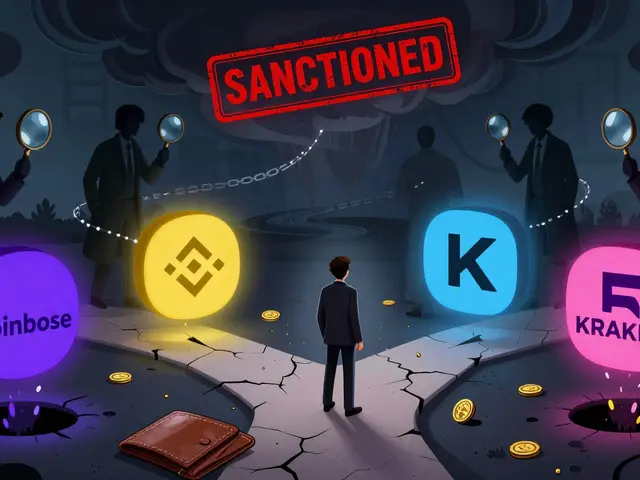
You swipe right on a dating app. You match with someone charming who asks about your day, your dreams, and then casually mentions how they’re making serious money trading Bitcoin. It feels personal. It feels safe. Then you transfer your savings to their "platform," and poof-your money is gone, and so is your new friend. This isn't just bad luck; it’s a highly organized industrial-scale crime. In 2024 alone, American victims lost nearly $10 billion to cryptocurrency frauds, a staggering 66% jump from the year before. And a massive chunk of that chaos didn’t originate in Silicon Valley or Wall Street. It started in the jungles of Myanmar.
If you think crypto scams are just one guy in a hoodie hacking a server, you’re missing the bigger picture. These aren’t lone wolves. They are armies. Operating out of fortified compounds like Shwe Kokko, near the Thai border, these networks function less like tech startups and more like feudal kingdoms run by warlords. The U.S. Treasury Department finally pulled the trigger in September 2025, sanctioning 19 individuals and entities tied to this web. But what exactly are we dealing with here? Let’s break down the machinery behind the millions stolen from your bank account.
The Shwe Kokko Fortress: Where Romance Meets Ransomware
Shwe Kokko isn’t a typical city. It’s a special economic zone that has mutated into a haven for transnational crime. Located in Kayin State, Myanmar, it operates under the protection of the Karen National Army (KNA), a group designated by the U.S. as a transnational criminal organization. Think of it as a state within a state, where local laws don’t apply, and the only law is the gun held by the militia guarding the gate.
Shwe Kokko is a special economic zone in Myanmar that serves as a primary hub for large-scale cyber scam operations, protected by armed ethnic militias.
The sophistication here is scary. We aren’t talking about Nigerian prince emails anymore. These operations use advanced social engineering. Teams of workers spend weeks building fake personas on Instagram, Facebook, and Tinder. They study your interests. They mirror your language. They become your ideal partner or best friend. Once trust is established, they pivot to the pitch: a exclusive cryptocurrency investment opportunity. The platforms look real. The charts go up. The withdrawals work at first. Then, when you try to pull out big money, the fees start piling up, the support goes silent, and the wallet address changes. You’ve been pig-butchered-a term used in Asia for this specific type of long-con romance scam.
The Human Cost: Scammers Who Are Also Victims
Here’s the twist that makes this story darker than a standard financial thriller. Many of the people typing those messages to you aren’t free agents. They are prisoners. Criminal syndicates recruit workers from across Southeast Asia and beyond with promises of legitimate jobs in customer service or marketing. Once they arrive in Myanmar, their passports are confiscated. They are trapped in debt bondage, forced to work 18-hour days hitting quotas. If they fail, they face beatings, torture, or threats of being sold into sexual slavery.
This dual victimization structure complicates the moral landscape. When you lose money to a scammer, you might imagine a greedy criminal. Often, you’re losing money to a terrified person working under duress. The U.S. Treasury recognized this complexity. Secretary of State Marco Rubio noted that "Criminal actors across Southeast Asia have increasingly exploited the vulnerabilities of Americans online." But Under Secretary John K. Hurley went further, stating that the industry "subjects thousands of people to modern slavery." Sanctioning these groups isn’t just about stopping theft; it’s about dismantling a system of forced labor that fuels global finance crimes.

How the Money Laundering Machine Works
Getting your Bitcoin out of your wallet is easy. Getting it back out of Myanmar without triggering alarms is hard. That’s why these networks rely on complex laundering structures. The sanctioned entities include companies like Chit Linn Myaing Co. and Yatai International Holdings Group. On paper, they look like legitimate businesses involved in mining, manufacturing, and tourism. In reality, they act as cash registers for the scams.
The flow usually looks like this:
- Acquisition: Victims send stablecoins (like USDT) or Bitcoin to scam wallets.
- Layering: Funds are moved through multiple exchanges, often using mixers or swapping between different cryptocurrencies to obscure the trail.
- Integration: The crypto is converted into fiat currency (Thai Baht, Chinese Yuan, or USD) via over-the-counter (OTC) desks in neighboring countries like Thailand or Cambodia.
- Clean Up: The clean cash is reinvested into local real estate, casinos, and luxury goods in Shwe Kokko, washing the money completely.
This process exploits gaps in international regulation. While the U.S. has strict anti-money laundering (AML) rules, enforcement stops at the border. By operating in a jurisdiction with weak oversight and corrupt protection, these syndicates can move billions with relative impunity.
The U.S. Response: A Multi-Vector Attack
For years, the U.S. government watched from the sidelines. That changed on September 9, 2025. The Office of Foreign Assets Control (OFAC) didn’t just slap a fine on a company; they targeted the entire ecosystem. They used four different executive orders simultaneously:
- E.O. 13851: Targeting transnational criminal organizations.
- E.O. 13694: Addressing malicious cyber activities.
- E.O. 13818: Focusing on global human rights abuses.
- E.O. 14014: Dealing with threats to Burma’s stability.
This legal hammer approach means that any U.S. bank or business touching these sanctioned entities risks secondary sanctions. It cuts off access to the dollar-based financial system. For a network trying to launder billions, losing access to the dollar is a death sentence. However, enforcement remains tricky. Crypto transactions are borderless. As soon as one node is shut down, another pops up in Laos or Cambodia. The Treasury knows this, which is why they also sanctioned targets in Cambodia during the same sweep.

Comparing the Global Scam Landscape
Myanmar isn’t the only place generating crypto fraud, but it has become the most prolific. To understand its unique threat level, compare it to other regional hubs.
| Feature | Myanmar (Shwe Kokko) | Cambodia (Sihanoukville) | North Korea |
|---|---|---|---|
| Primary Method | Romance/Pig Butchering | Pig Butchering/Live Trading | Hacks & Exchange Theft |
| Operational Structure | Militia-Protected Compounds | Special Economic Zones | State-Sponsored Cyber Units |
| Human Rights Impact | High (Forced Labor/Trafficking) | High (Forced Labor) | Low (Voluntary State Workers) |
| Estimated Annual Losses (US) | >$5 Billion | ~$3 Billion | Variable (Hacking focused) |
| Enforcement Difficulty | Extreme (Failed State Dynamics) | High (Corrupt Local Officials) | Extreme (Sanctions Evasion) |
While North Korea steals via sophisticated hacks, Myanmar steals via psychological manipulation. The difference matters because prevention strategies differ. You can patch software against hackers. It’s much harder to patch human loneliness against a well-scripted romance scam.
Protecting Yourself: The Red Flags Checklist
So, how do you keep your crypto safe? The FBI and ICBA (Independent Community Bankers of America) suggest staying vigilant. Here are the concrete signs you’re talking to a scammer from a compound in Myanmar:
- The Timeline is Too Fast: They say "I love you" or "You’re my soulmate" within two weeks of meeting online.
- The Pivot to Crypto: The conversation shifts from personal topics to investments quickly. "Have you heard about this new coin? I made 20% last week."
- Exclusive Platforms: They ask you to download an app that isn’t on the main Apple App Store or Google Play. Or they send you a link to a website that looks slightly off.
- Withdrawal Fees: When you try to withdraw profits, you’re told you need to pay a "tax" or "fee" upfront. Legitimate exchanges deduct fees from the balance; they don’t ask for new deposits.
- Video Call Avoidance: They claim their camera is broken, or they only do blurry audio calls. Real people want to see you.
If you spot these red flags, stop sending money. Block the number. Report the profile to the platform. And remember: if it sounds too good to be true, it’s probably coming from a room full of exhausted workers in Shwe Kokko.
What is the "Pig Butchering" scam?
Pig Butchering is a form of cryptocurrency investment fraud where scammers fatten up their victims with fake relationships before stealing their funds. The name comes from the idea of fattening a pig for slaughter. Scammers spend weeks or months building trust via text or voice messages before convincing the victim to invest in a fraudulent crypto platform. Once the victim invests heavily, the scammer disappears or blocks them after refusing withdrawal requests.
Why are Myanmar scam centers so hard to shut down?
Myanmar's political instability following the 2021 military coup created a power vacuum. Ethnic armed groups, such as the Karen National Army, control border regions like Shwe Kokko and provide protection to criminal enterprises in exchange for revenue. This quasi-governmental status makes traditional police raids difficult. Additionally, the borderless nature of cryptocurrency allows operators to easily relocate assets and personnel to neighboring countries like Thailand or Cambodia if pressure increases in one location.
Are the scammers themselves criminals or victims?
It is often both. Many low-level operatives are victims of human trafficking. They are recruited with false job offers, have their passports confiscated, and are subjected to debt bondage and physical violence if they do not meet sales quotas. However, the organizers and financiers are deliberate criminals profiting from both the fraud and the exploitation of their workforce. U.S. sanctions target the leadership and financial infrastructure to disrupt the profit motive driving this system.
How did the U.S. Treasury respond to the $10 billion loss?
In September 2025, the U.S. Treasury's Office of Foreign Assets Control (OFAC) sanctioned 19 individuals and entities linked to these networks. They utilized multiple executive orders targeting transnational crime, cyber activity, human rights abuses, and threats to Burma's stability. This action freezes any assets these entities hold in the U.S. financial system and prohibits U.S. persons from engaging in transactions with them, aiming to cut off their access to the global banking sector.
Can I get my money back if I was scammed?
Recovery is difficult but not impossible. Cryptocurrency transactions are irreversible, meaning once sent, the money is gone unless the recipient sends it back. However, if you report the fraud quickly, law enforcement may freeze accounts if the scammer uses centralized exchanges. Services specializing in blockchain forensics can sometimes trace funds to identifiable wallets. Immediate reporting to the FBI's Internet Crime Complaint Center (IC3) is crucial for any chance of recovery.