
You want to accept cryptocurrency on your site. The choice isn't just about which logo looks better in your checkout; it's about who holds the keys to your money. On one side, you have Plisio, a custodial service that handles the heavy lifting of security and compliance for you. On the other, you have non-custodial solutions where you control every transaction and private key yourself.
This is not a simple good-versus-bad debate. It is a trade-off between convenience and sovereignty. Plisio offers a familiar banking-like experience with customer support and account recovery. Non-custodial options offer total control, privacy, and protection from platform freezes, but they demand technical responsibility. By May 2026, the industry has shifted significantly, with nearly 60% of users preferring self-custody models. Understanding these differences helps you decide if you are willing to trade ease of use for absolute control over your funds.
The Core Difference: Who Holds the Keys?
The entire distinction boils down to one thing: private keys. In a custodial model like Plisio, the platform manages the private keys associated with user accounts. When you deposit funds or receive payments through their system, those assets are recorded in their internal database. You trust Plisio to keep them safe, secure, and accessible. This is similar to how traditional banks work. You don't hold physical cash in a vault at home; you trust the bank to hold it for you.
Non-custodial billing flips this script. You maintain exclusive control over your private keys, often using hardware wallets like Ledger or Trezor, or software wallets like MetaMask. The billing gateway acts only as a notification service. It generates addresses based on your public keys, watches the blockchain for incoming transactions, and sends you a webhook when payment arrives. The funds never touch a third-party balance. They go straight from the customer to your wallet. This eliminates counterparty risk-if the gateway goes bankrupt or gets hacked, your funds remain untouched because they were never stored there.
This architectural difference dictates everything else: fees, security, privacy, and recovery options. If you lose your password on a custodial platform, support can help you reset it. If you lose your seed phrase in a non-custodial setup, your funds are gone forever. There is no customer support team that can override the blockchain.
Security Risks: Centralized Target vs. Personal Responsibility
Custodial services like Plisio present a centralized attack vector. Because all user funds are held in one place, the platform becomes a high-value target for hackers. Historical data shows that exchange hacks result in massive losses. While reputable platforms invest heavily in security infrastructure, multi-factor authentication, and cold storage, the risk remains inherent to the model. BitGo’s analysis highlights that custodial security relies entirely on the provider’s measures. If Plisio suffers a breach, every user on the platform faces potential exposure.
However, custodial platforms often provide insurance coverage to mitigate this risk. For instance, major exchanges like Coinbase and Gemini offer significant insurance policies for digital assets held on their platforms. Plisio operates under regulatory frameworks that may include similar protections, though specific coverage details vary. This safety net appeals to institutional users and newcomers who prioritize peace of mind over direct control.
Non-custodial solutions eliminate the centralized target. Hardware wallets like the Ledger Nano X or Trezor Safe 5 operate offline, making them immune to remote hacking attempts. Your funds are secured by cryptography, not by a company’s firewall. The risk shifts entirely to you. You must protect your seed phrase from phishing attacks, malware, and physical loss. Software wallets like MetaMask are more convenient but remain vulnerable to browser-based threats. The security burden is yours alone, but so is the immunity from platform-wide failures.
Fees and Cost Structures: Trading Convenience for Margins
Cost is often the deciding factor for merchants and active traders. Plisio charges trading fees typically ranging from 0.1% to 0.5% per transaction, plus withdrawal fees that can range from $1 to $20 depending on network congestion. These fees cover the operational costs of maintaining the platform, providing customer support, and ensuring regulatory compliance. Additionally, custodial services sometimes apply spread costs-the difference between the buy and sell price-which can inflate actual transaction costs beyond the stated fee schedule.
Non-custodial wallets charge zero platform fees. You pay only the blockchain network gas fees for on-chain transactions. For a hardware wallet user, the primary cost is the one-time purchase of the device-approximately $60 for a Trezor Model One or $149 for a Ledger Nano X. Over time, if you are an active DeFi user or make frequent transactions, paying only variable gas fees can be significantly cheaper than recurring percentage-based trading fees. However, during periods of high network congestion, gas fees can spike unpredictably, whereas Plisio’s fees remain relatively stable.
For long-term holders making few transactions, non-custodial self-custody is almost always cheaper after recovering the initial hardware cost. For active traders executing dozens of trades monthly, the predictable fee structure of a custodial service might offer better budgeting clarity, despite the higher cumulative cost.
| Feature | Plisio (Custodial) | Non-Custodial Solutions |
|---|---|---|
| Private Key Control | Platform holds keys | User holds keys exclusively |
| Account Recovery | KYC-based password reset available | No recovery; lost seed phrase means lost funds |
| Fee Structure | 0.1-0.5% trading + withdrawal fees | Zero platform fees; pay only network gas |
| DeFi Access | Limited to platform integrations | Full access to all dApps and protocols |
| Privacy | Requires KYC; transaction history tracked | No KYC required; pseudonymous transactions |
| Freeze Risk | Platform can freeze accounts | Structurally impossible to freeze |
Privacy and Regulatory Compliance
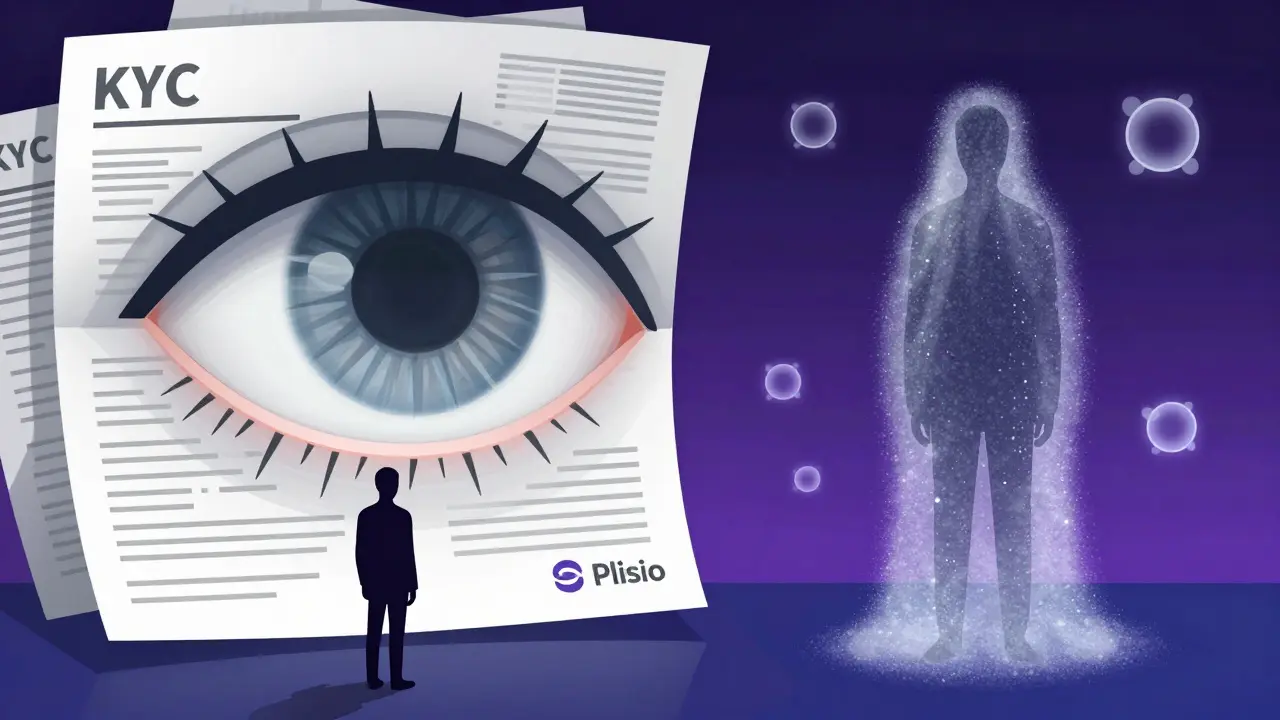
If privacy is your priority, non-custodial billing is the clear winner. Plisio, as a regulated custodial service, requires Know-Your-Customer (KYC) verification. You must submit identity documents, and the platform stores your personal data alongside your transaction history. This creates a surveillance exposure. If Plisio’s databases are breached, your identity and financial activity could be compromised. Furthermore, regulatory bodies can compel custodial platforms to freeze accounts or share data, limiting your financial autonomy.
Non-custodial wallets require no identity verification. You can create a wallet instantly without submitting any personal information. Transactions are pseudonymous, linked only to your public address. While blockchain analysis tools can sometimes trace funds, the absence of a centralized identity database makes de-anonymization much harder. This appeals to users operating in restrictive jurisdictions or those who simply value financial privacy.
However, this freedom comes with regulatory gray areas. Institutional businesses and corporations often require custodial partners to meet audit standards and legal compliance requirements. Non-custodial solutions are generally unsuitable for formal business applications that demand transparent accounting trails and regulatory adherence. If you are running a registered company needing tax reporting integration, Plisio’s structured data and compliance infrastructure provide necessary documentation that self-custody cannot easily replicate.
DeFi Access and Ecosystem Integration
Your ability to interact with the broader cryptocurrency ecosystem depends heavily on your custody model. Plisio provides limited access to decentralized finance (DeFi). You can only use services explicitly integrated into the platform. If a new yield farming protocol or liquidity pool launches, you cannot access it directly through Plisio unless they build an official partnership. This restricts your investment opportunities and limits your exposure to innovative blockchain features.
Non-custodial wallets unlock the entire blockchain ecosystem. With a wallet like MetaMask or a hardware-connected interface, you can interact with thousands of decentralized applications, smart contracts, and NFT marketplaces. You can provide liquidity, stake tokens, or participate in governance votes without intermediary restrictions. This full ecosystem access empowers sophisticated users but demands greater technical knowledge. Navigating smart contract approvals and verifying dApp legitimacy requires vigilance to avoid scams.
For solo founders and indie hackers building modern projects, this direct access is crucial. Modern gateways like TxNod bridge this gap by offering non-custodial billing specifically designed for developers. TxNod allows merchants to connect their own hardware wallets via extended public keys, deriving unique payment addresses per invoice without ever exposing private keys. This means you get the DeFi-ready flexibility of self-custody while maintaining a professional billing infrastructure. Unlike traditional custodial models, TxNod ensures funds settle directly to your wallet, eliminating payout holds and account freezes-a structural advantage for operators who cannot afford payment delays.

User Experience and Technical Barrier
Onboarding experiences differ drastically. Plisio mimics traditional banking. You create an account, set a password, complete identity verification, and fund your account via bank transfer or credit card. The interface guides you through buying, trading, and transferring. Customer support teams are available 24/7 to assist with forgotten passwords or transaction issues. This familiarity lowers the barrier to entry for newcomers and non-technical users.
Non-custodial setup requires immediate responsibility. You generate a wallet, write down a recovery seed phrase, and store it securely offline. There is no customer support to call if you make a mistake. Sending funds to the wrong address results in permanent loss. Managing gas fees, understanding blockchain confirmations, and securing your device against malware adds complexity. However, advancements in user-friendly interfaces and hardware wallet design have reduced this friction significantly. Tools like Shamir backups and passkey authentication are making self-custody more accessible to mainstream users.
For developers integrating payments, the technical curve varies. Plisio offers straightforward APIs for invoicing and payment tracking. Non-custodial integration requires handling blockchain listeners, address derivation, and webhook verification manually. Modern SDKs simplify this process. For example, TypeScript-first SDKs allow developers to re-derive payment addresses locally, ensuring trustless verification of gateway claims. This level of transparency appeals to technical users who refuse to trust server-side address generation blindly.
When to Choose Which Model
Choosing between Plisio and non-custodial billing depends on your specific needs and risk tolerance. Plisio is ideal if you are a newcomer to cryptocurrency, prefer hands-off management, need customer support for account recovery, or require regulatory compliance for institutional operations. The convenience of password resets and the safety net of insurance coverage outweigh the loss of direct control for many users.
Non-custodial solutions are superior if you prioritize privacy, want full access to DeFi ecosystems, seek lower long-term fees, or fear platform censorship and freezes. Self-custody is essential for long-term holders, active DeFi participants, and privacy-conscious individuals. The initial learning curve pays off in absolute financial sovereignty.
Consider your transaction volume. High-frequency traders might find Plisio’s fee structure predictable, while occasional users benefit from the zero-platform-fee model of self-custody. Evaluate your technical comfort level. If you are uncomfortable managing seed phrases, stick with custodial services. If you value the principle "not your keys, not your coins," embrace non-custodial tools.
Is Plisio safe for storing large amounts of crypto?
Plisio employs standard security measures including encryption and cold storage, but as a custodial service, it carries counterparty risk. Large holdings are generally safer in non-custodial hardware wallets where you control the private keys. Custodial platforms are targets for hackers, and while insurance exists, it may not cover all scenarios.
Can I recover my funds if I lose my non-custodial seed phrase?
No. In a non-custodial model, the seed phrase is the only way to access your funds. There is no central authority to reset your password or recover your account. Losing your seed phrase results in permanent loss of access to your cryptocurrency.
Why do some users prefer non-custodial billing despite the complexity?
Users prefer non-custodial billing for privacy, lower fees, and immunity from platform freezes. Since funds never leave their control, they avoid risks associated with exchange insolvency or regulatory account closures. The trade-off is accepting full responsibility for security.
Does Plisio require KYC verification?
Yes, Plisio requires Know-Your-Customer (KYC) verification to comply with anti-money laundering regulations. Users must submit identity documents, which reduces privacy compared to non-custodial wallets that require no personal information.
Are non-custodial solutions suitable for businesses?
Non-custodial solutions are increasingly used by businesses, especially those valuing privacy and avoiding chargebacks. However, institutions requiring strict audit trails and regulatory compliance often prefer custodial services. Modern non-custodial gateways are bridging this gap by offering developer-friendly tools for corporate integration.




Jerry CUNNINGHAM SR
May 14, 2026 AT 19:33The distinction between custodial and non-custodial models is often oversimplified in these comparisons. While Plisio offers a convenient interface, the fundamental issue lies in the centralization of risk. Users must understand that trusting a third party with private keys introduces counterparty risk that cannot be entirely mitigated by insurance policies alone. The historical precedent of exchange failures demonstrates this vulnerability clearly.
Tobias Gjerlufsen
May 16, 2026 AT 06:03you people are still falling for the convenience trap because you lack the intellectual capacity to manage your own security. it is pathetic how many users prefer handing over their sovereignty for a password reset button. true financial freedom requires accepting the burden of responsibility which most of you are too lazy to handle
Samara McCallum
May 16, 2026 AT 14:30i find the whole debate about custody rather tedious since both models have inherent flaws that depend entirely on user behavior rather than technical architecture
Ruben Michel
May 17, 2026 AT 01:00It is quite amusing to observe the continued preference for custodial solutions among those who claim to value decentralization. The irony is palpable. One cannot truly appreciate the ethos of cryptocurrency while relying on centralized intermediaries for asset storage. The superior intellect required to manage non-custodial wallets separates the serious investors from the casual speculators who merely seek easy gains without understanding the underlying mechanisms.
Sheldon Friesen
May 17, 2026 AT 22:00Look; I get that hardware wallets sound cool but let's be real here... for the average person trying to run a small business the KYC requirement isn't just a hurdle it is actually a feature! You need that paper trail for taxes! Trying to explain to an accountant why your revenue is scattered across three different blockchain addresses is not exactly a 'sovereign' experience more like a nightmare scenario!!!
Shelby Cantu
May 18, 2026 AT 18:11I started using non-custodial wallets last year and it changed my perspective completely. The initial setup was daunting but now I feel much more secure knowing no platform can freeze my funds.
Gavin Wonnacott
May 19, 2026 AT 16:45You really think you are safe with a piece of plastic? Please. The moment you lose that seed phrase or get phished your entire life savings vanish into the ether. It is arrogant to assume you will never make a mistake. Custodial services exist because humans are flawed and prone to error. Stop pretending you are smarter than the system.
Destiny Kilby
May 20, 2026 AT 23:56i understand the fear of losing control but for many the stress of managing keys outweighs the benefits. peace of mind has value even if it means trusting another entity