Blockchain Finance: How Decentralized Systems Are Changing Money
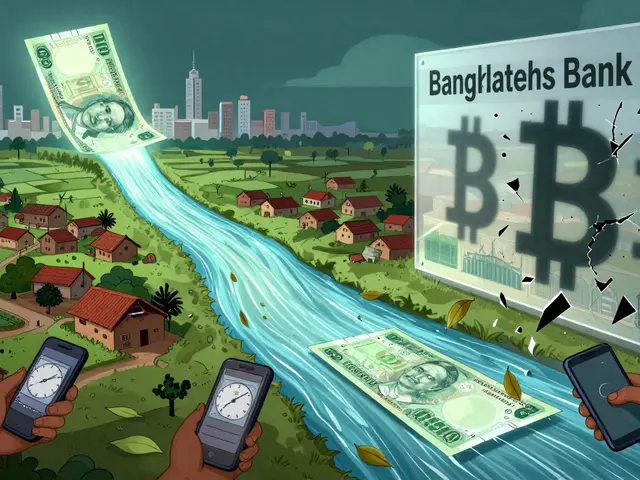
When we talk about blockchain finance, a system that uses distributed ledgers to handle money without traditional banks. Also known as decentralized finance, it’s not just about Bitcoin—it’s about how payments, loans, and savings work when no single company or government controls them. This isn’t theory. Real people in India use Bitcoin to send money home. Cubans trade Ethereum to buy groceries because banks won’t let them. And in Iran, miners run rigs on government-subsidized power while families face blackouts. Blockchain finance is happening now, in messy, real ways—not in boardrooms, but in kitchens, street markets, and mobile apps.
At its core, blockchain finance replaces middlemen. Instead of a bank clearing a cross-border transfer that takes days and costs 10%, a stablecoin like USDT moves the same amount in minutes for pennies. Platforms like Ripple and Stellar make this possible, and central banks are watching. CBDCs, digital versions of national currencies issued by governments are being tested in over 100 countries. But they’re not the same as crypto—CBDCs are controlled, traceable, and often designed to replace cash, not challenge banks. Meanwhile, stablecoins, crypto tokens pegged to real money like the dollar or euro are the quiet workhorses of global crypto payments. They’re what people actually use to send money across borders, avoid inflation, or trade on exchanges without touching volatile Bitcoin.
Blockchain finance doesn’t just move money—it changes who gets access to it. In Bangladesh, people trade crypto despite threats of prison. In the Philippines, regulators froze $150 million in assets from unlicensed platforms, hurting ordinary users. And in Turkey, traders choose Coinzo because it’s cheap and fast for local currency swaps, even if it lacks security audits. These aren’t edge cases. They’re the new normal for billions who can’t rely on traditional systems. The posts below show you exactly how this works: from gasless DEX swaps on Manta Pacific to how AI is being used to track liquidity on crypto exchanges. You’ll see real reviews of platforms people actually use, breakdowns of tokens that look like investments but are ghosts, and deep dives into how consensus protocols like Byzantine Fault Tolerance keep these systems running without a central authority. This isn’t about hype. It’s about understanding what’s real, what’s risky, and what’s changing money for good.

DeFi vs Traditional Banking: Key Differences in Speed, Fees, Access, and Security
DeFi offers faster transactions, higher yields, and global access without banks - but with less protection. Traditional banking is slower and more expensive, but safer and regulated. Here's how they really compare in 2025.
Recent Post
-
Benefits of Liquid Staking Over Traditional Staking
Jan, 17 2026