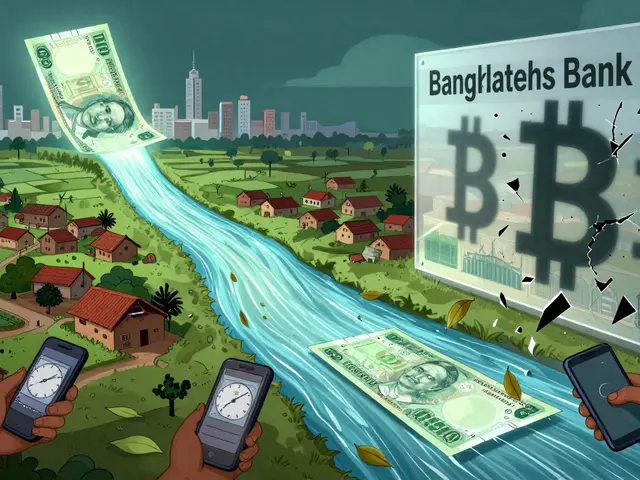
International Money Transfer with Crypto: Faster, Cheaper, and Borderless
When it comes to sending money across borders, international money transfer, the process of moving funds between countries, often through banks or services like Western Union. Also known as cross-border remittance, it’s slow, expensive, and locked behind layers of bureaucracy. For millions, it’s not a luxury—it’s a lifeline. A worker in the U.S. sending cash home to family in the Philippines. A student in Turkey paying tuition in euros. A Cuban family receiving aid from relatives in Spain. Traditional systems charge up to 10% in fees and take days. But crypto is changing that.
DeFi, a financial system built on open blockchain networks that lets users send, borrow, and earn without banks. Also known as decentralized finance, it removes the middlemen and lets people send value directly. Stablecoins like USDT and USDC act like digital dollars that move across borders in minutes, not weeks. In countries like India and Iran, where banks block foreign transactions, crypto is the workaround. In Cuba, where U.S. sanctions cut off traditional remittance channels, Bitcoin and Ethereum are how families survive. And it’s not just for the unbanked—small businesses in Nigeria use crypto to pay suppliers in China. No wire fees. No currency conversion traps. Just fast, peer-to-peer value.
But it’s not magic. crypto remittance, the use of cryptocurrency to send money internationally, bypassing traditional financial institutions. Also known as blockchain payments, it requires understanding wallets, gas fees, and security. You can’t just send ETH to a bank account. You need to know how to use a wallet, verify addresses, and avoid scams. That’s why so many posts here focus on real platforms—like EO.Trade for Android users, Coinzo for Turkish traders, or ApertureSwap for privacy-focused sends. Some exchanges let you deposit local currency and instantly convert to stablecoins. Others let you swap tokens without KYC, though that comes with risk. The Philippines froze $150 million in unlicensed crypto assets. Bangladesh warns of prison for trading. But people still send money. Because when your options are a 12% fee or a 1% fee with a little risk, the choice is clear.
What you’ll find below aren’t theoretical guides. These are real stories from people using crypto to move money when the system won’t let them. From how Cubans bypass sanctions to why Iranian miners get cheap power to fund remittances, from the hidden costs of traditional banks to the tools that actually work today. This isn’t about speculation. It’s about survival, connection, and getting paid what you’re owed—no matter where you live.

Cross-Border Payments with Blockchain Technology: Faster, Cheaper, and Transparent
Blockchain is transforming cross-border payments by slashing fees, cutting settlement time to minutes, and offering full transparency. Learn how stablecoins, CBDCs, and platforms like Ripple and Stellar are making international money transfers faster and cheaper than ever.