IPFS NFT: What It Is, How It Works, and Why It Matters for Crypto Collectibles
When you buy an IPFS NFT, a non-fungible token that uses the InterPlanetary File System to store its underlying digital asset. Also known as decentralized NFT, it doesn’t just point to a link on a server—it locks the actual file on a global, peer-to-peer network that can’t be shut down or altered by one company. This isn’t just tech jargon. It’s the difference between owning a photo saved on your phone versus owning a copy that’s backed up across thousands of computers worldwide.
Most NFTs you see online are just pointers to a file hosted on Amazon, Google, or some startup’s server. If that server goes down, your NFT becomes a dead link—your digital art vanishes. That’s why IPFS, a protocol designed to replace the web’s centralized file system with a distributed one. Also known as InterPlanetary File System, it solves this. Every file on IPFS gets a unique hash, like a digital fingerprint. That hash is what your NFT stores. No matter what happens to any single computer, as long as someone somewhere still has the file, it stays alive. That’s the core of true digital ownership.
Related to this are blockchain NFT, digital assets whose ownership and history are recorded on a public ledger like Ethereum. Also known as on-chain NFT, they rely on IPFS for storage because the blockchain itself is too expensive and slow to hold large files like images or videos. The NFT lives on-chain; the art lives on IPFS. Together, they create something rare: verifiable, permanent, and censorship-resistant ownership. You can’t delete it. You can’t censor it. You can’t lose it unless the whole internet goes dark.
And that’s why the collection below matters. You’ll find posts that cut through the hype—like how some "IPFS NFT" projects still use centralized links, or how fake airdrops pretend to give you free NFTs while stealing your wallet. You’ll see real breakdowns of what happens when a project’s IPFS node dies, how to verify if your NFT’s file is truly stored on IPFS, and why most NFT marketplaces still don’t do this right. There’s no fluff. Just facts on what works, what’s broken, and how to protect your digital collectibles from vanishing overnight.
What Is NFT Metadata? A Clear Guide to How It Works and Why It Matters
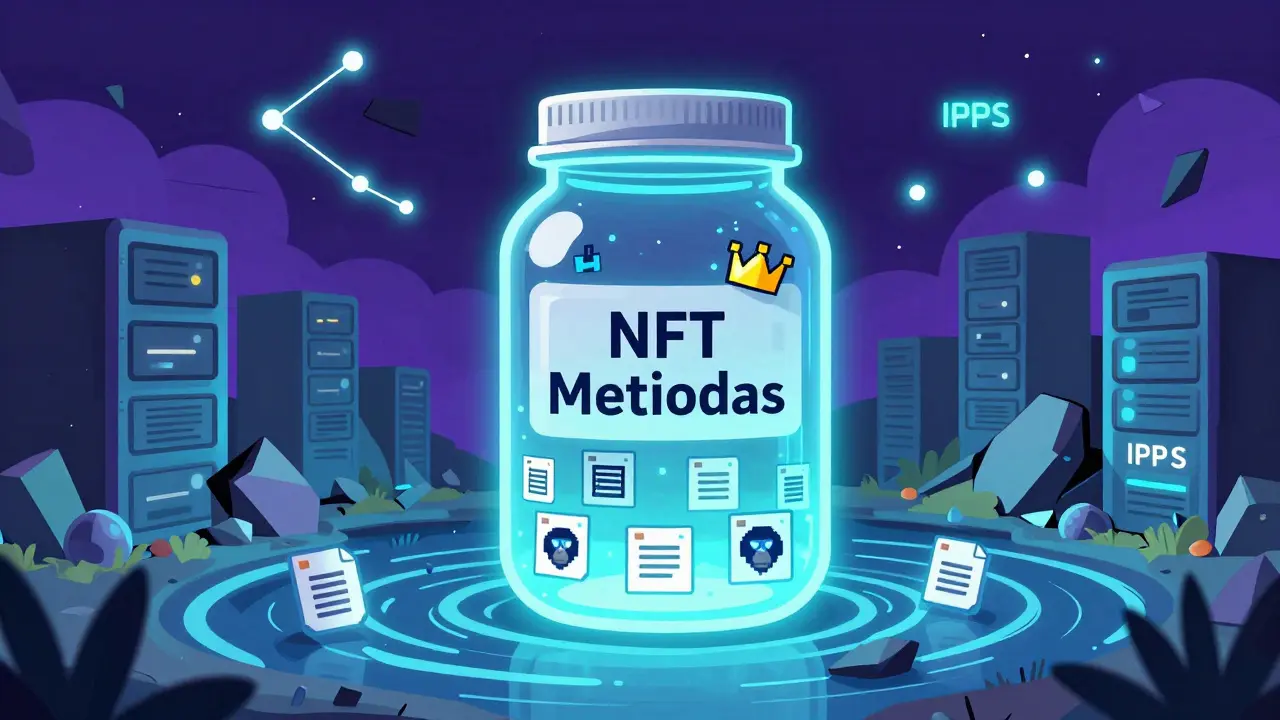
NFT metadata is the JSON data that defines what your NFT looks like and what it means. Without it, your digital asset is just a number on a blockchain. Learn how it works, why storage matters, and how to protect your NFTs from disappearing.