Whale Distribution: How Big Players Shape Crypto Markets
When you hear whale distribution, the pattern of how large amounts of cryptocurrency are held by a small number of addresses. Also known as token concentration, it's not just about who owns the most—it's about who can move markets with a single trade. These aren't random investors. They're funds, exchanges, early backers, and sometimes even projects themselves holding millions in a single wallet. Their actions don't just affect prices—they create the ripple effects that trap retail traders.
Whale distribution isn't just about size. It's about token distribution, how supply is spread across wallets. If 10 wallets hold 60% of a coin, that’s dangerous. If 1,000 wallets hold 60%, it’s stable. The difference? One invites manipulation. The other resists it. You see this in every major crypto crash: a whale sells a chunk, the market panics, and everyone else follows. That’s not luck. That’s structure. And it’s visible in on-chain data if you know where to look.
Related to this are market manipulation, the practice of artificially influencing price through coordinated buying or selling. Whales don’t just hold—they test the waters. They place large buy orders to lure others in, then quietly pull back. Or they dump small amounts to trigger stop-losses. These tactics work because most traders don’t check where the coins actually are. They follow trends, not ownership. But the truth? The biggest moves aren’t driven by news or hype—they’re driven by who owns what and when they decide to act.
Understanding whale distribution means learning to read the hidden layers of crypto markets. It’s not about predicting the next moonshot. It’s about avoiding the traps set by those who already own the boat. You’ll find posts here that expose fake airdrops tied to concentrated wallets, analyze how exchanges hide their holdings, and break down why some tokens crash the moment they hit CMC. Some show how Cuban users bypass sanctions using stablecoins held in dispersed wallets—exactly the opposite of whale behavior. Others reveal how unregulated exchanges like Horizon Dex or ko.one have no transparency at all, making whale movements impossible to track—and that’s exactly why they’re dangerous.
What you’ll see below isn’t just data. It’s a pattern. A trail. And if you learn to follow it, you stop being the one who gets swept away—and start seeing where the tide is really going.
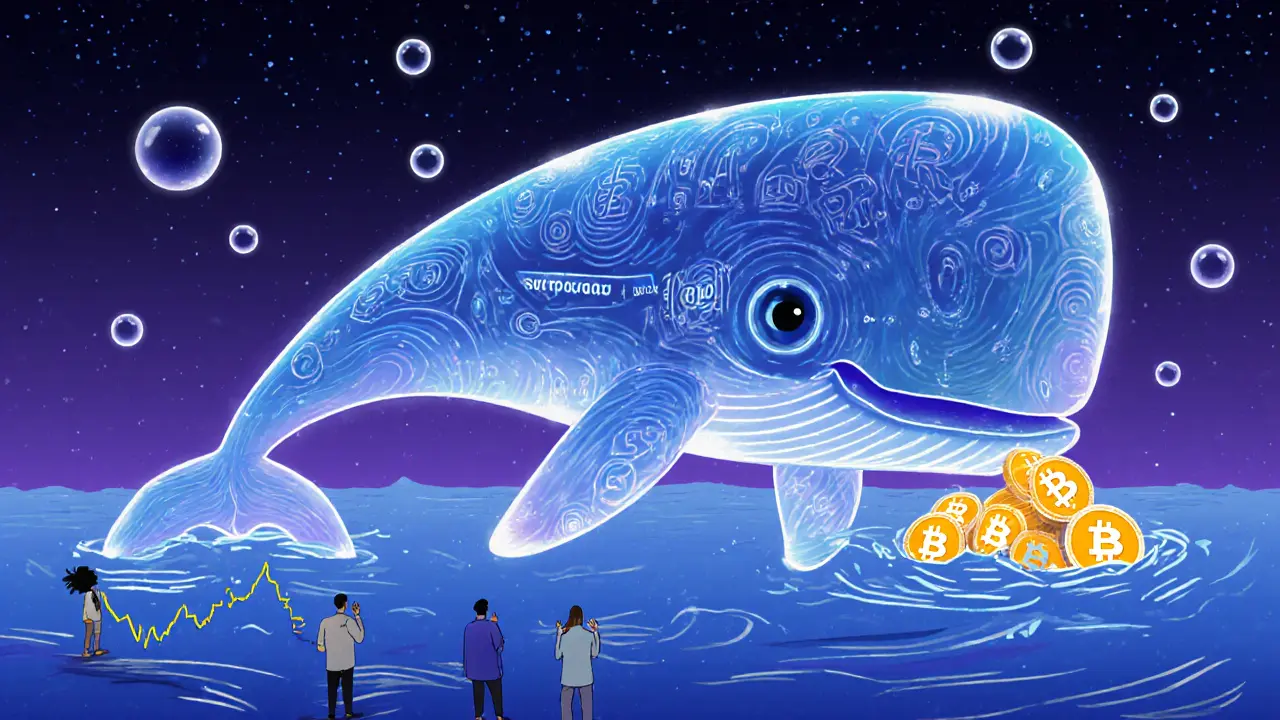
Whale Accumulation vs Distribution in Crypto: How Big Holders Move Markets
Learn how crypto whales accumulate and distribute assets, the on-chain signals to watch, and how to use whale behavior to anticipate market moves - without falling for fake signals or retail traps.