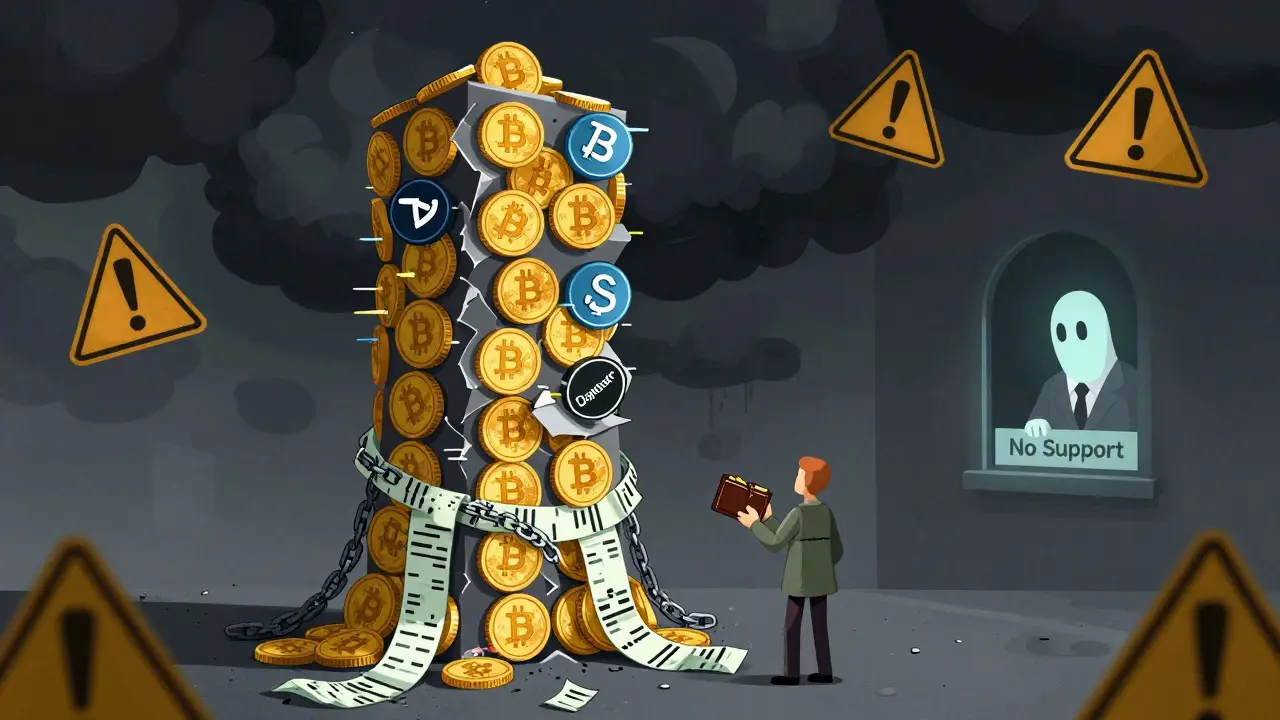
When you hear the name Bleutrade, you might think of a quiet corner of the crypto world where obscure altcoins are traded quietly. But the truth is far more dangerous. Bleutrade isn't just another small exchange-it’s a platform that has been flagged by multiple independent sources as a potential scam. If you're considering using it, stop. Right now.
What Bleutrade Claimed to Be
Bleutrade launched in 2014 during the first wave of crypto exchanges trying to capitalize on the altcoin boom. It wasn’t trying to compete with Coinbase or Binance. Instead, it focused on one thing: listing hundreds of obscure, low-liquidity coins. If you wanted to trade something like BitConnect, DarkCoin, or Stellar before it went mainstream, Bleutrade had it. And for a while, that was its selling point.Its interface was simple. No fancy charts. No advanced order types. Just a basic buy/sell panel, an order book, and a list of trading pairs-mostly BTC-based. No USD, no EUR, no bank transfers. You had to buy Bitcoin or Ethereum elsewhere, send it over, and then trade. That alone made it a bad fit for new users. But worse was coming.
The Red Flags: What Experts and Users Said
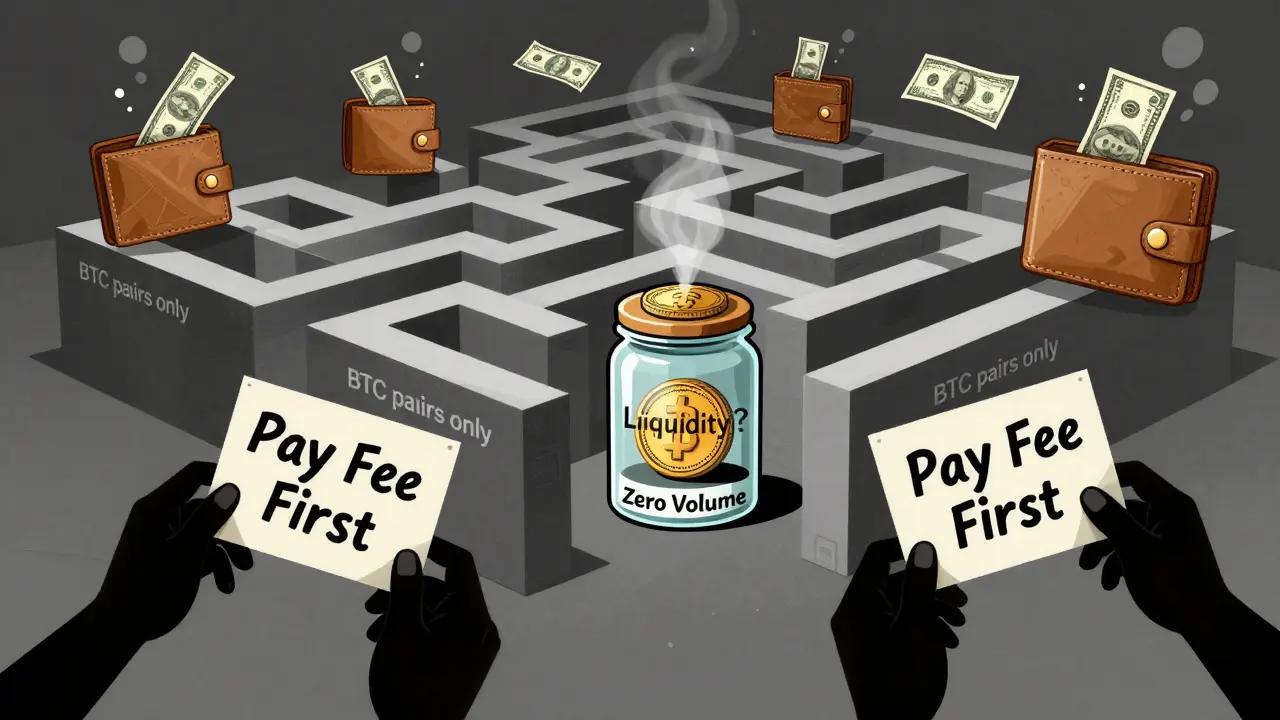
By late 2017, user complaints started piling up. ForexSQ, a crypto review site, noted: "The predominant mood among the exchange's clients is that of dissatisfaction." Users called many of the listed coins "crap coins"-not because they were bad investments, but because they had zero trading volume. If you bought one, you couldn’t sell it. Liquidity was practically nonexistent.Then came the withdrawal issues.
Multiple users reported being asked to pay "verification fees," "taxes," or "security deposits" before they could cash out. Once they paid, their accounts were frozen. No response from support. No refund. StaySafeWeTrace, a scam monitoring group, called it an "Advance Fee Scam"-a classic fraud pattern where victims are tricked into paying money upfront under false promises, only to lose everything.
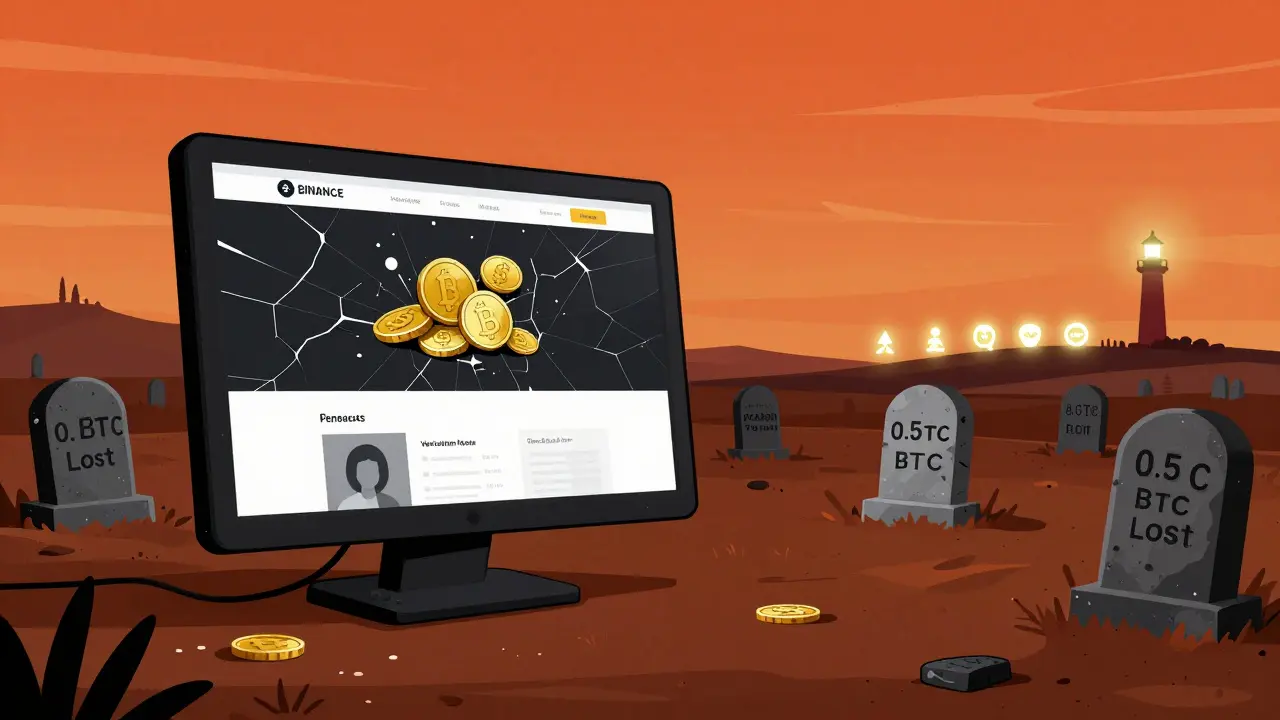
Trustpilot reviews from 2017-2018 showed an average rating of 1.8 out of 5. Of the 78% who left negative feedback, nearly all mentioned withdrawal problems. One user wrote: "I sent 0.5 BTC. They asked for $200 in USDT as a "compliance fee." I paid. My account vanished."
Technical and Operational Failures
Bleutrade never upgraded its platform. No mobile app. No desktop app. No margin trading. No OTC desk. No API access. Even in 2020, its website looked like it was built in 2015. CoinCodex listed features like "Leverage Trading" and "Launchpad," but no user ever confirmed these existed. These were likely false claims copied from other exchanges.Trading fees were 0.25%-fair for the time. Withdrawal fees on Bitcoin were 0.001 BTC, which was average. But fees mean nothing if you can’t access your funds. Cryptowisser admitted: "The fee structure is competitive, but new users are restricted from trading here." Why? Because you needed crypto already. No fiat on-ramp. No easy entry. That’s not user-friendly-it’s exclusionary.
And then there was the location problem. CoinCodex called it Malta-based. Bitrates.com said Brazil. Myfxbook listed it as "Closed." ScamAdviser gave its website a "very low trust score" based on domain age, lack of SSL transparency, and no verifiable business address. No regulatory license. No public team. No contact info beyond a web form.
Why It Failed (And Why You Should Avoid It)
Bleutrade’s downfall wasn’t bad luck-it was bad business. In 2017, it ranked #85 in trading volume. By 2019, it was #437. Mainstream exchanges like Binance and KuCoin started listing the same altcoins, with better liquidity, security, and support. Bleutrade didn’t adapt. It didn’t improve. It just waited.Then, the scams started.
By 2022, multiple sources-including StaySafeWeTrace and CryptoSlate-classified Bleutrade as a "scam operation." Myfxbook officially marked it as "Closed." The website still loads, but it’s a ghost. No deposits accepted. No withdrawals processed. No customer service. Just a static page with a list of coins that no one can trade.
It’s not an exchange anymore. It’s a warning.
Who Was It For? (And Who Should Never Use It)
The only people who might have benefited from Bleutrade were experienced traders hunting for micro-cap coins with zero public data. But even then, the risk outweighed the reward. If you didn’t already have crypto, you couldn’t get in. If you did, you couldn’t get out. It was a trap disguised as opportunity.If you’re a beginner? Don’t even look at it. If you’re experienced? Don’t touch it. If you’ve already deposited funds? You’re likely out of luck. No one is coming to help you.
What to Do Instead
If you want to trade altcoins safely, use platforms that are transparent, regulated, and active:- Binance - Supports over 500 coins, fiat on-ramps, and strong security.
- Kraken - Licensed in the U.S. and EU, reliable withdrawals.
- KuCoin - Strong altcoin selection with high liquidity.
- Bybit - Great for traders who want spot and derivatives.
All of these have verified customer support, public company details, and active trading volumes. You can check their rankings on CoinGecko or CoinMarketCap in real time. No guessing. No scams.
Final Verdict
Bleutrade was never a serious exchange. It started as a niche player, but quickly became a haven for fraudsters. Its lack of transparency, repeated withdrawal failures, and eventual disappearance aren’t accidents-they’re signs of a platform that prioritized profit over users.Don’t be the next victim. If you see Bleutrade pop up in a forum, YouTube ad, or Telegram group, walk away. There’s no legitimate reason to use it. Not in 2026. Not in 2020. Not even in 2017.
Is Bleutrade still operational?
No. Bleutrade is no longer operational. Multiple sources, including Myfxbook and CryptoSlate, list it as a "closed" or "dead" exchange. The website may still load, but deposits are not accepted, withdrawals are blocked, and customer support has been non-existent for years.
Can I withdraw my funds from Bleutrade if I deposited in the past?
Almost certainly not. Users who deposited funds after 2017 report being asked to pay "fees" or "taxes" before withdrawals. Once paid, funds were never released. StaySafeWeTrace and ScamAdviser confirm this is a classic advance fee scam pattern. If you sent crypto to Bleutrade, assume it’s lost.
Why did Bleutrade list so many obscure coins?
It was a strategy to attract speculative traders looking for quick gains in low-volume altcoins. These coins were often promoted by anonymous teams with no real utility. The lack of liquidity made it easy for operators to manipulate prices and eventually vanish with funds. It wasn’t about serving traders-it was about creating a honeypot.
Did Bleutrade have any regulatory approval?
No. There is no public record of Bleutrade holding any license from Malta, Brazil, or any other jurisdiction. Even though CoinCodex listed Malta as its base, no official government registry confirms its registration. Legitimate exchanges are required to disclose licensing details-Bleutrade never did.
Are there any legitimate alternatives to Bleutrade for trading altcoins?
Yes. Binance, KuCoin, Kraken, and Bybit all offer extensive altcoin selections with real liquidity, verified security, and responsive customer support. These platforms are regulated where required, have public company information, and allow fiat deposits. You don’t need to risk your funds on ghost exchanges.




John Fuller
February 28, 2026 AT 06:13Lucy Simmonds
March 1, 2026 AT 03:18Maggie House
March 1, 2026 AT 11:19Jessica Carvajal montiel
March 2, 2026 AT 06:09Sean Logue
March 3, 2026 AT 01:38