Have you ever wondered why some NFTs cost pennies to transfer while others drain your wallet? Or why certain digital assets can’t be traded on specific platforms? The answer lies in the invisible rules governing them: NFT token standards. These technical specifications are the backbone of the non-fungible token ecosystem, dictating how digital items are created, owned, and exchanged. Without them, the chaotic world of Web3 would be impossible to navigate.
The journey of these standards is not just a technical history; it’s a story of solving real-world problems. It started with simple experiments on Bitcoin and evolved into complex systems on Ethereum that now power billions of dollars in transactions. Understanding this evolution helps creators choose the right tool for their projects and helps collectors avoid costly mistakes.
From Colored Coins to Quantum: The Pre-Ethereum Era
Before Ethereum dominated the conversation, the concept of unique digital tokens was already being tested. In 2012, Meni Rosenfield introduced "Colored Coins" on the Bitcoin blockchain. This wasn’t an NFT standard in the modern sense, but it was a crucial precursor. It aimed to use Bitcoin’s ledger to track metadata and prove ownership of real-world assets like real estate. It proved that blockchains could represent more than just currency.
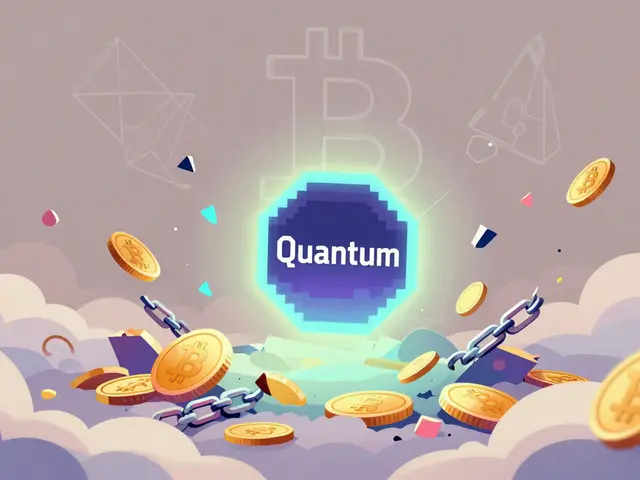
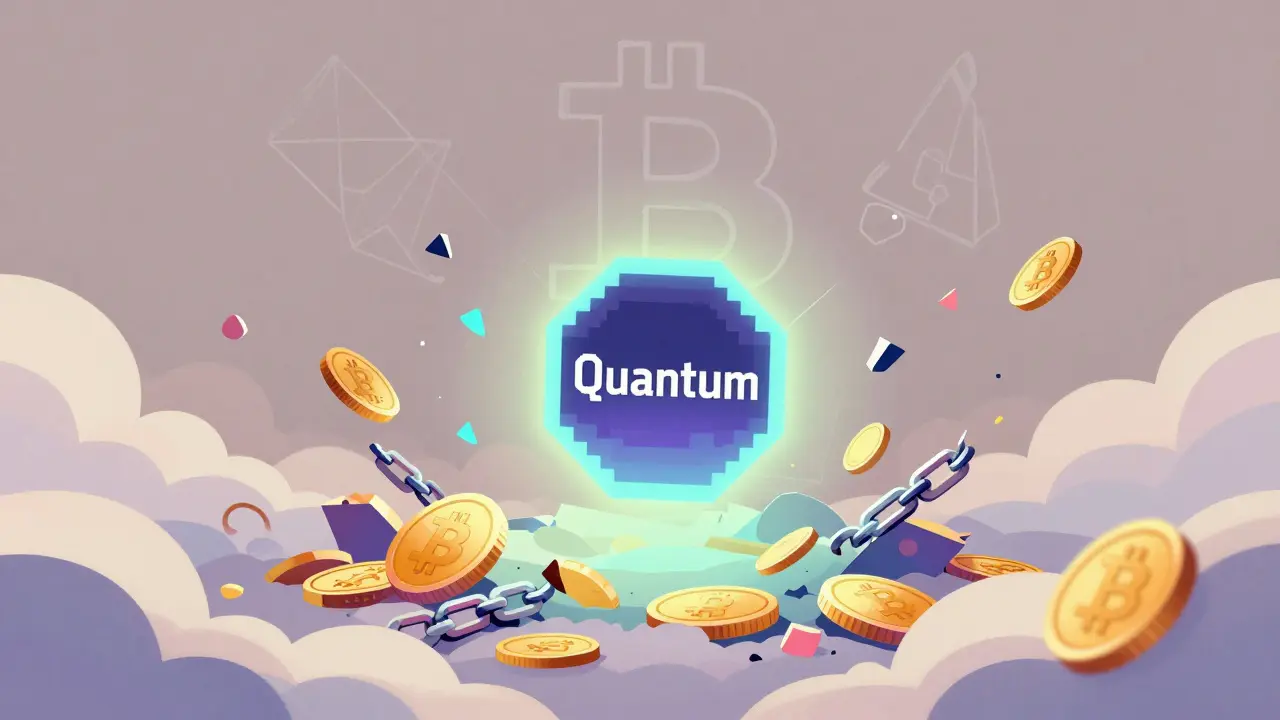
Then came the first actual NFT. On May 3, 2014, digital artist Kevin McCoy created "Quantum" on the Namecoin blockchain. It was a pixelated octagon that changed color and pulsated. While it didn’t spark a global movement immediately, it established the core principle of verifiable digital scarcity. For years, these early tokens existed in isolation, lacking a unified language for wallets and marketplaces to understand them. This fragmentation meant that owning an NFT was often a lonely experience-you couldn’t easily show it off or trade it outside its specific niche.
The Birth of ERC-721: Standardizing Uniqueness
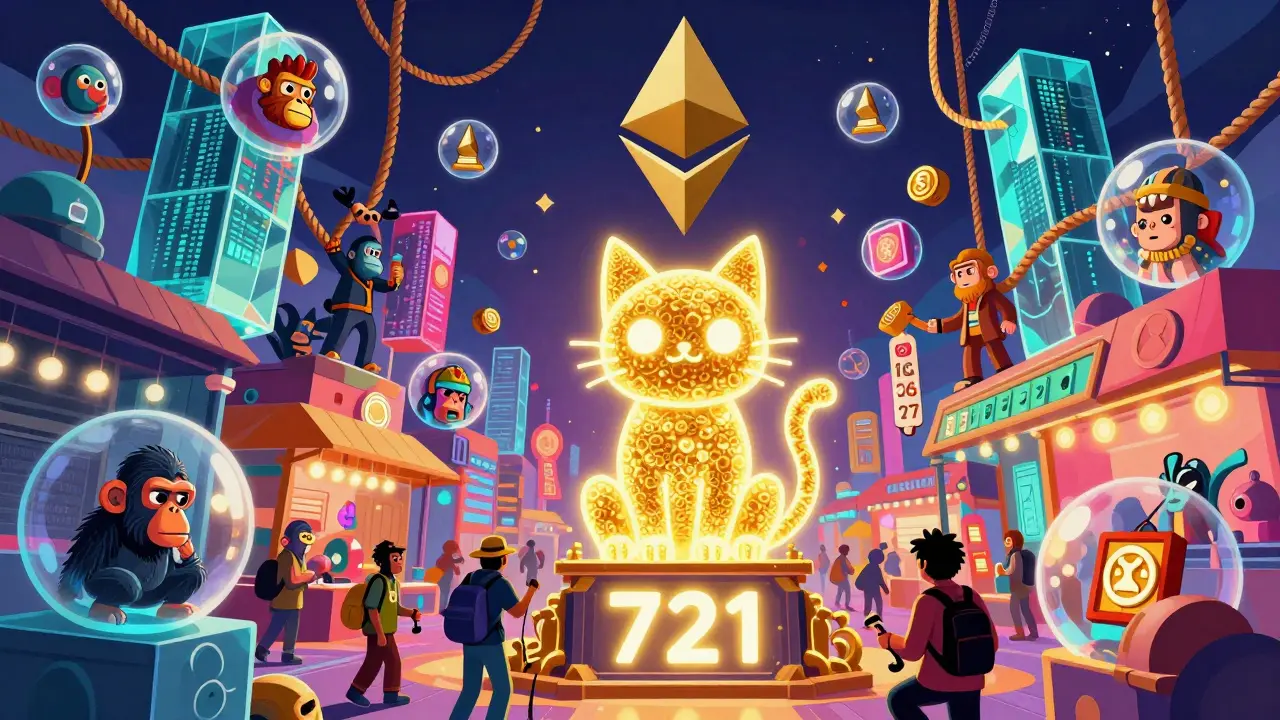
The game changed in 2018 with the introduction of ERC-721, which is the first formal standard for non-fungible tokens on the Ethereum blockchain. Proposed by William Entriken, Dieter Shirley, Jacob Evans, and Nastassia Sachs, ERC-721 provided a common interface for creating unique tokens. Before this, every smart contract for a unique item had to be written from scratch, leading to security risks and compatibility issues.
ERC-721 defines mandatory functions like `balanceOf` (how many tokens an address holds) and `ownerOf` (who owns a specific token ID). It also includes optional extensions for metadata, allowing each token to have a name, description, and image link. This standardization allowed marketplaces like OpenSea to support thousands of different collections without building custom integrations for each one.
| Feature | Description | Impact |
|---|---|---|
| Unique IDs | Each token has a distinct uint256 ID within the contract. | Ensures true uniqueness and individual ownership tracking. |
| Metadata Support | Allows linking to off-chain data via IPFS or centralized servers. | Enables rich content (images, videos) associated with tokens. |
| Interoperability | Standardized interface for wallets and marketplaces. | Reduced friction in trading and displaying NFTs. |
| Gas Costs | High per-transfer cost due to single-token operations. | Limitation for high-volume or low-value use cases. |
The catalyst for ERC-721’s adoption was CryptoKitties. Launched in November 2017 using an early version of the standard, this game allowed users to buy, sell, and breed virtual cats. Its popularity was so immense that it congested the entire Ethereum network, highlighting both the potential demand for NFTs and the scalability limitations of the existing infrastructure. Despite these growing pains, ERC-721 became the gold standard for digital art and collectibles, powering iconic projects like CryptoPunks and Bored Ape Yacht Club.
ERC-1155: Efficiency Through Multi-Token Design
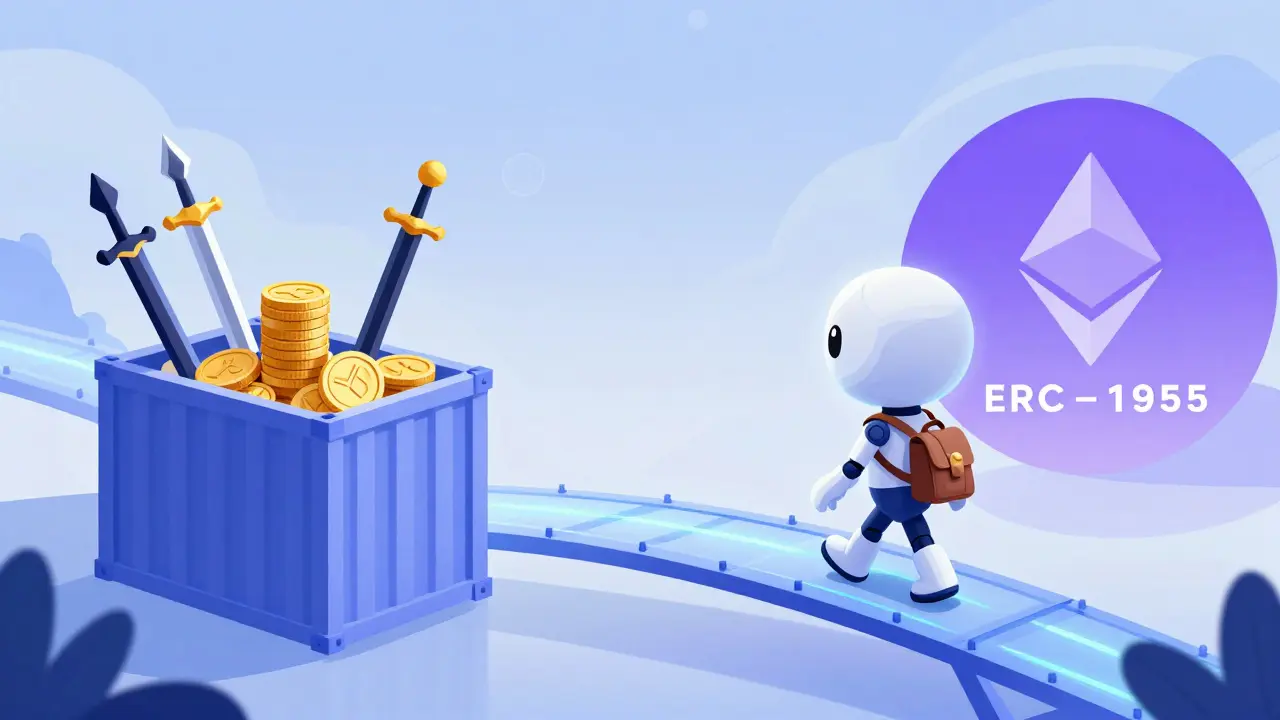
While ERC-721 solved the problem of uniqueness, it struggled with efficiency. Transferring multiple ERC-721 tokens required separate transactions for each item, leading to high gas fees. This was particularly problematic for gaming and applications involving large inventories. Enter ERC-1155, proposed by Witek Radomski of Enjin in June 2018.
ERC-1155 is a multi-token standard that allows a single smart contract to manage both fungible (interchangeable) and non-fungible (unique) tokens. Imagine a video game where players have unique swords (non-fungible) and thousands of identical gold coins (fungible). With ERC-721, you’d need two different contracts. With ERC-1155, one contract handles everything.
This design offers significant advantages:
- Batch Transfers: You can send hundreds of tokens in a single transaction, reducing gas costs by up to 90% compared to ERC-721.
- Simplified Wallet Integration: Wallets only need to support one standard to handle diverse asset types.
- Flexibility: Tokens can change status from fungible to non-fungible and vice versa within the same contract.
Gaming platforms were quick to adopt ERC-1155. Axie Infinity migrated over 2 million assets from ERC-721 to ERC-1155 in late 2021, cutting gas costs by 83%. Similarly, The Sandbox reduced average transaction costs from $4.21 to $0.47 per asset transfer, enabling smoother user experiences during major sales events. For developers, ERC-1155 represents a more scalable approach for utility-driven NFTs.
Beyond Ethereum: Solana and Alternative Chains
Ethereum isn’t the only player in the NFT space. As the market grew, other blockchains developed their own standards to address Ethereum’s high fees and slower transaction speeds. Solana, known for its speed and low costs, implemented its NFT standard through the Metaplex protocol.
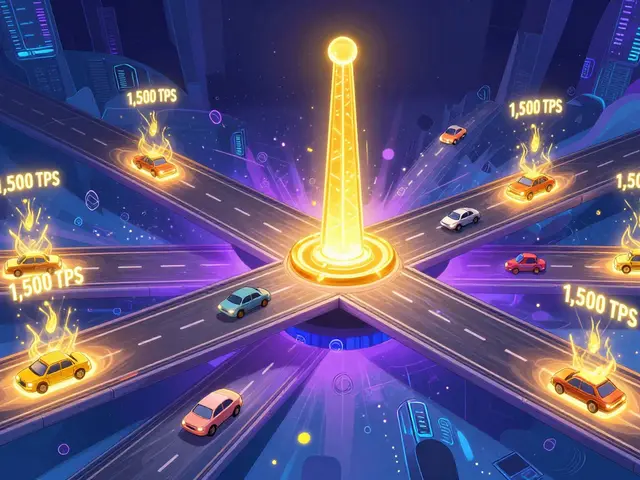
Solana’s approach differs significantly from Ethereum’s model. Instead of storing all metadata on-chain or relying heavily on IPFS hashes linked to the token, Solana uses a more structured on-chain metadata account. This results in faster indexing and lower storage costs. Transaction fees on Solana average around $0.00025 per NFT transfer, making it ideal for high-volume, low-value interactions like social media badges or micro-transactions in games.
However, this comes with trade-offs. Ethereum’s mature ecosystem offers deeper liquidity, more robust security audits, and wider institutional adoption. Solana’s lower barrier to entry attracts retail users and artists looking for affordability, but it lacks the same level of decentralized governance and historical trust. Other chains like Polygon and Flow have also carved out niches, offering hybrid solutions that bridge the gap between cost and security.
Current Challenges and Security Concerns
Despite advancements, NFT standards face ongoing challenges. One major issue is metadata reliability. Many ERC-721 tokens store their images and descriptions on centralized servers. If those servers go offline, the NFT becomes a broken link-a phenomenon known as "link rot." A Nansen report from January 2023 found that 12.7% of NFT collections had broken metadata links, leaving owners with empty placeholders instead of their purchased art.
Security vulnerabilities are another concern. A study by Imperial College London identified that 68.3% of ERC-721 contracts deployed between 2018 and 2021 contained critical security flaws related to approval mechanisms. These bugs could allow attackers to steal tokens if users granted improper permissions. Developers must stay vigilant, using audited libraries like OpenZeppelin and following best practices for access control.
Environmental impact was also a significant criticism before Ethereum’s transition to proof-of-stake in September 2022. Prior to the Merge, each ERC-721 transaction consumed approximately 171.7 kWh of energy. Post-Merge, this dropped by 99.95%, aligning Ethereum more closely with sustainability goals. However, some alternative chains still rely on energy-intensive consensus mechanisms, raising questions about long-term ecological viability.
The Future: Token Bound Accounts and Cross-Chain Interoperability
The evolution of NFT standards is far from over. Emerging proposals aim to give NFTs greater autonomy and functionality. ERC-6551, proposed in early 2023, introduces "Token Bound Accounts" (TBAs). This innovation allows NFTs to have their own wallets, enabling them to hold other assets, interact with smart contracts, and maintain a transaction history independent of their owner. Imagine owning a virtual land plot that automatically collects rent in crypto or a character in a game that earns XP even when you’re not playing.
Cross-chain interoperability is another frontier. Currently, moving an NFT from Ethereum to Solana requires complex bridging processes that carry security risks. Protocols like Polygon’s PoS bridge are handling millions of transfers monthly, but seamless cross-chain compatibility remains a work in progress. Industry experts predict that by 2025, 70% of enterprise NFT implementations will use hybrid standards combining elements of ERC-721, ERC-1155, and custom extensions to meet specific needs.
Decentralized identity (DID) integration is also gaining traction. Projects like Microsoft’s ION are exploring ways to verify NFT ownership without revealing personal information, enhancing privacy and security. Additionally, sustainability-focused standards like EIP-3643 are emerging to track carbon footprints within NFT metadata, appealing to environmentally conscious consumers.
Choosing the Right Standard for Your Project
If you’re a creator or developer, selecting the right NFT standard depends on your goals:
- Digital Art & Collectibles: Stick with ERC-721 for maximum marketplace support and prestige.
- Gaming & Utility Tokens: Choose ERC-1155 for efficiency, batch transfers, and mixed asset types.
- High-Volume, Low-Cost Applications: Consider Solana’s Metaplex standard for affordability and speed.
- Advanced Functionality: Explore ERC-6551 if you want NFTs to act as autonomous agents.
Always prioritize security by using audited code libraries and storing metadata on decentralized networks like IPFS or Filecoin. Engage with community resources like the Ethereum NFT Developers Discord to stay updated on best practices and emerging trends.
What is the main difference between ERC-721 and ERC-1155?
ERC-721 is designed for unique, non-fungible tokens where each item has a distinct ID and value. ERC-1155 is a multi-token standard that allows both fungible and non-fungible tokens within a single contract, enabling efficient batch transfers and lower gas costs.
Why did CryptoKitties cause network congestion?
CryptoKitties used an early version of the ERC-721 standard on Ethereum. Its massive popularity led to a surge in transactions that overwhelmed the network’s capacity, highlighting the scalability limitations of Ethereum at the time and driving interest in layer-2 solutions and alternative standards.
Is it safe to store NFT metadata on centralized servers?
No, it is risky. If the server goes offline or changes URLs, the NFT’s image and details may disappear, resulting in "link rot." Best practice is to use decentralized storage solutions like IPFS or Filecoin to ensure permanent accessibility.
How does ERC-6551 change the future of NFTs?
ERC-6551 introduces Token Bound Accounts, allowing NFTs to have their own wallets. This enables NFTs to hold assets, earn rewards, and interact with smart contracts independently, transforming them from static collectibles into dynamic, functional entities.
Which blockchain is best for low-cost NFT transactions?
Solana is currently one of the most cost-effective options, with average transaction fees around $0.00025 per NFT transfer. Its high throughput and low latency make it suitable for high-volume applications like gaming and social media badges.
What role does metadata play in NFT standards?
Metadata provides the context for an NFT, including its name, description, and media files (images, videos). While the token itself exists on the blockchain, metadata is often stored off-chain. Reliable metadata storage is crucial for maintaining the integrity and value of the NFT.
Can ERC-1155 tokens be used for digital art?
Yes, ERC-1155 can represent unique digital art just like ERC-721. However, ERC-721 remains more widely supported by major marketplaces for high-value art collections. ERC-1155 is better suited for scenarios involving multiple items or mixed asset types.
How has Ethereum's shift to proof-of-stake affected NFTs?
The transition to proof-of-stake (The Merge) reduced Ethereum’s energy consumption by 99.95%, addressing environmental concerns. It also improved network stability and paved the way for further scalability upgrades, benefiting NFT transactions indirectly.