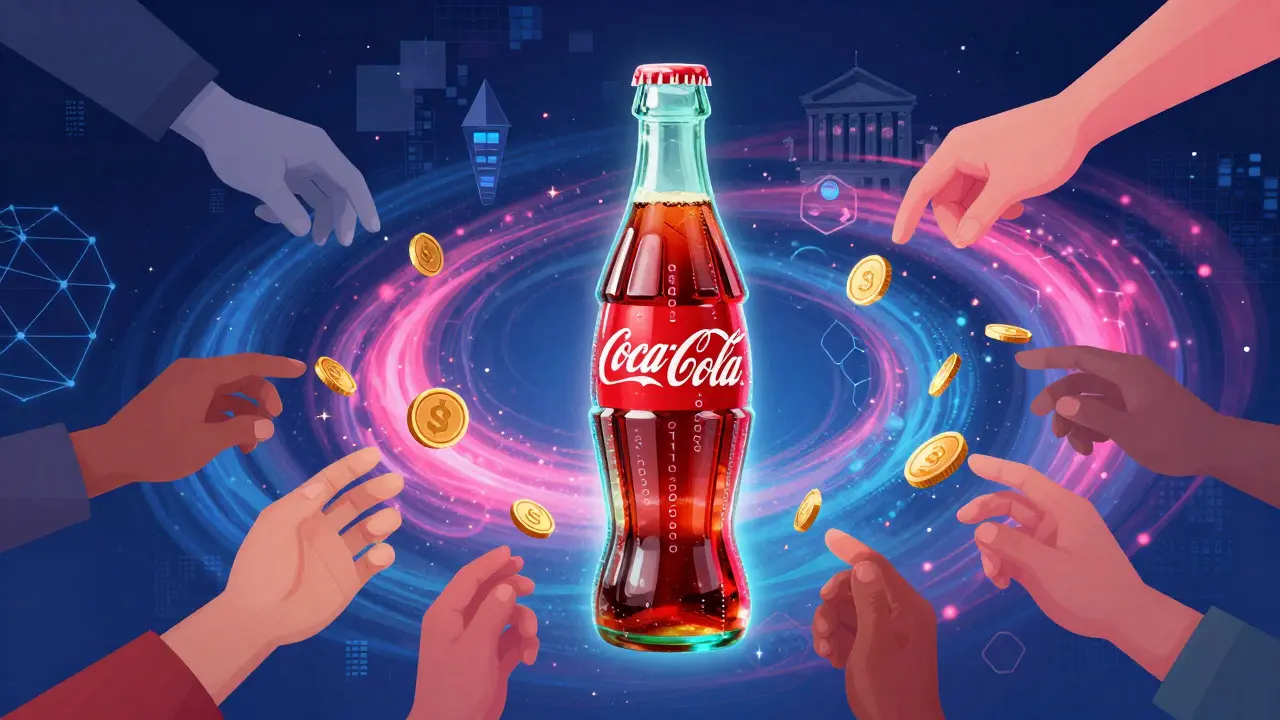
Imagine owning a piece of The Coca-Cola Company without opening a U.S. brokerage account or dealing with cross-border transfer fees. That is exactly what KOon offers. It is a blockchain-based token that tracks the price of Coca-Cola stock (ticker: KO). Issued by Ondo Finance, this digital asset lets investors in many countries buy exposure to one of the world's most recognized brands using cryptocurrency infrastructure.
If you are wondering if this is just another speculative meme coin, the answer is no. KOon is a tokenized equity product. Its value is directly linked to the performance of Coca-Cola shares on traditional stock exchanges. This article breaks down how it works, where to buy it, and who should consider adding it to their portfolio.
Quick Summary / Key Takeaways
- KOon is an ERC-20 token on the Ethereum network representing Coca-Cola stock.
- It allows non-U.S. investors to gain economic exposure to KO stock with automatic dividend reinvestment.
- Trading is available 24 hours a day, 5 days a week, bridging time zone gaps between global markets.
- The current market cap is small (~$3.5M), indicating early-stage adoption rather than mainstream dominance.
- Risks include counterparty reliance on Ondo Finance and regulatory restrictions in certain jurisdictions.
How KOon Works: The Mechanics of Tokenized Equity
To understand KOon, you have to look at the bridge it builds between traditional finance (TradFi) and decentralized finance (DeFi). In a standard setup, buying Coca-Cola stock requires a custodian-a bank or broker-to hold your shares. With KOon, Ondo Finance acts as the issuer and custodian, holding the underlying assets while distributing tokens to investors.
The process is straightforward:
- Minting: When demand rises, Ondo buys actual Coca-Cola shares and issues new KOon tokens backed by those assets.
- Trading: Investors buy and sell KOon on crypto exchanges like Bybit, Binance, or Crypto.com.
- Redemption: If you want out, you can redeem your tokens for fiat currency, and Ondo sells the corresponding shares.
This mechanism ensures that the token price stays closely aligned with the real-world stock price. Because minting and redemption are instant, large price discrepancies (arbitrage opportunities) are quickly corrected by traders. This keeps KOon trading very close to the actual value of Coca-Cola shares, unlike pure crypto assets that can deviate significantly from any underlying physical commodity.
Market Data and Performance Metrics
As of late August 2026, KOon trades in the range of $79.00 to $80.00 USD. While prices vary slightly across different exchanges due to liquidity differences, the consensus hovers around $79.50. This price reflects the current valuation of Coca-Cola stock plus a minimal premium or discount associated with the tokenization process.
| Metric | Value | Context |
|---|---|---|
| Current Price | ~$79.50 USD | Tracks KO stock price closely |
| Market Cap | $3.57 Million | Small cap; early adoption stage |
| Circulating Supply | ~45,000 Tokens | No maximum supply cap defined |
| 24-Hour Volume | ~$3.0 Million | High velocity relative to market cap |
| All-Time High | $83.67 (Mar 2026) | Reflects peak interest period |
| Token Holders | 552 Addresses | Concentrated investor base |
You might notice that the daily trading volume ($3M) is nearly equal to the total market cap ($3.57M). This high turnover ratio suggests active trading, likely driven by arbitrageurs ensuring the token price matches the stock price, as well as retail investors entering and exiting positions frequently. For a stable blue-chip company like Coca-Cola, this level of activity indicates healthy liquidity for its size, even if the absolute numbers seem modest compared to major cryptocurrencies like Bitcoin or Ethereum.
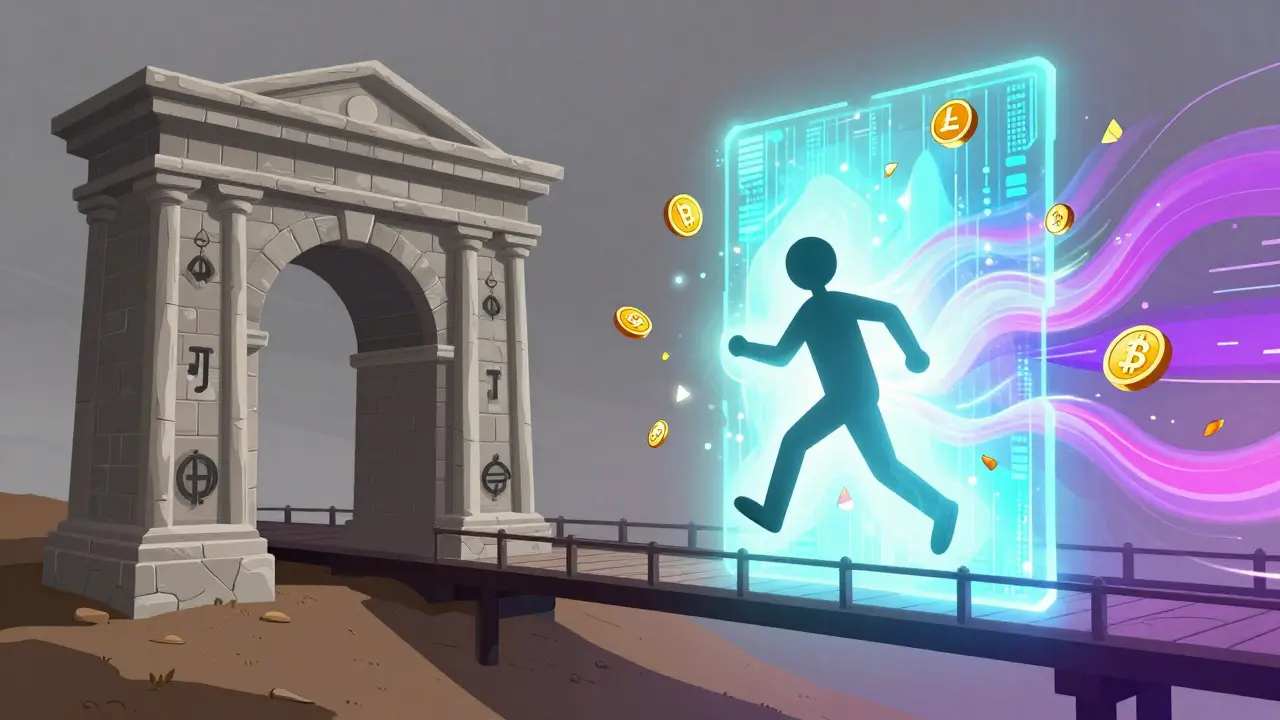
Who Should Use KOon? Ideal Investor Profiles
KOon isn't for everyone. It solves specific problems for specific types of investors. Here is who benefits most from this tool:
- International Retail Investors: If you live outside the U.S. and find opening a U.S. brokerage account difficult due to documentation, minimum deposits, or currency exchange hurdles, KOon offers a simpler entry point. You just need a crypto exchange account.
- Crypto-Native Traders: If you already hold USDC or ETH and want to diversify into traditional equities without leaving the blockchain ecosystem, KOon provides a seamless way to do so.
- Time-Zone Challenged Users: Traditional U.S. stock markets only trade during specific hours. KOon trades 24/5, allowing investors in Asia or Europe to react to news during their local business hours.
However, if you are a U.S. resident, KOon may not be the best option. Regulatory classifications often treat tokenized stocks as securities, which can complicate tax reporting and availability for domestic investors. Additionally, if you prefer direct ownership with voting rights, KOon typically does not grant these privileges; it is purely an economic exposure instrument.
Risks and Considerations Before Buying
While KOon tracks a stable company like Coca-Cola, it introduces new layers of risk that don't exist in traditional stock ownership.
Counterparty Risk
You are trusting Ondo Finance to hold the actual shares securely. If Ondo goes bankrupt, gets hacked, or faces legal issues, accessing your underlying assets could become complicated. Unlike a public stock held in a regulated custody account, this relies heavily on the issuer's operational integrity.
Regulatory Uncertainty
The regulatory landscape for tokenized equities is still evolving. Different countries have different rules about whether these tokens count as securities, commodities, or something else. Always check if KOon is legally permitted for purchase in your jurisdiction. Some platforms may restrict access based on your IP address or KYC data.
Liquidity Constraints
With only 552 holders and a small market cap, large orders could move the price more than they would in a deep traditional market. If you are trying to buy or sell a significant amount of KOon, you might face slippage. It is best suited for smaller, retail-sized positions rather than institutional block trades.

How to Buy and Sell KOon
Buying KOon follows the standard workflow for most crypto assets. Here is a step-by-step guide:
- Choose an Exchange: KOon is listed on major platforms like Bybit, Binance (via Alpha), and Crypto.com. Pick one that supports your local payment methods.
- Create an Account: Sign up and complete identity verification (KYC). Level 1 verification is usually sufficient for trading.
- Fund Your Wallet: Deposit fiat currency (USD, EUR, etc.) or a stablecoin like USDC. Stablecoins are often preferred for lower fees and faster settlement.
- Search for KOon: Look for the ticker "KOon" or "KOON" in the search bar. Double-check the contract address to ensure you are buying the correct token issued by Ondo Finance.
- Place Your Order: Use a market order for immediate execution or a limit order to set your desired price. Given the tight spread, market orders are usually fine for small amounts.
Selling works similarly. You place a sell order, and the funds return to your exchange wallet as fiat or stablecoins. You can then withdraw them to your bank account or keep them in crypto for further investment.
KOon vs. Traditional Brokers: A Comparison
Why choose a token over a regular stock? Let’s compare the two approaches side-by-side.
| Feature | KOon (Tokenized) | Traditional Broker |
|---|---|---|
| Access Barrier | Low (Crypto exchange account) | High (Bank docs, min. deposits) |
| Trading Hours | 24/5 | Market hours only (9:30-4:00 ET) |
| Settlement Time | Near-instant | T+2 days |
| Dividend Handling | Automatic reinvestment | Manual cash payout |
| Voting Rights | None | Yes |
| Primary Risk | Issuer/Custody risk | Broker failure (SIPC protected) |
The trade-off is clear. You gain convenience, speed, and global accessibility with KOon, but you sacrifice some protections and control inherent in traditional brokerage accounts. For international users who cannot easily open U.S. accounts, the convenience factor often outweighs the added complexity of smart contracts.
Frequently Asked Questions
Is KOon a safe investment?
KOon is as safe as the combination of Coca-Cola's stock performance and Ondo Finance's operational stability. Since Coca-Cola is a blue-chip company, the underlying asset risk is low. However, you must trust Ondo to manage the custody correctly. It is safer than speculative altcoins but carries more issuer risk than a direct bank-held stock.
Do I get dividends from Coca-Cola when holding KOon?
Yes, but indirectly. Instead of receiving cash dividends in your bank account, the value of your KOon tokens adjusts to reflect the dividend payments, or the system automatically reinvests the dividends into more tokens. This means your holding grows over time similar to a dividend-reinvestment plan (DRIP).
Can I use KOon in DeFi protocols?
Technically, yes, because it is an ERC-20 token. You can deposit it into lending markets or use it as collateral on some DeFi platforms. However, because it represents a regulated security, not all DeFi protocols accept it. Check the specific protocol's whitelist before depositing.
What happens if Ondo Finance shuts down?
This is the primary risk. If Ondo fails, the tokens might lose their backing. To mitigate this, Ondo uses reputable custodians for the underlying assets. However, there is no SIPC insurance equivalent for tokenized stocks. Diversifying your holdings across multiple issuers or sticking to direct stock ownership for large sums is a common risk management strategy.
Where can I track the price of KOon?
You can track KOon on major crypto aggregators like CoinMarketCap, CoinGecko, and Crypto.com. For real-time trading prices, check the specific exchange you use, such as Bybit or Binance. Note that slight price differences between platforms are normal due to liquidity variations.



nic c
August 29, 2026 AT 19:40Oh, you think this is a revolution? It’s just a digital receipt for the same old syrup and sugar that has been clogging our arteries since the turn of the century. You’re not investing in a brand; you’re betting on a legacy of beige mediocrity wrapped in a shiny new blockchain wrapper. The whole concept feels like putting a turbocharger on a horse-drawn carriage. Sure, it moves faster, but it still smells like manure. I’ve seen too many 'innovative' financial products crumble under the weight of their own hype cycles, and this one reeks of desperation from a company that can’t come up with a new flavor that doesn't taste like artificial nostalgia. Why would anyone want to tokenize a stock when they could just buy the actual shares without trusting some tech bro in a hoodie to keep his hands off the custody keys? It’s a Rube Goldberg machine of complexity for zero additional value. The liquidity is so thin it makes a whisper sound like a shout. You’re not diversifying your portfolio; you’re concentrating your risk in a smart contract that might have a bug in it. And don’t get me started on the '24/7 trading' perk. Who needs to panic sell Coca-Cola at 3 AM? Sleep is a better asset allocation strategy than this nonsense. This is peak performative finance. We are pretending to be modern while actually just making things harder to understand. The real innovation would be if they tokenized the air we breathe, because at least that’s something we all need and can’t easily fake. But no, they had to go with the safe, boring, over-caffeinated giant. Bravo. Truly groundbreaking stuff.
Kevin Payette
August 30, 2026 AT 14:55You're missing the point entirely.
The friction is the product.
Rebecca Springer
August 31, 2026 AT 12:20I appreciate the passion here, everyone. For those of us outside the US who struggle with getting a brokerage account due to documentation hurdles, this does seem like a practical workaround. It’s not about replacing the traditional market, but rather opening a door that was previously locked. Just be mindful of the regulatory side in your specific country before diving in. It’s a small step, but sometimes small steps are all we have.
J Shepherd
September 2, 2026 AT 10:27From a DeFi yield optimization standpoint, this is actually a solid alpha play. The ERC-20 standard means you can potentially use KOon as collateral in lending markets, which opens up leverage opportunities that aren't available with direct equity holdings. The counterparty risk is real, sure, but Ondo has a decent track record with institutional-grade custody partners. If you're looking to maximize capital efficiency without leaving the chain, this is one of the few blue-chip proxies that actually works. Just watch out for the slippage if you're moving large size; the order book isn't deep enough for whale-sized entries yet. But for retail accumulation, it's a clean entry point into TradFi exposure without the KYC headache of a local bank.
Steve Sulley
September 4, 2026 AT 01:06its just another way for the rich to wash money through crypto
think about it
coca cola is a monopoly anyway
why bother with tokens when you can just drink the water
the whole thing is a psyop to make us feel like we are part of the future
but really we are just buying more plastic bottles
typo alert: i mean its a scam
but a nice one
at least its not bitcoin
that one was worse
Linda Jevne
September 6, 2026 AT 00:47There is something poetic about tokenizing a beverage that has become synonymous with global commerce. It speaks to our desire to fragment ownership in an increasingly interconnected world. We are no longer just consumers; we are micro-shareholders in the machinery of modern life. Yet, it also raises questions about what it means to truly 'own' something when the asset is merely a promise held by a third party. Is the joy in the sip, or in the spreadsheet? Perhaps both. The aesthetic of holding a piece of history in a digital wallet is undeniably cool, even if the mechanics are dry. It bridges the gap between the tangible past and the intangible future. In a way, it’s a mirror reflecting our current economic anxieties: we want stability, but we crave the novelty of the new. The tension is palpable. It’s a fascinating experiment in how we value trust versus transparency. Whether it succeeds or fails, it will change how we view the boundary between money and media. A curious development indeed.