Imagine you’re trying to agree on who paid whom in a town where nobody trusts the bank. You need a way to stop someone from spending the same dollar twice. That’s the core problem Proof of Work (PoW) solves. It’s not just tech jargon; it’s the engine that keeps Bitcoin running without a CEO or a government telling everyone what’s true.
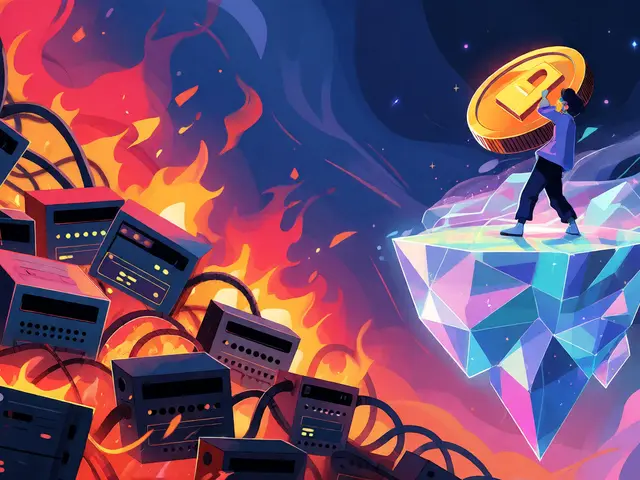
You might have heard people complain about how much electricity Bitcoin uses. They aren’t wrong-it’s massive. But that energy isn’t wasted. It’s the price we pay for security. Think of it like a digital fortress. The more guards (computing power) you have, the harder it is for an attacker to break in. If you want to understand why your crypto wallet feels safe even when the market crashes, you need to look under the hood at how PoW actually works.
The Core Idea: Why Do We Need Proof of Work?
Before Bitcoin, digital money had a fatal flaw: double-spending. If I send you a digital file representing $10, what stops me from sending that same file to ten other people? In the physical world, handing over a bill means I don’t have it anymore. In the digital world, copying a file is free.
Satoshi Nakamoto, the creator of Bitcoin, solved this by introducing a cost to adding new transactions to the ledger. Instead of letting anyone write down a transaction, he required them to solve a difficult math puzzle first. This is the "work" in Proof of Work. By making it expensive and time-consuming to add data, the network ensures that cheating costs more than the reward for winning.
This mechanism creates trust among strangers. You don’t need to know the person validating your transaction. You just need to know that they spent real-world resources (electricity and hardware) to do it. If they tried to lie, they’d lose those resources. It’s a brilliant economic trick.
How Does Mining Actually Work?
Let’s break down the process step-by-step. When you buy coffee with Bitcoin, your transaction goes into a waiting room called the mempool. Miners pick up these transactions and bundle them into a candidate block. But before they can add this block to the chain, they have to find a specific number, known as a nonce.
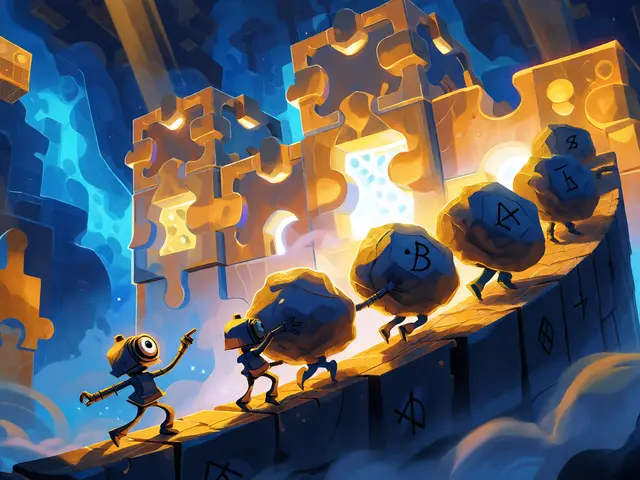
Here is the catch: they have to guess this number billions of times per second. They take the block’s data, mix it with a random guess, and run it through a cryptographic function called SHA-256. The goal is to produce a hash (a unique string of characters) that starts with a certain number of zeros. The more zeros required, the harder the puzzle.
- The Guess: Miner A tries nonce 12345. Hash fails.
- The Retry: Miner A tries nonce 12346. Hash fails.
- The Win: Miner B tries nonce 98765. Hash starts with 000000... Success!
Miner B shouts the answer to the rest of the network. Other miners quickly verify the hash. Verification is instant and cheap. Finding it was hard; checking it is easy. Once verified, the block is added to the blockchain, and Miner B gets rewarded with new Bitcoin and transaction fees.

Who Uses Proof of Work Today?
While many newer cryptocurrencies switched to lighter methods, PoW remains the gold standard for value storage. Bitcoin is the biggest user, but it’s not alone. Networks like Litecoin, Monero, and Ethereum Classic also rely on it.
You might wonder why Ethereum isn’t on this list. As of September 2022, Ethereum completed "The Merge," switching from PoW to Proof of Stake (PoS). This move reduced its energy consumption by roughly 99.95%. However, Bitcoin stuck with PoW because its primary goal is being a secure store of value, similar to digital gold. For gold, you don’t care if it takes a lot of effort to mine; you care that it’s rare and secure.
| Feature | Proof of Work (PoW) | Proof of Stake (PoS) |
|---|---|---|
| Security Basis | Computational Power (Energy) | Financial Stake (Capital) |
| Energy Usage | High (e.g., ~121 TWh/year for BTC) | Low (Minimal) |
| Transaction Speed | Slower (10 min blocks for BTC) | Faster (12 sec blocks for ETH) |
| Decentralization | Hardware-dependent | Wealth-dependent |
The Energy Debate: Is It Worth It?
Critics love to point out that Bitcoin consumes more electricity than some countries. According to the Cambridge Bitcoin Electricity Consumption Index, Bitcoin uses around 121 terawatt-hours annually. That’s comparable to Argentina’s usage. Sounds bad, right?
But context matters. First, a significant portion of this energy comes from renewable sources or stranded gas-energy that would otherwise be wasted. Companies like Marathon Digital Holdings report using over 68% renewable energy in their operations. Second, compare this to traditional banking. The global banking system, including branches, ATMs, and server farms, consumes vastly more energy. PoW replaces intermediaries with code, shifting the cost from human infrastructure to computational infrastructure.
Also, the difficulty adjusts automatically. If miners leave the network because prices drop, the puzzles get easier, keeping block times consistent. If too many join, puzzles get harder. This self-regulating nature prevents the network from becoming chaotic.

Risks and Real-World Challenges
PoW isn’t perfect. The biggest threat is the 51% attack. If one entity controls more than half the network’s computing power, they could theoretically rewrite history. For Bitcoin, this is nearly impossible today. Controlling 51% of Bitcoin’s hashrate would require hundreds of billions of dollars in specialized hardware (ASICs) and massive amounts of electricity. No single company or country has done it yet.
For smaller PoW coins, however, this risk is real. Hackers have successfully attacked networks like Ethereum Classic multiple times because their total security budget is lower. This highlights a key rule: PoW security scales with the asset’s value. High-value assets attract high security; low-value assets are vulnerable.
Another challenge is centralization. Mining has moved from home computers to massive industrial farms. While this increases security, it raises questions about decentralization. If three pools control most of the hash rate, are they too powerful? Currently, checks and balances prevent abuse, but it’s a watchlist item for regulators.
Why Should You Care About PoW?
If you hold Bitcoin or any major PoW cryptocurrency, understanding this mechanism helps you gauge risk. It explains why the price doesn’t crash every time a miner shuts down during a heatwave. The network adapts. It also clarifies why Bitcoin moves slower than Solana or Ethereum. Speed isn’t the priority; survival is.
As regulations evolve, such as the EU’s MiCA rules requiring environmental disclosures, PoW networks will face pressure to prove their sustainability. Innovations like "Proof of Useful Work," which aims to direct mining computations toward scientific problems, may eventually bridge the gap between security and utility. For now, though, PoW remains the most battle-tested method for securing digital scarcity.
Is Proof of Work still relevant after Ethereum switched to Proof of Stake?
Yes, absolutely. While Ethereum moved to Proof of Stake for efficiency, Bitcoin remains the dominant store of value and continues to use Proof of Work. Its security model is considered superior for high-value, long-term holdings because it relies on physical energy expenditure rather than financial collateral, making it resistant to different types of attacks.
Can I mine Bitcoin on my laptop?
Technically, yes, but you won’t make money. Modern Bitcoin mining requires specialized hardware called ASICs (Application-Specific Integrated Circuits) that perform trillions of calculations per second. Your laptop would take years to mine a fraction of a cent while consuming more in electricity costs than it earns.
What happens if all miners stop working?
If miners stopped, no new blocks would be created, and transactions would pile up in the mempool. The network wouldn’t die, but it would freeze until new miners joined. Difficulty would adjust downward once activity resumed, allowing new participants to enter easily.
Is Proof of Work eco-friendly?
It depends on the energy source. Bitcoin mining often utilizes stranded energy or renewables that cannot be stored on the grid. However, the absolute energy consumption is high. Critics argue it’s wasteful, while proponents say it provides essential security services worth the cost, similar to the energy used by gold mining or the traditional banking sector.
What is a 51% attack?
A 51% attack occurs when a single group controls more than half of the network’s mining power. They could potentially reverse recent transactions to spend coins twice. On large networks like Bitcoin, this is economically prohibitive due to the immense cost of acquiring enough hardware and electricity.