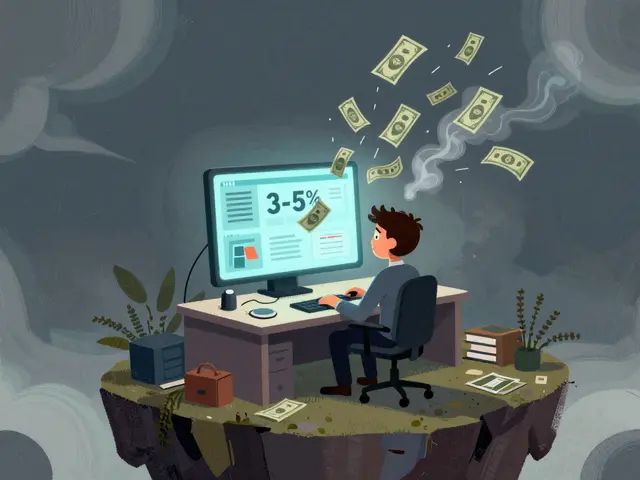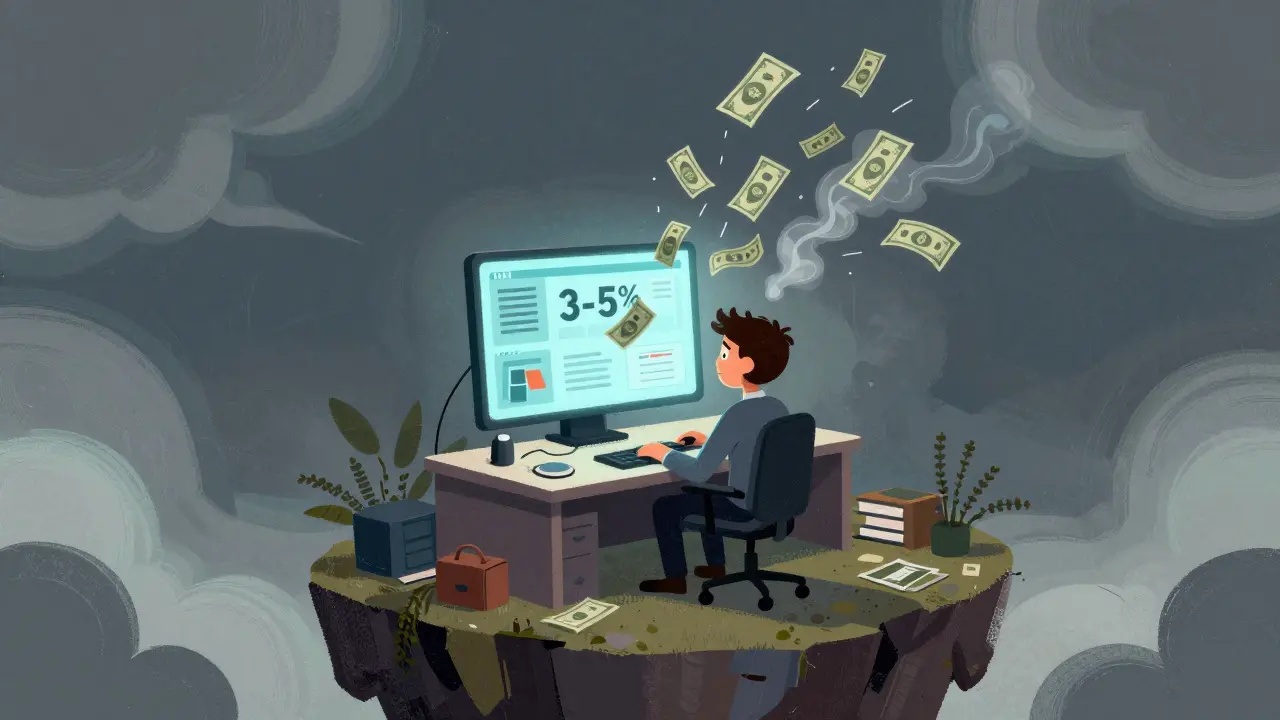
You spend months building a product. You finally get your first paying customers. Then you look at the dashboard and realize that roughly 3% to 5% of every dollar earned is vanishing into platform fees. For a solo founder running a lean operation, that drag isn't just an expense-it's a threat to survival.
This is where the concept of take rate, defined as the percentage of gross transaction value (GMV) that a payment platform or marketplace retains as commission, becomes critical. A 0% take-rate on volume means the infrastructure provider charges zero percent of your sales volume as a fee. Instead, they might charge a flat subscription. For indie hackers and solo operators, this distinction changes the math entirely.
The Hidden Cost of Percentage-Based Fees
Most developers treat payment processing like electricity-a utility cost you pay without thinking. But when you are a one-person business, that "utility" can eat your margins alive. Traditional processors like Stripe or PayPal operate on a variable pricing model. They typically charge around 2.9% plus a fixed amount per transaction.
Let's look at the real numbers. If you have a SaaS product generating $50,000 in Monthly Recurring Revenue (MRR), that standard 2.9% fee translates to roughly $1,450 a month. That is $17,400 a year gone before you even pay for server costs or marketing. Now, imagine using a Merchant-of-Record service like Paddle or LemonSqueezy, which handles taxes and compliance but often charges closer to 5%. At that same revenue level, you are looking at $2,500 a month, or $30,000 annually.
For a solo founder targeting a net margin of 20%, losing 3% to 5% just to move money is painful. It forces you to raise prices, potentially reducing conversion rates, or accept lower personal income. This is why understanding the difference between a percentage-based take rate and a flat-fee model is essential for financial planning.
How 0% Take Rate Changes Unit Economics
When a platform offers a 0% take rate on volume, it decouples their revenue from your success. The platform does not profit more when you sell more. This alignment is rare in fintech. In this model, the platform usually earns through a fixed monthly subscription rather than a cut of your GMV.
Consider a scenario where you scale to $1 million in annual revenue. With a traditional 3% processor fee, you pay $30,000. With a 0% take-rate model charging a flat $20/month, your total fee is only $240. The difference is $29,760. That is nearly $30,000 back in your pocket to hire help, build features, or simply take home as salary.
This structure rewards growth. As your volume increases, your effective cost-per-transaction drops toward zero. Traditional models do the opposite: the more you sell, the more you pay in absolute dollars, even if the percentage stays static. For bootstrapped businesses, preserving cash flow during high-growth periods is often the difference between scaling up and burning out.
Crypto Billing: The Natural Fit for Zero Commission
If fiat credit card networks rely on interchange fees paid to banks, cryptocurrency operates differently. There are no intermediaries taking a cut of the principal amount. This makes crypto billing an ideal candidate for 0% take-rate structures.
In the world of digital assets, you can use a non-custodial payment gateway, which is a system that facilitates payments without holding user funds, allowing merchants to retain full control of their private keys. Because the gateway never touches the money, it has no reason to charge a percentage fee for custody or risk management. It simply provides the software interface and webhook notifications.
Platforms like TxNod exemplify this approach. By connecting your own hardware wallet-such as a Ledger or Trezor-the gateway generates invoice addresses derived from your public keys. When a customer pays, the funds go directly to your wallet on-chain. The platform acts purely as a communication layer, verifying transactions and notifying your application via signed webhooks. Since there is no counterparty risk for the platform, they can offer a flat subscription model with 0% take rate on volume.
This setup eliminates the "middleman tax." You still pay network gas fees (which vary by blockchain), but you do not pay a 3% commission to a payment processor. For high-ticket items or recurring subscriptions, the savings are immediate and significant.
Beyond Fees: Control and Autonomy
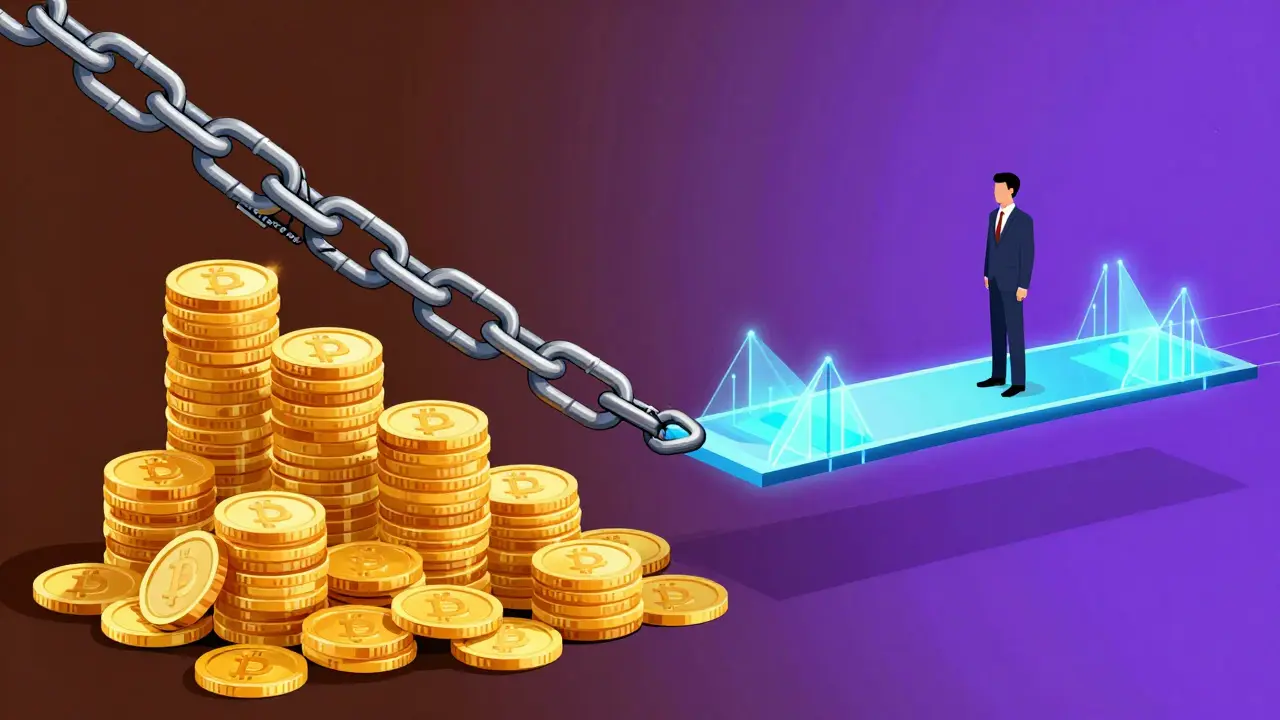
While the economics are compelling, the operational benefits of a 0% take-rate crypto model are equally important for solo founders. Traditional payment processors hold immense power over your business. They can freeze accounts, hold payouts for review, or ban you for selling products they deem "high-risk."
These freezes can happen overnight. If your Stripe account is suspended, your entire revenue stream stops. You cannot refund customers, you cannot process new orders, and your cash flow halts while you appeal the decision. This centralization of power creates fragility for small businesses.
In contrast, non-custodial crypto systems are structurally immune to these risks. Because the funds settle directly to your wallet, no third party can freeze them. There are no chargebacks in the traditional sense; once a transaction is confirmed on the blockchain, it is final. There are no payout holds because there is no intermediary balance to withdraw from. You own the asset immediately upon settlement.
This autonomy is crucial for creators selling digital goods, NFTs, or controversial content. It allows you to operate globally without worrying about regional banking restrictions or arbitrary policy changes from US-based payment giants. You are building on open protocols, not rented land.
| Feature | Traditional Processor (e.g., Stripe) | Merchant-of-Record (e.g., Paddle) | Non-Custodial Crypto Gateway (e.g., TxNod) |
|---|---|---|---|
| Take Rate on Volume | ~2.9% + $0.30 | ~5% | 0% |
| Pricing Model | Per-transaction fee | Percentage of GMV | Flat monthly subscription |
| Fund Custody | Platform holds funds briefly | Platform holds funds | Merchant holds funds (Non-custodial) |
| Risk of Freeze/Hold | High (Policy violations) | Medium (Compliance checks) | None (Structural impossibility) |
| Chargebacks | Yes (Customer disputes) | Handled by Platform | No (Final settlement) |
| Tax Compliance | Merchant responsibility | Platform responsibility | Merchant responsibility |
The Trade-Off: Complexity vs. Savings
No solution is perfect. Choosing a 0% take-rate crypto model requires accepting certain responsibilities that traditional processors handle for you. The primary trade-off is complexity.
With a service like Paddle, you offload VAT calculation, sales tax collection, and global compliance. They act as the legal seller of record. This saves time and reduces legal risk, which is why many solo founders tolerate the higher 5% fee. However, this convenience comes at a steep financial price.
With a non-custodial gateway, you remain the seller of record. You must manage your own tax obligations. Additionally, you need to be comfortable managing private keys and understanding basic blockchain concepts. You cannot lose your seed phrase, and you must ensure your wallet security is robust.
However, the barrier to entry has lowered significantly. Modern tools make integration easier than ever. For example, TypeScript SDKs allow developers to embed checkout flows with minimal code. Some platforms even offer sandbox environments that let you test the entire lifecycle-from invoice creation to webhook receipt-in minutes without needing real crypto. AI coding agents can now generate the necessary boilerplate code, reducing the technical overhead for vibe-coders and indie hackers.
For a solo founder who values financial sovereignty and long-term margin retention, the learning curve is a worthy investment. The goal is to shift from renting infrastructure to owning your stack.
Who Should Switch to 0% Take Rate?
Not every business needs to switch to crypto billing. If you are selling low-cost physical goods with thin margins and your audience primarily uses credit cards, the friction of crypto might outweigh the fee savings. Customer acquisition cost (CAC) is sensitive to checkout friction. If your users don't already hold Bitcoin or stablecoins, asking them to buy crypto just to pay you may kill conversions.
However, the 0% take-rate model is ideal for specific profiles:
- Digital Product Sellers: If you sell software, courses, or templates, delivery is instant and borderless. Your customers are likely tech-savvy and may already be familiar with wallets.
- High-Ticket Services: For consultants or agencies charging thousands per project, saving 3% on a $10,000 invoice is $300. That adds up quickly.
- Global Audiences: If you have customers in regions with unstable currencies or restricted banking access, stablecoins (like USDC or USDT) offer a reliable payment rail.
- Censorship-Resistant Projects: If your work touches on privacy, free speech, or political commentary, avoiding centralized payment rails protects your ability to earn.
Even if you don't switch entirely, adding crypto as an alternative payment option can diversify your revenue streams. It reduces dependency on a single provider. If your Stripe account gets flagged, you still have a way to get paid.
Implementing Crypto Billing Without the Headache
The fear of managing nodes, reading documentation, and debugging webhooks keeps many founders away from crypto. But modern infrastructure abstracts most of this away. You don't need to run a full Bitcoin node on your server. You just need a reliable gateway.
Look for solutions that prioritize developer experience. Key features include:
- Hardware Wallet Integration: Ensure the platform supports connecting Ledger or Trezor devices. This ensures your private keys never leave your possession.
- Multi-Chain Support: Customers prefer different chains. Accepting Bitcoin (BTC), Ethereum (ETH), and stablecoins on Polygon or TRON gives users flexibility.
- Robust Webhooks: Your app needs to know when payment is confirmed. Reliable, signed webhooks prevent fraud and automate order fulfillment.
- Sandbox Mode: Test thoroughly before going live. A good sandbox lets you simulate transactions without spending real money.
By choosing a tool that aligns with these principles, you can integrate crypto payments in an afternoon rather than weeks. The result is a checkout flow that respects your customer's choice and preserves your hard-earned revenue.
What exactly is a 0% take rate on volume?
A 0% take rate on volume means the payment platform does not charge a percentage fee based on the total value of transactions processed. Instead of taking 2.9% or 5% of each sale, the platform typically charges a fixed monthly subscription fee. This model ensures that as your revenue grows, your payment processing costs remain flat rather than increasing proportionally.
Is crypto billing safe for solo founders?
Yes, provided you use a non-custodial gateway and secure your private keys properly. Non-custodial systems mean the platform never holds your funds; they go directly to your wallet. This eliminates the risk of the platform freezing your assets. The main responsibility falls on you to keep your hardware wallet (like Ledger or Trezor) and seed phrase secure.
How does a 0% take rate compare to Stripe or PayPal?
Stripe and PayPal charge variable fees, typically around 2.9% plus a fixed amount per transaction. On high volumes, this becomes expensive. A 0% take-rate model charges a flat fee regardless of volume. While Stripe offers ease of use and fiat handling, a 0% take-rate crypto model offers superior margins for high-revenue businesses and immunity to account freezes.
Do I need to register a company to use crypto payment gateways?
Many modern non-custodial crypto gateways do not require a registered company, KYC checks, or extensive documentation. They focus on the technical connection to your wallet rather than identity verification. This makes them accessible to solo founders, freelancers, and indie hackers who operate as individuals.
What are the hidden costs of crypto payments?
The primary hidden cost is network gas fees. These are paid to blockchain validators to process transactions. Unlike credit card fees, these are not charged by the payment gateway but by the network itself. Depending on the chain (e.g., Ethereum vs. Polygon), these fees can range from fractions of a cent to several dollars. Stablecoins on Layer-2 solutions often minimize these costs significantly.