
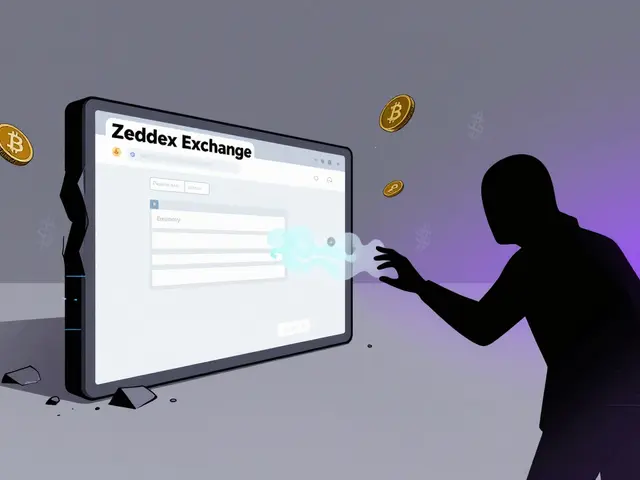
Imagine finding a crypto exchange that charges absolutely nothing to trade. No maker fees, no taker fees, just pure profit potential. That is the pitch for Zeddex Exchange, a decentralized cryptocurrency platform built on the Binance Smart Chain that launched in 2024 and offers zero-fee trading via its native ZED token. It sounds like a dream for cost-conscious traders, but does the reality match the marketing? Before you connect your wallet, we need to look at the hard numbers, because the gap between the promises and the actual performance might surprise you.
As of late 2025, data from CoinGecko shows that the total 24-hour trading volume across all Zeddex pairs hovers around $50,000. To put that in perspective, Uniswap processes over $40 billion daily, and even smaller competitors like PancakeSwap handle billions. Zeddex’s volume represents less than 0.0001% of the overall decentralized exchange market. If you are looking for a place to move serious capital, this tiny number should raise a red flag immediately. So, what exactly is Zeddex Exchange, and who is it actually for?
The Core Value Proposition: Zero Fees vs. Hidden Costs
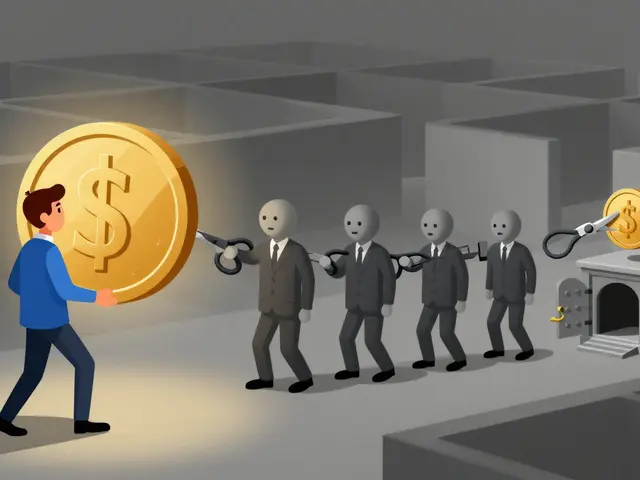
The main selling point of Zeddex Exchange is its fee structure. According to FxVerify’s analysis, the platform claims 0.00% taker and maker fees on its primary trading pairs. In an industry where standard fees range from 0.25% to 0.30%, this seems like a massive advantage. However, in decentralized finance, there is always a catch. When explicit fees disappear, costs often shift to slippage-the difference between the expected price and the executed price due to low liquidity.
Liquidity depth metrics reveal why this matters. For the main ZED/USDT.Z pair, the +2% depth is only $49,300. This means if you try to buy more than a few thousand dollars worth of tokens, you will likely push the price up significantly against yourself. Industry analysts suggest that trades exceeding $5,000 on Zeddex could result in 15-20% slippage. While you save on the fee, you lose far more money on the bad execution price. For micro-transactions or small speculative bets, the zero-fee model works. For anything larger, the hidden cost of poor liquidity makes it a risky choice compared to established platforms with deep order books.
Technical Infrastructure and Tokenomics
Under the hood, Zeddex operates as an automated market maker (AMM) on the Binance Smart Chain. It doesn’t use a traditional order book but rather liquidity pools. The platform’s utility is tied to the ZED token, which serves as the governance and reward asset. As of November 2025, the ZED token traded at approximately $0.43, with a market capitalization of around $1.8 million. This places it at rank #2873 on CoinGecko, indicating it is a very small-cap asset with high volatility risk.
The technical setup appears to be a fork of existing AMM protocols without significant innovation. Unlike top-tier competitors that offer concentrated liquidity positions or cross-chain swaps, Zeddex sticks to basic swap functionality. There are no integrated lending protocols or advanced yield farming options. This simplicity can be a double-edged sword: it makes the interface easy to understand, but it also limits the utility for DeFi power users who expect multi-chain capabilities and complex financial instruments.
| Feature | Zeddex Exchange | PancakeSwap | Uniswap |
|---|---|---|---|
| Network | BSC | BSC, Ethereum, Polygon | Ethereum, Arbitrum, Base |
| Daily Volume | ~$50,000 | $1.2 Billion+ | $42.7 Billion+ |
| Trading Fees | 0.00% | 0.10% - 0.25% | 0.25% - 0.30% |
| Liquidity Depth (Main Pair) | ~$49,000 | Millions USD | Hundreds of Millions USD |
| Security Audits | None Publicly Documented | CertiK, Trail of Bits | ConsenSys, OpenZeppelin |

Security Risks and Regulatory Status
When dealing with unregulated exchanges, security is the biggest concern. Zeddex is not regulated by any government authority, placing it in a segment that accounts for about 37% of all DEX platforms. While decentralization offers freedom, it also removes the safety net of legal recourse. A preliminary analysis by blockchain security firm CertiK in August 2025 identified medium-risk vulnerabilities in Zeddex’s router contract, specifically noting potential exposure to front-running attacks. Although no critical bugs were found, the lack of comprehensive third-party audits remains a significant gap.
Furthermore, the platform lacks insurance mechanisms for smart contract failures. Since the 2023 DeFi security crisis, most major exchanges have implemented some form of protection or bug bounty program. Zeddex has neither. If a hacker exploits a vulnerability in the code, your funds are at risk with no guarantee of recovery. Additionally, regulatory pressure is tightening globally. The EU’s MiCA regulations require KYC procedures for exchanges serving European customers by January 2026. Zeddex currently has no visible compliance infrastructure, which could limit its accessibility for international users in the near future.
User Experience and Community Engagement
Let’s talk about the people using the platform. Or rather, the lack of them. Web traffic analytics show only 47 monthly visits to the Zeddex website as of October 2025. That is incredibly low. For context, leading DEXs have millions of monthly active users. The bounce rate is 36%, and the average visit duration is essentially zero, suggesting that visitors aren’t sticking around to explore features.
Community engagement is nearly nonexistent. There are no verified user reviews on major platforms like Trustpilot or CryptoSlate. Social media mentions on Twitter/X and Telegram are sparse, with only 12 organic mentions in the past 90 days. Developer activity on GitHub has stalled, with no public commits in the last six months. This silence raises questions about the project’s long-term viability. Without an active community or development team pushing updates, how do you know the platform won’t become abandoned? The absence of customer support channels-no live chat, no email, no Discord-means if something goes wrong during a trade, you are largely on your own.

Who Should Use Zeddex Exchange?
Given these factors, who is this exchange actually for? It is not for day traders moving large sums, nor is it for long-term holders seeking secure storage. It appeals to a very specific niche: high-risk speculators interested in the ZED token itself. If you believe the ZED token will appreciate significantly, trading on Zeddex might offer slightly better entry points due to the zero fees, provided you keep your position size small enough to avoid severe slippage.
For everyone else, the risks outweigh the benefits. The combination of low liquidity, unproven security, and lack of regulatory oversight creates a fragile environment. If you are new to DeFi, stick to established platforms with proven track records. If you are an experienced trader, ask yourself if saving 0.25% in fees is worth the potential 15% loss in slippage and the risk of smart contract failure. For most users, the answer is no.
Frequently Asked Questions
Is Zeddex Exchange safe to use?
Safety is relative. While no critical hacks have been reported yet, the platform lacks comprehensive third-party security audits and insurance mechanisms. CertiK noted medium-risk vulnerabilities in 2025. You should only use funds you can afford to lose, as there is no regulatory protection or guaranteed recourse if a smart contract fails.
What are the trading fees on Zeddex?
Zeddex advertises 0.00% maker and taker fees on its native trading pairs. However, you must account for gas fees on the Binance Smart Chain when executing transactions. Additionally, low liquidity can lead to high slippage, which acts as a hidden cost that may exceed the savings from zero fees for larger trades.
Which wallets are compatible with Zeddex?
Since Zeddex is a decentralized exchange on the Binance Smart Chain, it works with any Web3 wallet that supports BSC. Popular choices include MetaMask, Trust Wallet, and Rabby Wallet. You will need BNB in your wallet to pay for network gas fees before you can start swapping tokens.
How liquid is the ZED token on Zeddex?
Liquidity is quite shallow. The primary ZED/USDT pool has a depth of roughly $49,000 within a 2% price range. This means small trades (under $1,000) will execute smoothly, but larger orders will face significant price impact. Traders should check the estimated slippage carefully before confirming any transaction above a few hundred dollars.
Does Zeddex require KYC verification?
Currently, Zeddex does not require KYC (Know Your Customer) verification, as it operates fully on-chain. However, this could change if the platform seeks to comply with emerging regulations like the EU’s MiCA framework. Until then, you can trade anonymously using just your wallet address, though this also means less consumer protection.


Rajni Mathur
August 25, 2026 AT 19:36Oh, look at this little gem of a disaster. 📉 The math is actually insulting here. They claim zero fees but the slippage on a $5k trade is like 15-20%. That is not saving money, that is donating to the liquidity void. 😂 Why would anyone touch this when PancakeSwap has actual depth? It’s basically a rug pull waiting for a slow day. The volume is so low it’s practically a ghost town. 👻 Just stick to the majors, people. Don’t be the exit liquidity for the dev team. 🚫📉
Rachel Etheridge
August 25, 2026 AT 21:17ok so i was just looking at this because my friend told me about it and honestly it looks kinda sus?? like who even uses a dex with only 50k volume?? that feels like a trap for small traders. i mean sure no fees sounds cool but if you cant move your money out without losing half in slippage what is the point right? also no audits?? scary stuff. i think we should all just stay away from this one until they prove themselves more. dont want to lose my savings over some random token lol
Matt Reckdenwald
August 27, 2026 AT 05:08You hit the nail on the head regarding the liquidity trap. It’s a classic bait-and-switch where the headline number hides the operational reality. When the order book is thin as paper, the 'free' transaction becomes an expensive gamble. I’ve seen plenty of projects die quietly because the community evaporates faster than the gas fees accumulate. It’s a sobering reminder that infrastructure matters more than marketing fluff. We need to respect the boring, proven protocols over the flashy, hollow ones. The silence on GitHub is the loudest warning sign of all.
Emmanuel Ogbomo
August 29, 2026 AT 03:35It makes me think about the nature of value itself. Is a platform valuable if no one interacts with it? Perhaps the absence of users is a feature, not a bug, for those seeking obscurity. But for trading, presence is everything. A quiet exchange is a dangerous place. I remain neutral, observing the dust settle.
Melanie Armijo
August 30, 2026 AT 17:17honestly im so tired of these new coins popping up every week its crazy. why do we keep falling for the zero fee thing? its never good. i feel like everyone is just trying to scam each other. its so annoying how complicated crypto is becoming. just buy bitcoin and leave it alone. this whole dex thing is a mess and nobody cares anymore except the degens. i hope this project fails fast so we can stop talking about it. its giving major red flag vibes to me. ugh.
Laine Van Sickle
August 30, 2026 AT 20:12Well, isn't this just *charming*? Another unregulated playground for people who think they're smarter than the market. The audacity to call this a 'platform' when it's barely a puddle of liquidity. You folks love your 'decentralization' until the code breaks and there's no one to call. Just another example of how the industry prioritizes hype over substance. Keep your wallets closed, or better yet, keep your expectations grounded in reality. This isn't innovation; it's just a slightly different shade of risk. Bravo, truly. 🙄