If you are searching for details on the Dypius airdrop from its time as the DeFi Yield Protocol, you might be feeling a mix of curiosity and confusion. The name change happened in late 2022, and the original reward mechanisms have evolved significantly since then. Many users who participated in the early days are wondering if they missed out on claims or how those old tokens fit into the current ecosystem.
The short answer is that the massive initial distribution you might be looking for has already been completed. The DeFi Yield Protocol distributed millions of tokens through specific mining pools and yield farming contracts before transitioning fully into the Dypius brand. Understanding what happened requires looking back at how the protocol originally incentivized users and how that strategy shifted over time.
The Origin Story: From DeFi Yield Protocol to Dypius
To understand the airdrop details, we first need to look at the entity itself. DeFi Yield Protocol was a decentralized finance platform focused on providing high-yield opportunities across multiple blockchains. It operated primarily on Ethereum, Binance Smart Chain, and Avalanche. The native token, DYP, had a total supply capped at 30 million tokens.
On December 12, 2022, the team announced a major rebranding. They changed the name to Dypius. This wasn't just a cosmetic change; it signaled a shift from a pure DeFi yield aggregator to a broader decentralized ecosystem. The name 'Dypius' references the suffix of nebulae, symbolizing a place where matter collects to form stars and planets. In crypto terms, this meant building a foundation for new projects, NFTs, and metaverse experiences rather than just offering interest rates.
This transition is crucial for anyone looking for "old" airdrop details because the incentive structures changed with the brand. The early days were about aggressive user acquisition through direct token giveaways, while the later phase focused on utility and governance within the new ecosystem.
The Mining Pool Airdrop Mechanism
The most significant distribution event during the DeFi Yield Protocol era was the zero-fee ETH mining pool program. This was not a simple "connect wallet and claim" snapshot. Instead, it was an active participation model designed to bootstrap liquidity and community engagement simultaneously.
Here is how it worked:
- Zero-Fee Entry: Users could join the mining pool without paying entry fees, lowering the barrier to entry compared to traditional yield farms that charged performance fees.
- Monthly Bonus Structure: Participants received a 10% monthly bonus on their ETH income in the form of DYP tokens. If your share of the pool generated $100 in ETH fees, you also received DYP tokens valued at roughly $10 (depending on market price).
- Liquidity Provision: By joining, users effectively provided liquidity to participating pools. This allowed the protocol to earn additional ETH rewards, which were shared back with participants.
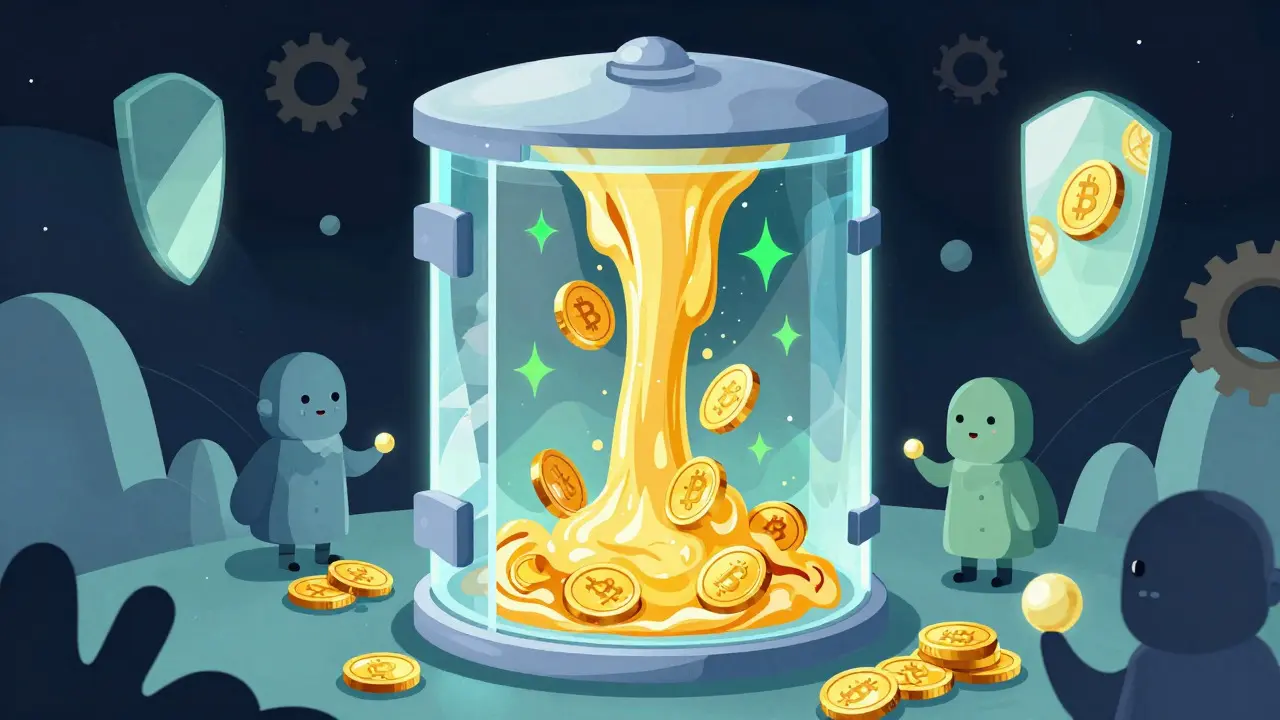
- Vault Access: Participants gained access to the DYP Earn Vault, an automated contract that moved funds to the most profitable platforms automatically.
The goal was ambitious: reach 200,000 miners. This volume of users would create a robust base for governance and security. Unlike many airdrops that target passive holders, this mechanism rewarded active capital deployment. If you held ETH in this pool during the operational window, your rewards were distributed continuously, not in a single lump-sum event.
Token Utility and Governance Rights
Receiving DYP tokens was only part of the equation. The value proposition relied heavily on what you could do with them. The DYP token served two primary functions: governance and utility.
| Function Category | Specific Use Case | Benefit to User |
|---|---|---|
| Governance | Voting on protocol upgrades and fee structures | Influence over the direction of the platform |
| Yield Farming | Staking DYP to boost APY on other assets | Higher returns on deposited capital |
| Premium Access | Unlocking advanced analytics via DYP Tools | Better data for making investment decisions |
| Ecosystem Participation | Access to DYP Launchpad and future events | Early access to new project tokens |
This multi-faceted utility ensured that airdrop recipients weren't just dumping their tokens immediately. To maximize value, users needed to hold and stake. This created a sticky community, which was essential for the protocol's survival in the volatile DeFi landscape of 2021-2022.
Security Audits and Trust Measures
One of the biggest risks in any airdrop or DeFi interaction is smart contract vulnerability. The DeFi Yield Protocol team understood this and invested heavily in security audits before launching major distribution phases.
The core contracts were audited by three reputable firms:
- Blockchain Consilium: Provided comprehensive code reviews focusing on logic errors and potential exploit vectors.
- CertiK: Offered ongoing monitoring through their Security Oracle, providing 24/7 protection against attacks.
- PeckShield: Conducted deep-dive analyses of the staking and yield farming mechanics.
These audits were public-facing, allowing users to verify the safety of the contracts they were interacting with to claim their rewards. For many users, seeing these audit badges was the green light needed to deposit funds into the mining pools. This level of transparency helped distinguish the protocol from less secure competitors during the wild west era of DeFi.
Anti-Manipulation and Fair Distribution
Air drops often suffer from sybil attacks, where bots create thousands of wallets to farm rewards. The DeFi Yield Protocol implemented several anti-manipulation features to ensure fair distribution.
The mining pool structure naturally mitigated some of this risk because it required actual ETH deposits to participate. Bots would need real capital to generate meaningful rewards, raising the cost of attack. Additionally, the system tracked unique wallet activity and contribution levels. Rewards were proportional to the liquidity provided and the duration of participation, rather than just being a flat rate per address.
This approach favored genuine users who wanted to earn yield on their existing ETH holdings. It discouraged speculative farmers who looked for quick flips. As a result, the token distribution leaned towards long-term holders who believed in the project's vision, stabilizing the token's early market dynamics.

Evolution into the Current Dypius Ecosystem
Today, the legacy of those early airdrops lives on in the expanded Dypius ecosystem. The platform now includes:
- World of Dypians: A metaverse integration where token holders can participate in events and virtual economies.
- NFT Staking: Opportunities to stake NFTs like CAWS for additional rewards.
- DYP Tools: Advanced analytics dashboards providing real-time market insights.
- DYP Locker: Services for securing tokens and managing vesting schedules.
If you held DYP from the old airdrop, those tokens are still valid. They retain their governance power and utility within the new framework. The transition did not invalidate previous holdings; instead, it expanded what those holdings could unlock. You can still use them to vote on proposals, access premium news feeds, and participate in launchpad events.
Common Questions About Old Airdrops
Many users ask if there is a way to retroactively claim rewards if they missed the initial window. Generally, once a distribution period closes and the smart contracts are updated or deprecated, the opportunity is gone. However, checking your transaction history on block explorers like Etherscan or BscScan can confirm if you received any DYP tokens during the active mining pool phase. Look for incoming transactions labeled as "DYP" or transfers from the official DYP contract addresses.
Another common concern is tax implications. In many jurisdictions, receiving airdropped tokens is considered taxable income at the fair market value on the day of receipt. Keeping records of when and how much you received is important for accurate reporting. Since the distributions were continuous during the mining pool era, this might require calculating the average daily value over your participation period.
Did the DeFi Yield Protocol airdrop expire?
Yes, the specific mining pool airdrop program that distributed DYP tokens based on ETH yields concluded as the protocol transitioned to the Dypius brand in late 2022. Active participants received their rewards continuously during the operational window, but no new claims can be made from that specific campaign today.
Are my old DYP tokens still valuable?
Yes, DYP tokens remain the central utility and governance token of the Dypius ecosystem. They can be used for voting, accessing premium tools, staking, and participating in new initiatives like the World of Dypians. Their value fluctuates with market demand, but their utility within the platform persists.
How can I check if I received DYP tokens in the past?
You can check your transaction history on blockchain explorers such as Etherscan (for Ethereum), BscScan (for Binance Smart Chain), or Snowtrace (for Avalanche). Search for your wallet address and filter by the DYP token contract address to see any historical incoming transfers.
Was the DYP airdrop safe from scams?
The official DeFi Yield Protocol airdrop was secured by audits from CertiK, PeckShield, and Blockchain Consilium. However, users should always verify contract addresses directly from official channels. Scammers often create fake sites mimicking legitimate airdrops. Always double-check URLs and contract hashes.
What is the difference between DeFi Yield Protocol and Dypius?
DeFi Yield Protocol was the original name focused primarily on yield aggregation and mining pools. Dypius is the rebranded entity launched in December 2022, expanding into a broader ecosystem including NFTs, metaverse elements, and advanced analytics tools. The token (DYP) remains the same, but the platform's scope has widened.