You might still think of blockchain technology as the messy, volatile engine behind Bitcoin memes. But that view is outdated. By October 2026, blockchain has quietly become the invisible backbone of global business, moving far beyond cryptocurrency speculation into practical, high-stakes applications. It is no longer just about digital coins; it is about trustless systems that eliminate middlemen, cut costs, and speed up processes that used to take weeks.
If you are wondering how this shift affects your industry, you are not alone. The question isn't whether blockchain works-it does-but where it actually adds value versus where it is just hype. This guide breaks down the real-world impact across key sectors, explains the tech without the jargon, and helps you decide if it fits your needs right now.
The Core Mechanics: Why It Matters Beyond Crypto
At its heart, a blockchain is a shared database that nobody can cheat. Unlike traditional servers controlled by one company, a blockchain distributes records across thousands of computers (nodes). If someone tries to alter a record, the network rejects it because it doesn't match the majority. This creates an immutable ledger-a permanent, unchangeable history of transactions.
Two features drive this revolution:
- Decentralization: No single point of failure means higher security and resilience against hacks or outages.
- Smart Contracts: These are self-executing codes that automatically enforce agreements when conditions are met. Think of them as digital vending machines: insert payment, get product, no human clerk needed.
In 2026, the focus has shifted from energy-hungry Proof-of-Work models to greener alternatives like Proof-of-Stake. This change addressed early criticisms about sustainability, making enterprise adoption viable for companies with strict ESG goals. The result? A technology that offers transparency without sacrificing efficiency.
Finance and Banking: The First Mover Advantage
Financial services remain the largest sector for blockchain adoption, accounting for roughly 40% of market revenue. Traditional cross-border payments often involve multiple intermediaries, taking days to settle and costing significant fees. Blockchain cuts this down to minutes at a fraction of the cost.
Central Bank Digital Currencies (CBDCs) represent the most significant development here. Countries like China with the Digital Yuan and the EU piloting the Digital Euro are using blockchain infrastructure to modernize national currencies. These aren't cryptocurrencies in the speculative sense; they are government-backed digital cash that combines regulatory oversight with digital efficiency.
Beyond CBDCs, Decentralized Finance (DeFi) platforms allow users to lend, borrow, and trade assets without banks. For businesses, this means faster access to capital and automated compliance reporting. Smart contracts handle interest calculations and collateral management automatically, reducing administrative overhead and human error.
Supply Chain: From Farm to Shelf Transparency
Ever wonder if that "organic" label on your food is legit? Blockchain provides the answer. In supply chain management, every step-from raw material sourcing to final delivery-is recorded on an immutable ledger. This creates end-to-end visibility that was previously impossible.
Major retailers like Walmart and Carrefour use blockchain to track products in real-time. If a batch of lettuce gets contaminated, they can trace its origin in seconds rather than days. This precision reduces waste, limits recalls to specific batches, and builds consumer trust. You scan a QR code, and you see the entire journey of your product. No more vague claims.
For manufacturers, this transparency extends to ethical sourcing. Companies can prove that their cobalt wasn't mined using child labor or that their timber didn't come from illegal deforestation. The data is verifiable, tamper-proof, and accessible to regulators and customers alike.

Healthcare: Securing Patient Data
Healthcare is projected to be the fastest-growing sector for blockchain adoption through 2030. Why? Because patient data is sensitive, fragmented, and hard to share securely between providers. Current systems often lock records in silos, forcing patients to carry physical files or rely on fax machines.
Blockchain solves this by giving patients ownership of their health records. Using private keys, individuals grant temporary access to doctors, hospitals, or insurers. Every access request is logged, creating a transparent audit trail. This complies with strict regulations like GDPR while improving care coordination.
Pharmaceutical companies also use blockchain to combat counterfeit drugs. Each pill pack gets a unique digital identity. When you buy medicine, you can verify its authenticity instantly. This simple check saves lives by ensuring patients receive genuine medication, not dangerous fakes.
Energy and Insurance: Automating Trust
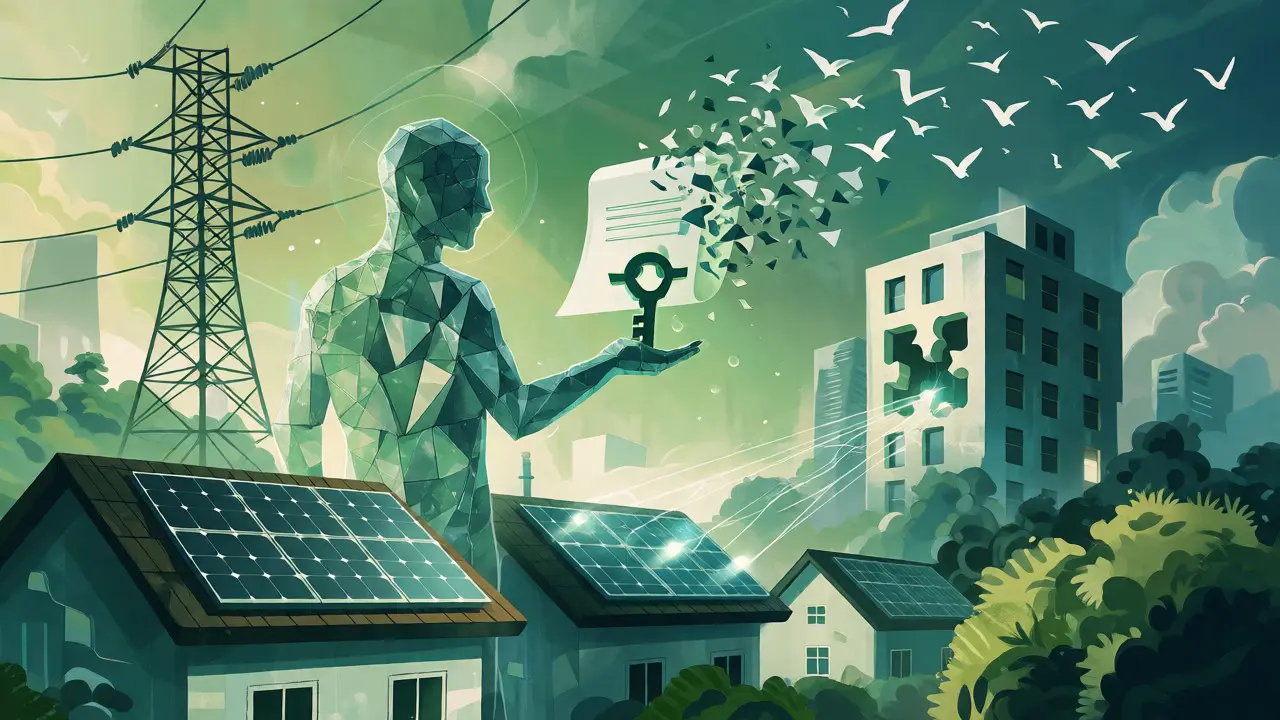
The energy sector uses blockchain for peer-to-peer trading. Imagine you have solar panels on your roof. On sunny days, you generate excess power. Instead of selling it back to the grid at low rates, you can sell directly to your neighbor via a blockchain platform. The transaction happens automatically, securely, and without utility company markup.
Insurance is undergoing a similar shift through parametric insurance. Traditional claims require lengthy investigations. Parametric policies pay out automatically when predefined events occur-like flight delays or rainfall levels below a certain threshold. Smart contracts trigger the payment instantly. No forms, no adjusters, no waiting.
Real-World Comparison: Blockchain vs. Traditional Systems
Not every problem needs a blockchain. Choosing the right tool depends on your specific needs. Here’s how they stack up:
| Feature | Traditional Database | Blockchain Ledger |
|---|---|---|
| Control | Centralized (one admin) | Decentralized (shared consensus) |
| Data Integrity | Editable by admins | Immutable once confirmed |
| Speed | Very fast for internal reads | Slower writes, but secure |
| Trust Model | Trust the central authority | Trust the math/code |
| Best For | Internal apps, high-speed queries | Multi-party verification, audits |
Use traditional databases for simple, high-speed internal tasks. Use blockchain when multiple untrusted parties need to share data without relying on a single intermediary.
Challenges and Pitfalls to Avoid
Despite the benefits, implementation isn't plug-and-play. Technical complexity remains a barrier. Developing smart contracts requires specialized skills, and bugs in code can lead to significant losses since transactions are irreversible. Security risks have shifted from external hacks to internal coding errors.
Regulatory uncertainty also persists. While frameworks are maturing, laws vary significantly by jurisdiction. Companies operating globally must navigate a patchwork of rules regarding data privacy, tax implications, and legal recognition of smart contracts.
Finally, scalability issues linger. While newer protocols handle more transactions per second, they still lag behind centralized systems like Visa for massive volume processing. However, layer-2 solutions and sharding techniques are closing this gap rapidly.
Key Takeaways
- Blockchain is mainstream: It has moved past crypto speculation into core business operations like supply chain and healthcare.
- Automation drives value: Smart contracts reduce manual work and errors in finance, insurance, and logistics.
- Transparency builds trust: Immutable records provide verifiable proof of origin and compliance for consumers and regulators.
- Green tech is here: Newer consensus mechanisms address environmental concerns, enabling sustainable enterprise adoption.
- Fit matters: Choose blockchain only when multi-party trust and immutability are critical; otherwise, stick to traditional databases.
Is blockchain only useful for cryptocurrency?
No. While Bitcoin popularized the tech, blockchain's primary value today lies in its ability to create secure, transparent records for non-crypto applications. Industries like healthcare, supply chain, and insurance use it for data integrity and automation, independent of currency fluctuations.
What are smart contracts and how do they help businesses?
Smart contracts are self-executing programs stored on a blockchain that run when predetermined conditions are met. They automate workflows like payments, compliance checks, and asset transfers, eliminating the need for intermediaries and reducing processing time from days to seconds.
Is blockchain technology environmentally friendly?
Early versions using Proof-of-Work were energy-intensive. However, modern blockchains increasingly use Proof-of-Stake or other energy-efficient consensus mechanisms. As of 2026, many major networks consume a fraction of the energy required by older systems, making them suitable for eco-conscious enterprises.
Can small businesses afford blockchain integration?
Yes, thanks to Software-as-a-Service (SaaS) blockchain platforms. These tools abstract away the complex coding, allowing smaller firms to implement tracking, authentication, or payment solutions without hiring specialized developers or maintaining heavy infrastructure.
What is the biggest risk of adopting blockchain?
The main risk is implementing it where it isn't needed. Blockchain adds overhead compared to traditional databases. Additionally, smart contract vulnerabilities can lead to financial loss if the code contains bugs, as transactions cannot be reversed.