Blockchain Liquidity: What It Is and Why It Matters in Crypto Markets
When you hear blockchain liquidity, the ease with which crypto assets can be bought or sold without changing their price. Also known as market liquidity, it’s what keeps prices stable and trades smooth. Without enough of it, even popular tokens like Ethereum or Solana can become impossible to exit without huge losses. Think of it like a water pipe: if the flow is weak, you can’t fill your glass. In crypto, low liquidity means your sell order might crash the price, or your buy order might never go through.
Blockchain liquidity isn’t just about volume—it’s about depth. A token with $10 million in daily trades but only $50,000 in buy orders at the current price? That’s thin liquidity. You’ll get slapped with slippage every time you trade. Meanwhile, a project with $2 million in daily volume and $1.2 million in bids and asks? That’s healthy. It’s why platforms like PancakeSwap, a decentralized exchange built for retail traders on Binance Smart Chain and now Linea focus so hard on liquidity pools. They don’t just let you swap tokens—they let you earn fees by providing them. And that’s why you see so many posts here about DeFi liquidity, the funds locked in smart contracts to enable trading on decentralized exchanges. It’s the engine behind every DEX you use.
But liquidity isn’t always what it seems. Some tokens pretend to be liquid—they show high trading numbers, but those are fake, pumped by bots. Others, like SakeToken or FOC TheForce.Trade, have barely $150,000 in total value locked. That’s not a market. That’s a graveyard. And when liquidity vanishes, so does your ability to cash out. That’s why so many posts here warn about unregulated exchanges, ghost projects, and fake airdrops. They’re all connected to one thing: lack of real, sustainable liquidity.
What you’ll find below isn’t just a list of articles. It’s a map. You’ll see how crypto adoption in India and Cuba thrives despite restrictions—because people use stablecoins with real liquidity to move value. You’ll learn why no-KYC exchanges get shut down—because they lack transparency and liquidity oversight. You’ll spot the difference between a real DeFi protocol like Flux Protocol and a dead token like ElonDoge. And you’ll understand why smart contract audits matter: without them, liquidity providers lose money, and traders get burned.
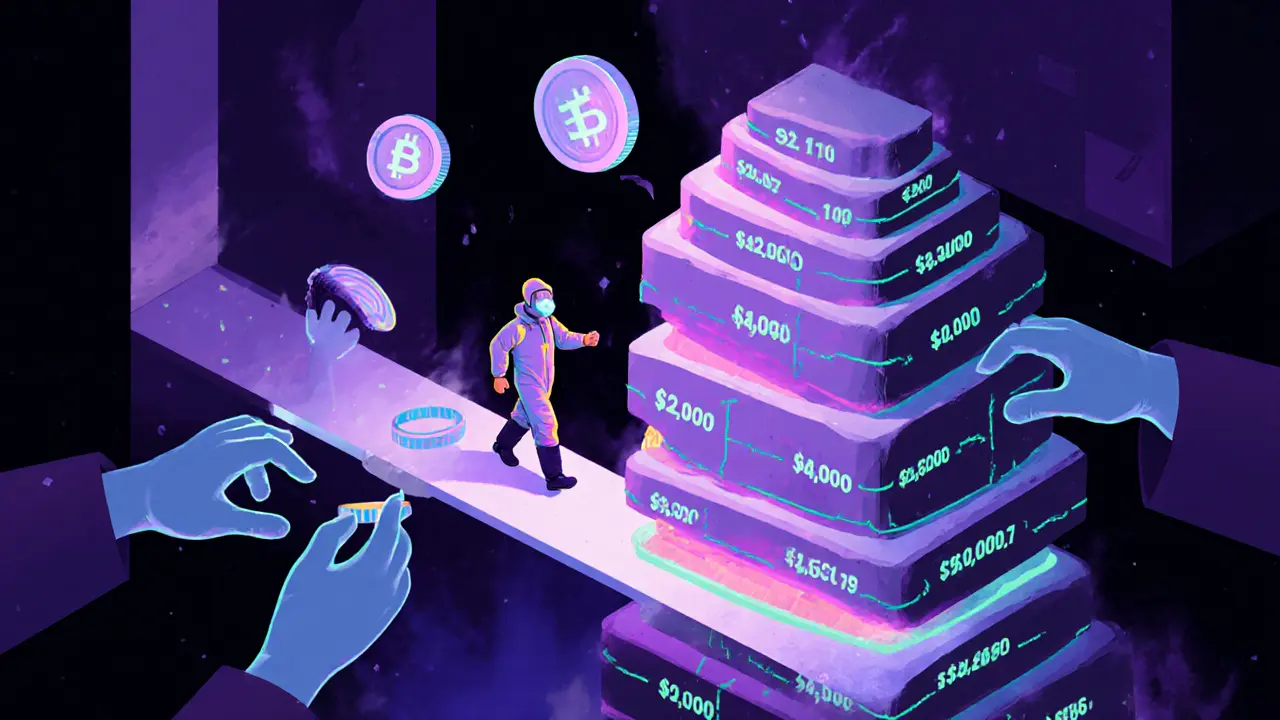
Market Depth and Liquidity Analysis in Blockchain Trading
Market depth and liquidity analysis reveal how much buying and selling pressure exists at every price level in crypto markets. Learn how to read order books, spot spoofing, and avoid slippage with real data from Bitcoin, Treasuries, and institutional trading practices.
Recent Post
-

WEMIX.Fi Review: A DeFi Hub for Blockchain Gamers
Apr, 11 2026